When a severe storm hits, your roof collects thousands of gallons of water in a surprisingly short amount of time. All that water has to go somewhere. Your gutter system acts as the primary defense line, catching the runoff and directing it safely away from your home. But when the skies open up, even a minor flaw in your drainage setup can lead to significant issues.
Watching water cascade over the sides of your roof during a downpour is stressful. It usually means your system is failing to manage the volume of water hitting your shingles. Heavy rain gutter problems range from simple clogs to complete structural failures that threaten your siding, fascia, and foundation.
Understanding exactly how your drainage system reacts to extreme weather helps you identify vulnerabilities before they cause expensive water damage. This guide covers the mechanics behind drainage failure, the warning signs to look for, and the most effective ways to upgrade your system so it handles the next big storm.
Why Heavy Rain Causes Gutter Problems
The root cause of almost all heavy rain gutter problems comes down to a simple equation: water volume versus gutter capacity. A standard residential roof spans hundreds or thousands of square feet. During a torrential downpour, that surface area collects a massive amount of water. Just one inch of rain falling on a 1,000-square-foot roof generates over 600 gallons of runoff.
When heavy rainfall hits, this massive volume rushes down the slope of your roof and into the troughs. If the gutters can’t handle heavy rain, it is usually because the rate of incoming water exceeds the rate at which the downspouts can drain it.
This bottleneck causes the water level inside the aluminum trough to rise rapidly. Once the water hits the brim, you experience heavy rainfall gutter overflow. The system simply cannot move the water out fast enough, causing it to take the path of least resistance, which is usually right over the front edge or, worse, over the back edge against your house.
Common Gutter Problems During Heavy Rain
Storms stress every component of your roof drainage system. When the volume of water peaks, specific failure points usually reveal themselves. Here are the most common issues you will see when extreme weather rolls through.
Gutters Overflowing During Downpours
The most obvious sign of system failure is gutters overflowing heavy rain right over the front lip. Instead of flowing neatly toward the downspouts, the water builds up and spills over like a waterfall. Gutter overflow heavy rain can ruin your landscaping, wash away your mulch, and create deep trenches in the soil right beneath the roofline.
Water Pouring Behind Gutters
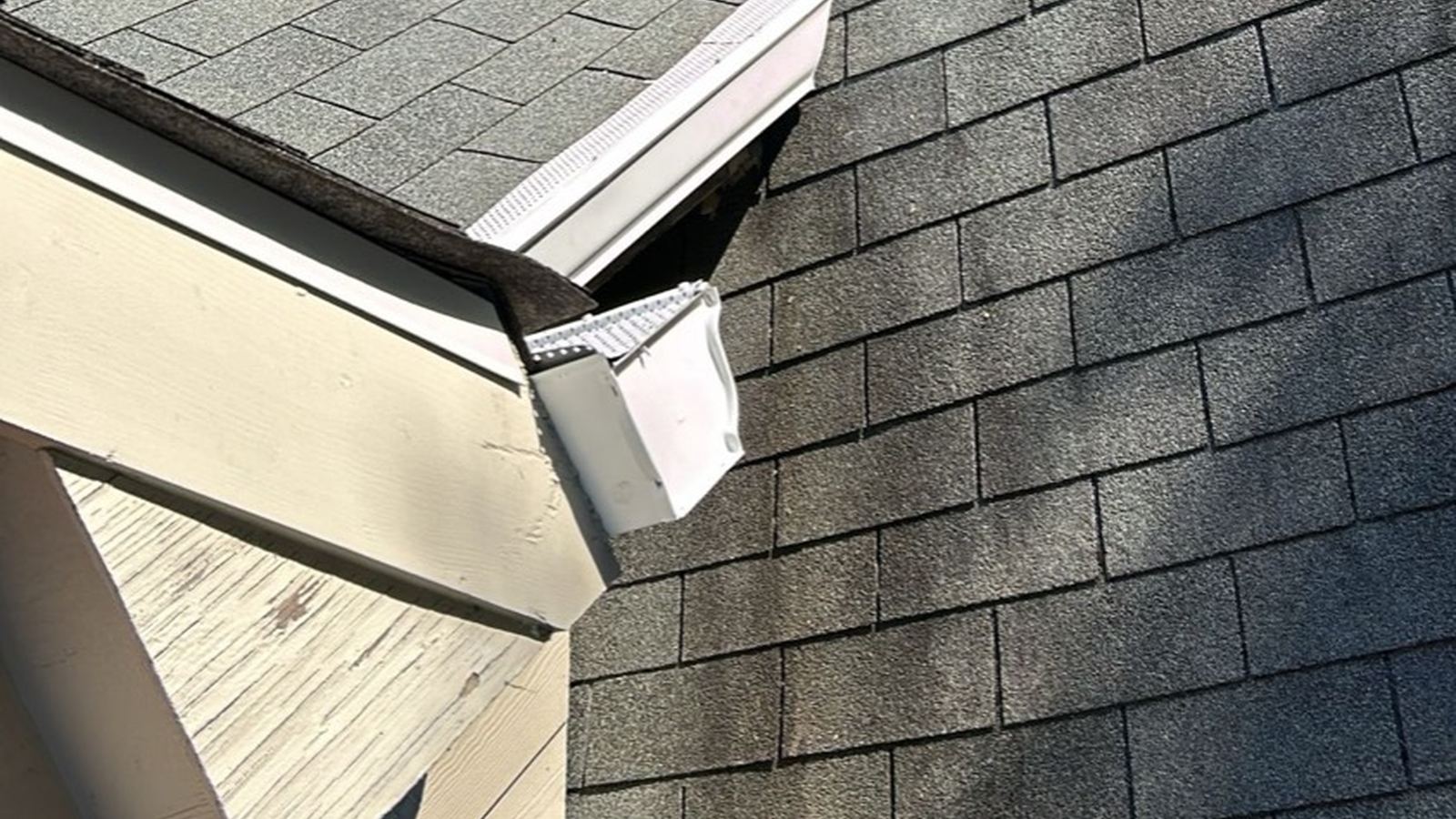
Sometimes the water does not spill over the front. Instead, you might notice water behind gutters heavy rain scenarios where moisture leaks between the aluminum trough and the wooden fascia board. This happens when the gutter is loose, tilted backward, or lacking proper flashing. Gutters leaking behind are incredibly dangerous for your home because the water directly attacks the wood, leading to rapid rotting of your fascia boards and roof decking.
Downspouts Unable to Handle Water Volume
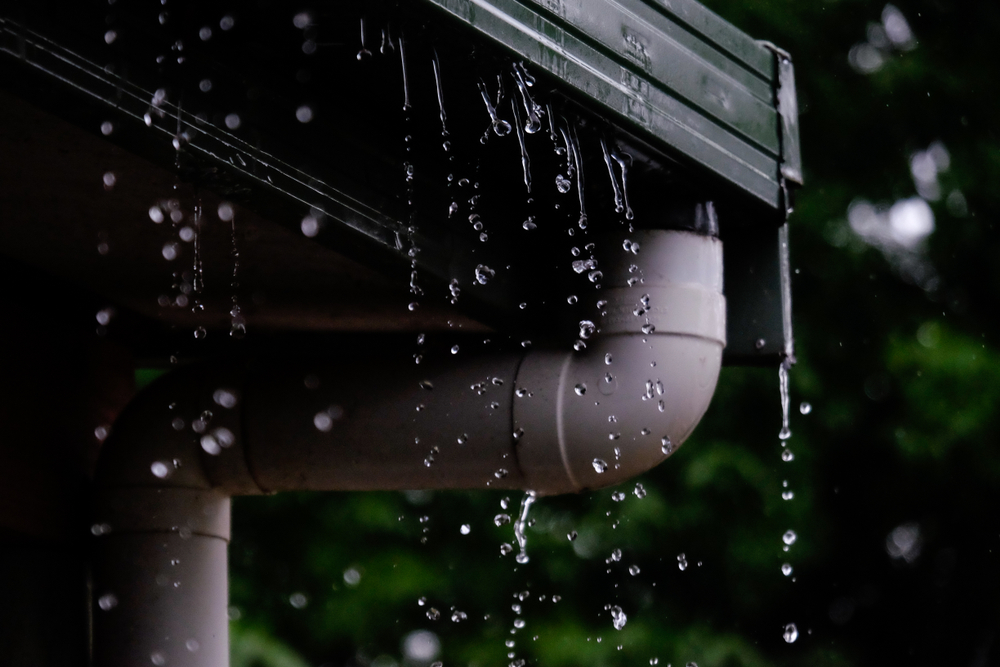
Even if your horizontal troughs are large enough, the vertical pipes might be the bottleneck. When downspouts overflow heavy rain, you will often see water shooting out of the seams or bubbling up from the top where the drop outlet connects to the pipe. Downspout drainage heavy rain issues mean the water is getting trapped in the vertical drop, forcing the entire upper trough to back up and overflow.
Sagging Gutters from Water Weight
Water is incredibly heavy, weighing about 8.3 pounds per gallon. During a severe storm, a backed-up trough holds hundreds of pounds of standing water. This excessive weight puts immense strain on the hangers and screws holding the system to your house. You will often see gutters sagging heavy rain as the fasteners begin to pull out of the wood. Left unaddressed, heavy rain gutter damage can cause entire sections of the system to rip off the fascia board and crash to the ground.
Water Pooling Around Foundation
The ultimate goal of any drainage system is to protect the base of your home. If you see heavy rain foundation water gutters failing to move moisture away, you have a serious problem. Gutters not draining heavy rain properly will dump hundreds of gallons of water directly next to your concrete slab or basement walls. This leads to hydrostatic pressure, foundation cracks, and flooded basements.
Why Gutters Overflow in Heavy Rain
Understanding what causes these failures helps you choose the right repair strategy. If your system is spilling over, one of the following culprits is likely to blame.
Clogged Gutters Reduce Capacity
The most frequent cause of overflow is debris. Leaves, pine needles, twigs, and roofing granules accumulate in the trough and at the downspout openings. Even a small handful of wet leaves can completely block a downspout drop. When the trough is half-full of decomposing debris, its actual water-holding capacity is cut in half, virtually guaranteeing a spillover during a heavy storm.
Gutters Too Small for Roof Size
Sometimes, the system is perfectly clean but still fails. This usually points to a sizing issue. Many older homes were built with standard 5-inch gutters, which max out at a certain water volume. When comparing 5 inch vs 6 inch gutters heavy rain performance, the difference is massive. A 6-inch gutter holds nearly double the water volume of a 5-inch gutter and typically features a larger downspout opening, allowing it to process heavy downpours much faster.
Improper Gutter Pitch
Gutters are not actually perfectly level. They need a slight downward angle, known as pitch, toward the downspout to keep water moving. If the pitch is too flat, the water sits stagnant. If the pitch is angled the wrong way due to house settling or sagging hangers, the water flows away from the downspout, pools at the dead end, and eventually spills over the edges.
Not Enough Downspouts
A perfectly clean, appropriately sized gutter will still overflow if the water has nowhere to exit. As a general contractor rule, you need one downspout for every 20 to 30 feet of horizontal gutter run. If you have a 50-foot stretch of roof draining into a single downspout, that single pipe will easily get overwhelmed during a torrential downpour.
Poor Downspout Drainage
If the water successfully travels down the vertical pipe but hits a blockage at the bottom, the entire system backs up. Crushed underground corrugated pipes, clogged French drains, or buried downspout extensions prevent the water from escaping.
Signs Your Gutters Can’t Handle Heavy Rain
You don’t always have to stand outside in a storm to know your system is failing. There are clear signs gutters can’t handle heavy rain that linger long after the weather clears.
Look for deep lines or trenches washed into your landscaping directly below the roofline. Check your exterior walls for vertical dirt streaks or peeling paint, which indicate water is constantly running down the siding. Inspect the bottom of your fascia boards for soft, rotting wood. If you notice any of these indicators, your gutters overflow during storm conditions and require immediate attention.
How to Fix Heavy Rain Gutter Problems
Addressing drainage issues promptly prevents costly structural repairs later. Here is how a professional approaches these heavy rain failures.
Clean Gutters and Downspouts
The first step in any diagnostic process is a thorough cleaning. Removing leaves, mud, and shingle grit restores the system to its maximum original capacity. A contractor will also flush the downspouts with water to ensure there are no hidden clogs trapped in the elbows.
Upgrade to Larger Gutters
If the system is clean but still overflowing, the water volume is simply too high for the current setup. Upgrading to oversized gutters heavy rain solutions, specifically 6-inch seamless gutters, drastically increases your roof’s water management capacity. The wider mouth catches water coming off steep metal or architectural shingle roofs much more effectively.
Add Additional Downspouts
Sometimes the horizontal troughs are fine, but the exit points are lacking. A contractor can cut new drop holes into your existing system and install extra downspouts. This divides the water volume, allowing the system to drain twice as fast and preventing water from backing up during sudden cloudbursts.
Correct Gutter Pitch
If water is pooling in the center of a run, the pitch needs adjustment. A professional will snap a new chalk line, remove the existing hangers, and reinstall the trough with the correct downward slope. This ensures gravity is doing the work to pull water toward the downspouts quickly.
Install Seamless Gutters
Older sectional systems have seams every ten feet. During heavy rain, the water pressure forces moisture through these seams, causing leaks. Upgrading to seamless aluminum gutters eliminates these weak points, providing a smooth, continuous channel for the water to flow.
How to Prevent Gutter Overflow During Heavy Rain
Once your system is flowing properly, you need to protect it. Preventative measures ensure your home remains safe during the wettest seasons.
Regular Gutter Maintenance
Schedule professional cleanings at least twice a year, once in the late spring and once in the late fall. Keeping the channels clear of debris is the most reliable way to maintain maximum water capacity.
Install Gutter Guards
If you live in a heavily wooded area, keeping up with falling leaves is nearly impossible. High-quality micro-mesh gutter guards prevent debris from entering the trough while still allowing heavy rain to pass through. This keeps your downspout outlets completely clear.
Improve Downspout Drainage
Ensure the water has a clear path once it reaches the bottom of the pipe. Clear any debris from the bottom elbows and check underground drainage pipes with a camera to ensure they are not crushed by tree roots or collapsed soil.
Extend Downspouts Away From Foundation
Water dumping at the base of the wall defeats the purpose of the entire system. Add downspout extensions to carry the water at least three to five feet away from your foundation. Splash blocks can also help disperse the energy of the water, preventing soil erosion.
When Heavy Rain Damage Requires Gutter Repair
Sometimes the storm wins. When excessive water weight or high winds compromise the system, you need to repair gutters heavy rain damage immediately.
If you see loose spikes pulling out of the fascia, the wood may be rotting, or the fasteners may just need to be replaced with heavy-duty hidden hangers. If a tree branch falls and dents the aluminum, that section will constantly pool water and rust over time. Heavy rain gutter repair involves re-securing loose sections, replacing damaged downspouts, resealing end caps, and swapping out rotten fascia wood before the system completely detaches.
Professional Help for Heavy Rain Gutter Problems
Ignoring drainage issues only leads to more expensive home repairs down the road. Whether you are dealing with constant clogs, water pouring behind the fascia, or an outdated 5-inch system that simply can’t keep up with modern storms, the right upgrades make all the difference.
At Top Rated Gutters, we specialize in solving complex drainage problems. From structural repairs and cleaning to installing high-capacity 6-inch seamless gutters and advanced gutter guards, we ensure your home is protected from the harshest weather. Contact Top Rated Gutters today to schedule a thorough inspection and keep the water flowing exactly where it belongs.
< Previous Next >

Written by
Scott Specker
Owner · Northeast Georgia
Owner of Top Rated Gutters of Northeast Georgia, serving Cumming, Alpharetta and surrounding communities.