
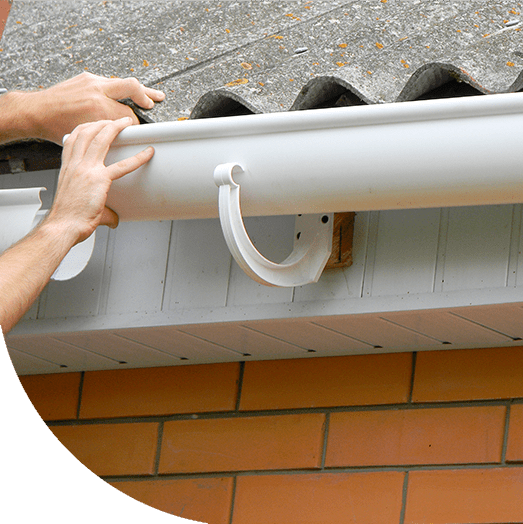
Gutter Replacement
Upgrade worn, leaking, or sagging gutters with durable seamless systems, professionally installed and built to last.
Key Takeaways: Gutter Replacement
- Replace gutters showing rust, sagging, leaks, or separated seams to protect your home from water damage.
- Seamless aluminum gutters offer fewer leaks and a longer lifespan than sectional gutters.
- Gutter size, material, and guard options all affect performance, we'll help you choose the right system.
- Free estimates and professional installation across Georgia, Ohio, Indiana & Michigan.
Clogged or Damaged Gutters?
Gutter replacement is an important part of home maintenance and a necessary job for keeping your home safe from water damage. Gutters are designed to collect and direct rainwater away from the foundation of your home, protecting it from moisture damage. Over time, gutters can become clogged or damaged, making them less effective at doing their job. Replacing faulty gutters with new ones can help keep your home in good condition and save you money in the long run by preventing costly repairs.
Why Should I Replace My Gutters?
- Old gutters can sag, leak and cause water damage to your home.
- New gutters will protect your home from rot and insects.
- New gutters improve the curb appeal of your home.
- New gutters are more efficient at channeling water away from your home.
- New gutters come in a variety of colors to match your roof and trim.
- You can install new gutters yourself in just a few hours with basic hand tools.
- If you have gutter guards installed, you won't need to clean your gutters as often (or ever).
- Replacing old gutters with new ones may help you qualify for a homeowners insurance discount.
Consider This When Getting New Gutters:
When considering gutter replacement, it’s important to make sure that you choose a material that suits your needs. These days there are many different types of materials available for gutter replacement, including aluminum, copper, vinyl, and steel. Each material has its own advantages and disadvantages which should be weighed when deciding on what type of gutter will work best for your home. Aluminum gutters are lightweight, durable, and low-maintenance but can corrode over time if exposed to saltwater or harsh weather conditions. Copper gutters are highly durable but are also more expensive than other materials, while vinyl and steel offer a more cost-effective option but may not be as strong or long-lasting as metal options.
Another factor to consider when replacing gutters is the size of the gutter needed for your house. If the old gutter was too small or inadequately sized for the amount of rainfall in your area, then installing a larger gutter could help improve drainage away from your foundation so that it won’t be left vulnerable to water damage during heavy rains or storms. Additionally, installing leaf guards along with new gutters can help reduce clogging caused by leaves and debris build up inside the gutter system and maintain your gutters longer without having to do frequent maintenance cleanings.
Overall, replacing damaged or inadequate gutters is an important step towards maintaining a safe and healthy home environment for you and your family. The right combination of materials and installation techniques will ensure that you get maximum benefit out of your new gutter system while properly protecting against potentially dangerous water damage around the foundation of your house. With proper care and maintenance over time, you’ll be able to enjoy peace of mind knowing that your roofing system is doing its job correctly – even during heavy rainfall!
Frequently Asked Questions: Gutter Replacement
How do I know if my gutters need replacement instead of repair?+
If gutters have widespread leaks, visible rust, sagging sections, recurring overflow problems, or repeated repair history, replacement is often the more reliable long-term option. Older systems with multiple failing sections may continue developing problems even after repairs.
How long do replacement gutters usually last?+
The lifespan depends on the gutter material, local weather conditions, maintenance, and installation quality. Aluminum gutters are commonly chosen for long-term durability and lower maintenance requirements.
Can replacing gutters improve drainage around my home?+
Yes. New gutters can improve water flow and help direct runoff farther away from the foundation. Proper gutter sizing and downspout placement both play an important role in overall drainage performance.
What are the advantages of seamless gutters during replacement?+
Seamless gutters reduce the number of joints throughout the system, helping minimize leak points and improve long-term water flow. They also create a cleaner appearance compared to older sectional gutter systems.
Should gutters be replaced if they are pulling away from the house?+
Gutters pulling away from the roofline may indicate structural weakening, damaged fascia areas, or aging support systems. In many cases, replacement becomes necessary when multiple sections begin separating or sagging.
Can damaged gutters affect the roof or foundation?+
Yes. Failing gutters may allow water to overflow near the roof edge or collect near the foundation, increasing the risk of moisture damage, erosion, and drainage problems around the property.
What gutter materials are most commonly used for replacement?+
Aluminum is one of the most common gutter replacement materials because it is lightweight, durable, and resistant to rust. Copper, steel, and vinyl systems are also available depending on the property and budget.
Is gutter replacement a good time to upgrade downspouts or drainage layout?+
Yes. Replacing gutters is often the best opportunity to improve downspout placement, drainage direction, and overall water management around the home.
See More Faq’s
More on Gutter Replacement from Our Team
By market
Gutter Replacement in Your Area
Every market runs its own crew, its own pricing, and its own seasonal calendar. Start with yours.
Rated 4.9 across 184 Google reviews in 4 states
Gutter Replacement Client Reviews
“Anthony and his team are top notch. They do things with integrity and are very dependable. Thanks, Anthony, for being a great resource for my gutter needs.”
“I was very pleased. They arrived on schedule, completed the job efficiently, and kept me informed every step of the way. The crew was professional, courteous, and answered all my questions. Communication was clear and friendly.”
“WOW! I am in shock at how easy this process went. I am a nurse that works weird hours and hate making multiple appointments. I got 3 quotes for new gutters, this company was less than half the price of the other two. Great price and they made everything quick and easy.”
“I had an excellent experience with Top Rated Gutters of South Bend. Anthony did an amazing job installing our gutters, and the entire process was smooth from start to finish. He was extremely responsive and paid close attention to every detail.”
“TRG was referred to me by my next door neighbor who is as pleased as i am. They did an all-round good job at a fair price. They also did a nice job installing my rain chains. I highly recommend them for anyone looking for reliable gutter installation or repair. Great job!”
“Their team was professional, punctual, and did an excellent job cleaning our gutters. They thoroughly removed all debris, ensured proper water flow, and left the work area clean when they finished. Communication was easy throughout the process, and they arrived exactly when scheduled.”
Ready for gutters done right?
Enter your zip code for a fast, free estimate from your local team.