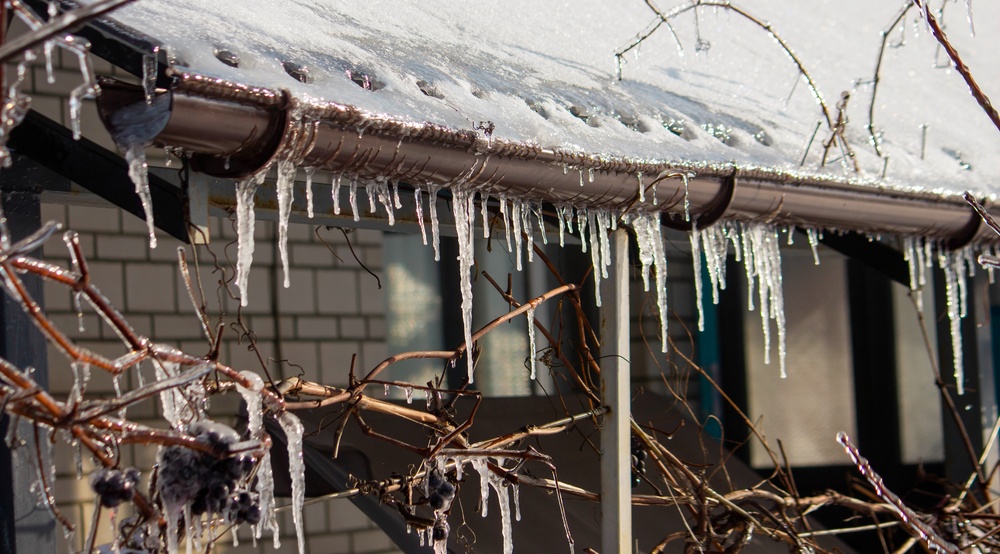
If you’ve ever watched a beautiful row of icicles form along your roofline in winter, here’s the uncomfortable truth: those icicles are a warning sign. Ice dams are one of the most destructive winter forces acting on your home, and your gutters are often the first casualty. Understanding how they form and what you can do about them can save you from a costly repair bill come spring.
WHAT IS AN ICE DAM, AND HOW DOES IT FORM?
An ice dam is a ridge of ice that builds up at the edge of a roof, preventing melting snow from draining off properly. Here’s how it happens: heat from inside your home escapes through the attic, warming the upper portion of your roof and melting snow. That meltwater runs down toward the eaves, which are cold because they’re not above the heated living space, and refreezes. Over time, this frozen ledge grows into a dam.
The cycle repeats every time temperatures fluctuate above and below freezing, which is exactly the kind of weather common for homes in northern Indiana.
HOW ICE DAMS DAMAGE YOUR GUTTERS SPECIFICALLY
1. Physical Weight and Pulling Force
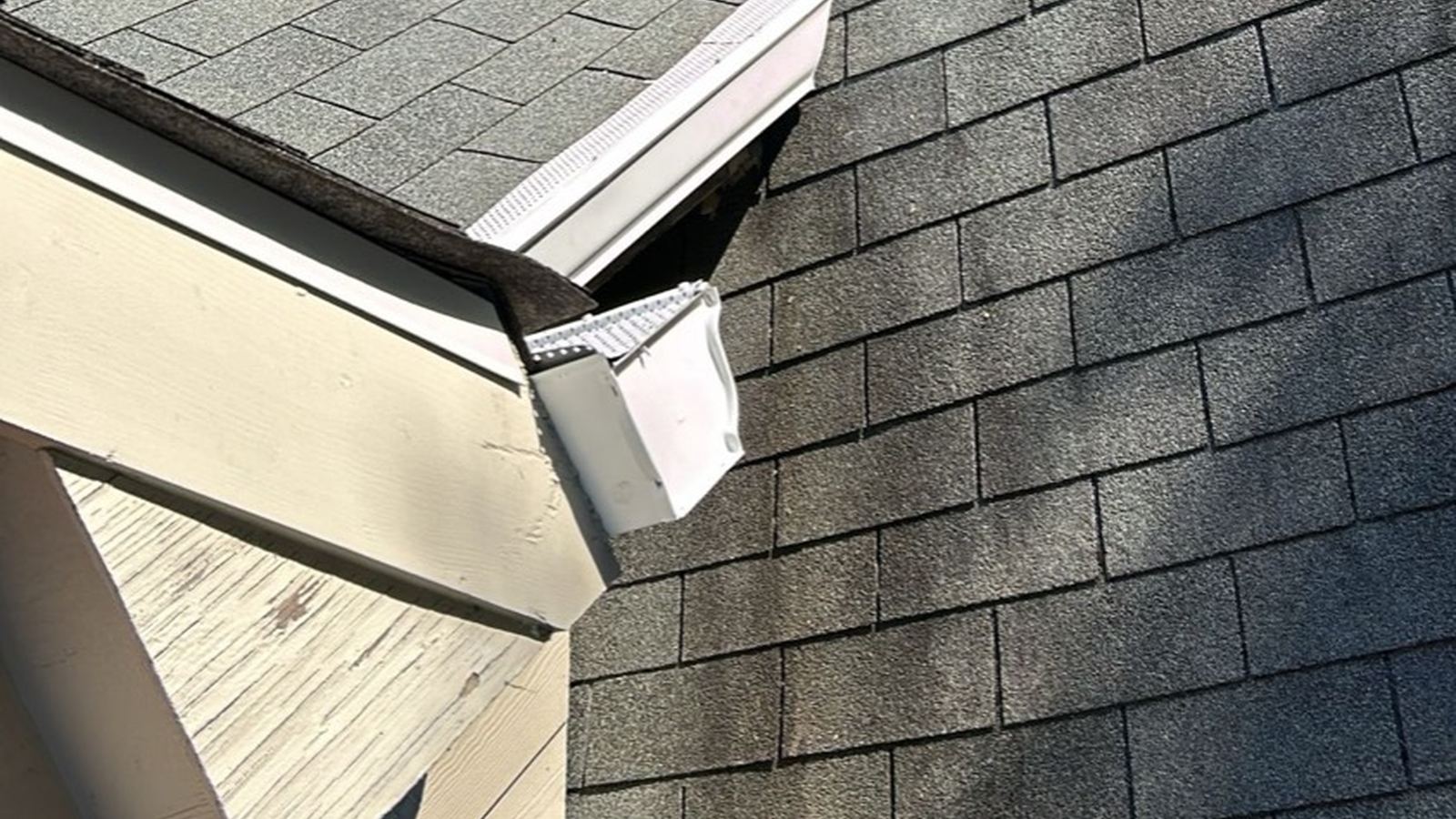
Ice is heavy, far heavier than most homeowners realize. A single foot of ice-packed gutter can weigh dozens of pounds. Over the course of a winter, this weight pulls gutters away from the fascia board, bends the hangers, and can rip the entire system off the house. Gutters that look fine in October can require major gutter repair by March due to sagging, cracking, or complete detachment.
Even gutters that survive the season intact often have hidden damage. Hanger screws get stripped, seams are stressed, and the fascia board underneath can be left exposed and rotting.
2. Expansion and Cracking
When water gets trapped behind an ice dam and seeps into gutter seams, it expands as it freezes. This freeze-thaw cycle widens existing cracks and creates new ones. Sectional gutters, those with joints every 10 to 20 feet, are especially vulnerable because the seams are natural weak points. Over time, what started as a minor drip becomes a significant leak.
3. Water Backup Into the Home
Once an ice dam is large enough, trapped water has nowhere to go but backward, under your shingles and into your home. This is where the real damage escalates. Water infiltrating the roof deck, attic insulation, and interior ceilings can cause thousands of dollars in structural damage and mold growth. The gutter damage is bad enough; the water damage inside is worse.
4. Why Gutter Guards Alone Don’t Solve Ice Dams
This is a common misconception worth addressing directly: gutter guards do not prevent ice dams. Guards are designed to keep debris out so water can flow freely, but if that water is freezing before it reaches the downspout, guards don’t change the equation. In fact, certain gutter guard styles can trap ice more effectively and add even more weight to the system. Gutter guards are still a worthwhile investment for debris management, but they need to be paired with other strategies in cold climates.
5. Proper Attic Insulation and Ventilation, The Real Solution
The most effective way to prevent ice dams is to stop the uneven roof warming that causes them in the first place. That means properly insulating your attic floor so heat doesn’t escape into the roof deck, and ensuring adequate attic ventilation so cold outside air keeps the roof surface temperature consistent. When the whole roof stays cold, snow doesn’t melt and refreeze at the eaves. This is a long-term fix and often worth a conversation with an insulation contractor alongside your gutter professional.
6. Heat Cables as a Short-Term Solution
If attic upgrades aren’t in the immediate budget, self-regulating heat cables installed in a zigzag pattern along the eave and into the downspout can prevent ice from forming in the most vulnerable zones. They’re not a permanent fix, they use electricity, require maintenance, and don’t address the root cause, but they can protect your gutters through a harsh winter while you plan a longer-term solution.
7. Seamless Gutters and Professional Installation Reduce Vulnerability
When it comes time to replace damaged gutters, seamless gutters are the better choice for cold climates. Without joints along the run, there are far fewer points where ice can force its way in and expand. Professional installation also ensures gutters are properly pitched, securely fastened with heavy-duty hangers rated for snow and ice loads, and correctly sized to handle spring runoff once the ice melts.
If you’re in the South Bend area or anywhere in northern Indiana, the team at Top Rated Gutters understands exactly how brutal a Midwest winter can be on your gutter system. We can assess your current setup and recommend the best combination of solutions for your home. Learn more at topratedgutters.com/indiana/
Ready to Get Started: Ice Dams?
Winter damage to your gutters doesn’t have to be inevitable. Our team in South Bend and across Indiana can evaluate your system, recommend ice-resistant solutions, and make sure you’re protected before the next cold season hits.
👉 Visit topratedgutters.com/indiana/ to connect with our Indiana team
—
Frequently Asked Questions: Ice Dams
Q: Can I remove an ice dam myself?
A: You can carefully use a roof rake to pull snow back from the eave area before it melts and refreezes, this reduces dam formation. However, chipping or hacking at an existing ice dam is risky. You can damage shingles and gutters further. Calling a professional for ice removal is always the safer option.
Q: How do I know if my gutters were damaged by ice dams?
A: Look for sagging sections, gaps where gutters have pulled away from the fascia, visible cracks or rust spots, and water stains on the soffit or fascia board. If you see any of these in spring, get a professional inspection before the next rain season.
Q: Do seamless gutters completely prevent ice dam damage?
A: Not completely, ice dams are primarily a roofing and insulation issue. But seamless gutters are more durable and less likely to be cracked open by expanding ice than sectional gutters. They’re a smart upgrade for cold climates.
Q: Does homeowner’s insurance cover ice dam damage?
A: Often yes, if the damage is sudden and accidental, but policies vary. Most standard homeowner’s policies cover water damage from ice dams but may exclude gradual wear. Check with your insurer and document any damage with photos as soon as you spot it.

Written by
Colin Nellis
Owner · Cincinnati, OH
Owner of Top Rated Gutters of Cincinnati, with a career built in home improvement on honest, high-quality service.