If you own an older home, especially one built before the 1960s, there’s a good chance you have box gutters and may not even know it. When those gutters start leaking, many homeowners find themselves in unfamiliar territory: should they repair what they have, or upgrade to modern K-style gutters? The answer depends on understanding what each system is, how it works, and what failure actually looks like. Here’s a clear breakdown.
WHAT ARE BOX GUTTERS VS. K-STYLE GUTTERS?
1. What Are Box Gutters?
Box gutters, also called built-in gutters or Yankee gutters, are recessed into the roofline rather than hanging on the outside of the fascia. They’re literally built into the structure of the roof, often lined with lead, copper, or tar-coated felt. On older homes, they’re usually wide, flat-bottomed troughs hidden beneath the roofing material at the eave. Because they’re integrated into the structure, they carry a larger water volume and can be visually invisible from the street, a quality many historic homeowners love.
They were the standard construction method for much of the 19th and early 20th century, which is why you’ll see them frequently on older homes in the Midwest, Northeast, and Mid-Atlantic regions.
2. What Are K-Style Gutters?
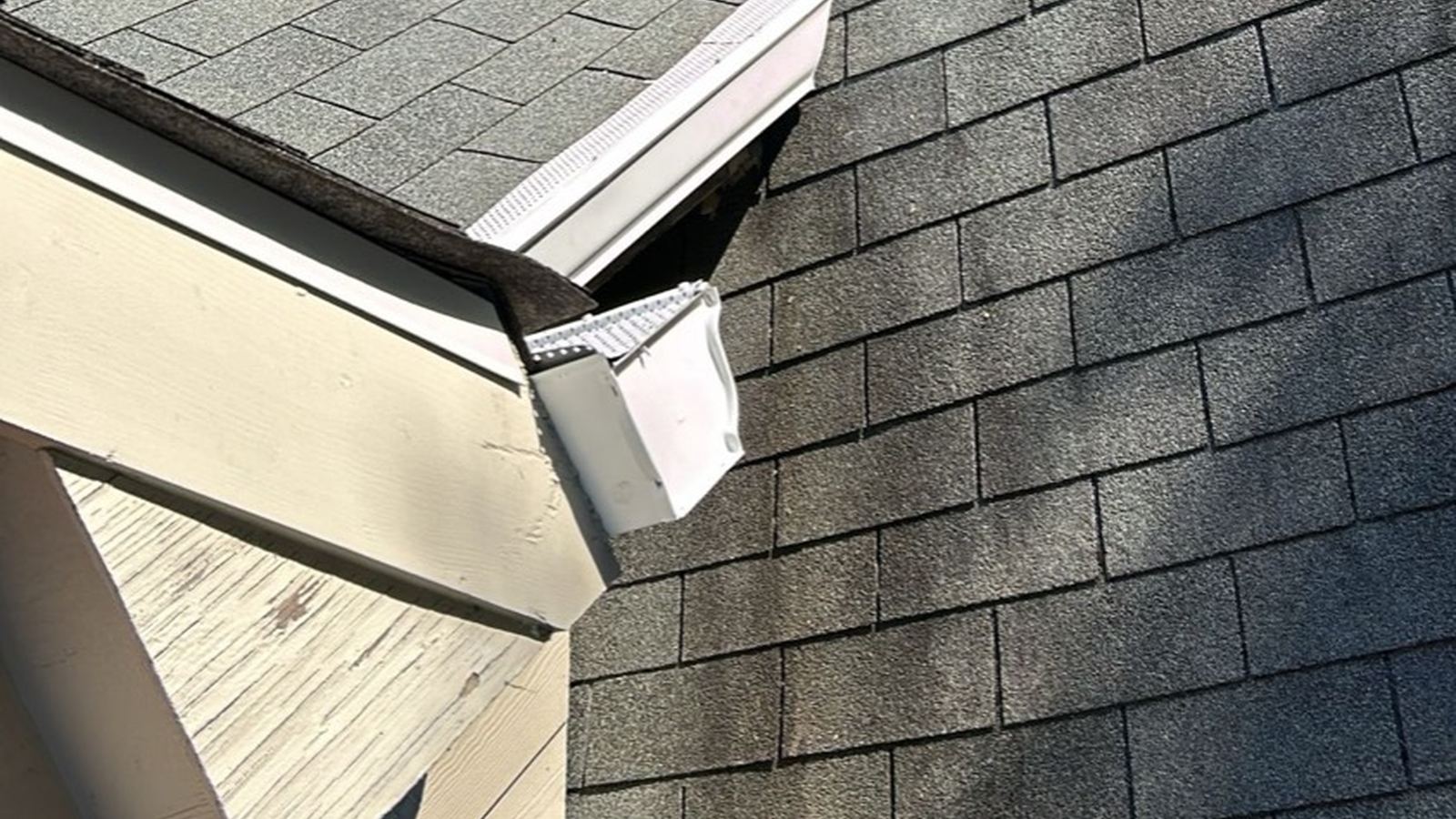
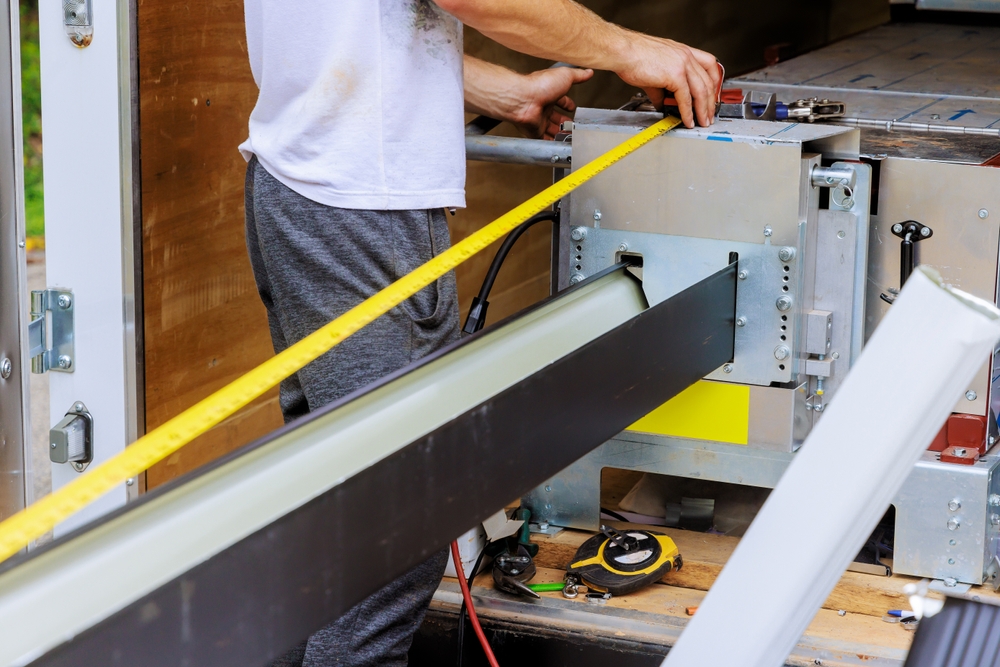
K-style gutters are the modern standard. Named for their cross-sectional profile (which resembles the letter K), they feature a flat back, a decorative ogee-shaped front, and a flat bottom. They’re hung on the outside of the fascia board and come in standard sizes, typically 5 or 6 inches. K-style seamless gutters are manufactured in long runs on-site using a portable roll-forming machine, making them cost-effective, widely available, and easy to repair or replace . The vast majority of homes built after 1960 have K-style gutters.
3. Capacity Comparison: Box Gutters Hold More, When They Work
Here’s something that surprises many homeowners: a properly functioning box gutter can actually carry more water than a comparable K-style gutter. Because they’re built into the roof, box gutters can be made quite wide and deep, handling heavy rainfall efficiently. This is part of why they were used on large historic homes, they were genuinely well-engineered for their purpose.
The keyword is “properly functioning.” A box gutter that’s cracked, separated, or has a compromised liner is no longer carrying water, it’s directing it into your roof structure.
4. Why Box Gutters Fail
The Achilles’ heel of box gutters is their liner. Original lead linings last a long time, sometimes over a century, but they eventually crack at the seams and joints. Tar or felt linings have a shorter lifespan and are prone to deterioration, especially where water pools. When the liner fails, water seeps into the wood framing of the gutter trough itself, causing rot that spreads to the fascia, rafters, and roof decking. By the time a homeowner notices a water stain inside the house, the structural damage is often significant.
Debris accumulation is also a major issue. Because box gutters are flush with the roofline, leaves and pine needles collect and hold moisture directly against the wood.
5. Repair vs. Replacement for Box Gutters
Box gutters can be repaired, and for historic homes where maintaining the original architectural character matters, repair is often the right call. Re-lining with EPDM rubber, copper, or a high-grade elastomeric coating can add decades of life to an existing box gutter system if the underlying wood is still sound.
However, if the wood framing has rotted significantly or the troughs have warped, repair becomes a major carpentry and roofing project before you even get to the gutter work itself. At that point, many homeowners opt to convert to K-style.
6. When K-Style Is the Right Upgrade
If your box gutters have failed structurally, if historic preservation isn’t a priority, or if the repair cost rivals replacement, converting to K-style gutters is a smart, practical choice. The conversion involves closing up the trough, repairing the roof edge, and hanging standard gutter brackets on the newly exposed fascia. Modern K-style gutters installed through professional gutter installation can handle significant rainfall and come with a much simpler maintenance and repair profile going forward.
The tradeoff is aesthetic, K-style gutters are visible and change the roofline profile. On some historic homes, this is a dealbreaker. On others, it’s a completely acceptable modernization.
7. The Cost Difference: Why Box Gutter Repair Is More Labor-Intensive
Box gutter repair is almost always more expensive per linear foot than standard gutter replacement, not because the materials are more exotic (though copper lining isn’t cheap), but because the labor is intensive. Roofers, carpenters, and gutter specialists may all need to be involved. Accessing the trough, removing old liner, treating any rot, and properly applying new liner requires skill and time.
If you’re in Cincinnati or the surrounding area and have an older home with box gutters, you’re in good company, the region has a significant stock of pre-war housing with built-in gutter systems. Top Rated Gutters has extensive experience with both box gutter repair and K-style conversion in the Cincinnati market. Get a quote or inspection at topratedgutters.com/gutter-repair/
Ready to Get Started: Box vs K-Style Gutters?
Not sure whether your box gutters can be saved or need to be replaced? Our Cincinnati team has seen it all when it comes to older homes and built-in gutter systems. We’ll give you an honest assessment and a clear recommendation.
👉 Learn more at topratedgutters.com
—
Frequently Asked Questions: Box vs K-Style Gutters
Q: Can I add gutter guards to box gutters?
A: It’s more complicated than with K-style gutters, but some micro-mesh guard solutions can be adapted for box gutter profiles. This is best evaluated on a case-by-case basis by a professional who’s familiar with built-in systems.
Q: How long does a properly re-lined box gutter last?
A: A quality EPDM or copper re-lining job on sound wood can last 20 to 40 years or more, depending on maintenance and climate. Annual cleaning is essential to maximize that lifespan.
Q: Are K-style gutters better than box gutters?
A: “Better” depends on your priorities. K-style gutters are simpler, cheaper to install, and easier to maintain. Box gutters, when functioning properly, handle more water and maintain the original look of historic homes. Neither is universally superior.
Q: Will my homeowner’s insurance cover box gutter failure?
A: Most policies don’t cover gradual deterioration, but if a roof event, storm, falling branch, caused or accelerated the failure, you may have a claim. Document the damage with photos and check with your insurer.

Written by
Scott Specker
Owner · Northeast Georgia
Owner of Top Rated Gutters of Northeast Georgia, serving Cumming, Alpharetta and surrounding communities.