For residential homeowners, a clogged gutter is an annoyance. For a commercial property owner or manager, it’s a liability, a deferred maintenance cost, and potentially a building code issue all at once. Commercial gutters move massive volumes of water across large roof surfaces, and when they fail, the consequences scale up accordingly. Here are five signs your commercial property needs professional gutter attention, plus a critical note about why commercial systems aren’t a DIY job.
THE 5 SIGNS YOUR COMMERCIAL GUTTERS NEED PROFESSIONAL SERVICE
1. Water Pooling Near the Building Foundation After Rain
Standing water near the base of your building after a rain event is one of the clearest signs that your drainage system isn’t doing its job. Functional gutters and downspouts direct water away from the foundation, ideally at least 5 to 10 feet from the building perimeter. When gutters are clogged or downspouts are discharging too close to the structure, water saturates the soil at the foundation, increases hydrostatic pressure, and accelerates foundation cracking, basement seepage, and structural settling.
On a commercial building, foundation issues are extraordinarily expensive to remediate, far more so than the cost of routine gutter maintenance. If you’re seeing pooling after moderate rainfall, don’t wait.
2. Visible Sagging, Separation, or Rust on Gutters
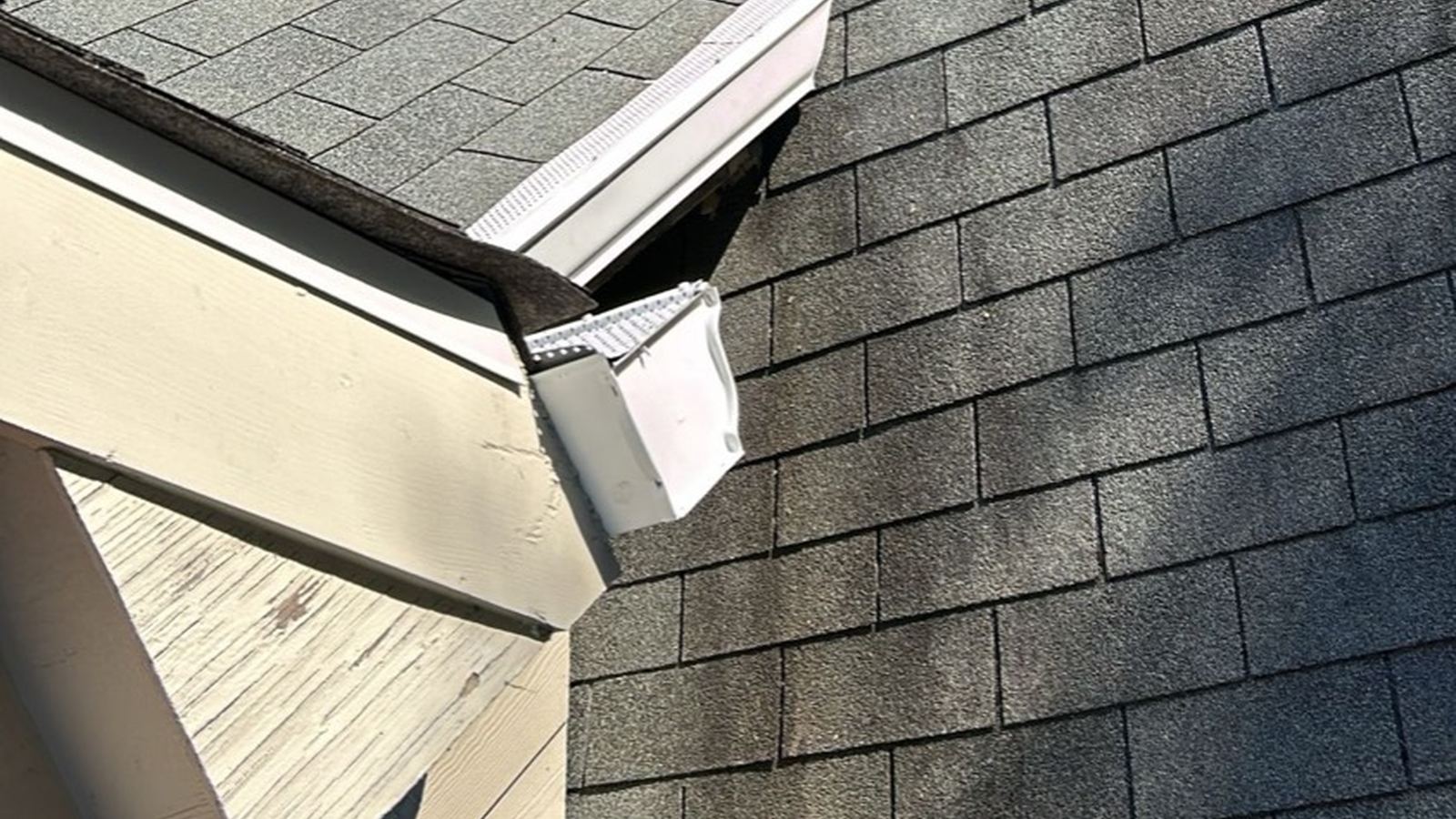
Commercial gutters work harder than residential ones. Large flat or low-slope roofs collect enormous amounts of water during a storm and funnel it through a relatively small number of downspouts. That volume creates weight, and if gutters are clogged with debris or standing water, that weight causes sagging, stress on hanger systems, and eventual separation from the building fascia or parapet.
Rust and visible corrosion are signs that the protective finish on the gutter has failed, often because water has been standing in the trough for extended periods. Left unaddressed, a corroded commercial gutter won’t just leak, it will fail structurally during a heavy rain event, sometimes in dramatic and dangerous ways. This is not a job for a facilities staff member with a ladder.
3. Downspouts Discharging Onto Parking Lots or Pedestrian Areas
This one has direct liability implications. If a downspout is discharging water onto a walkway, building entrance, or parking lot in cold weather, that water freezes, creating a slip-and-fall hazard that exposes your business to significant legal risk. Even in warmer climates, concentrated water discharge onto hardscaped surfaces accelerates wear and can create unexpected drainage problems across the entire lot.
Proper commercial gutter systems direct water into stormwater drains, retention areas, or away from all pedestrian traffic. If your downspouts are emptying onto the wrong surfaces, you need a professional to evaluate and redirect the drainage.
4. Interior Water Stains Near the Roofline or Loading Docks
Water stains on interior ceilings near the roofline are never just cosmetic. They indicate that water has already breached the building envelope and is moving through your roof structure or walls. Loading dock areas are particularly vulnerable because of their open design and frequent exposure to heavy rain during operations.
The source of the infiltration may be the gutters themselves, overflowing due to blockage, pulling away at the seam, or simply undersized for the roof drainage area. A professional inspection will trace the water path and determine whether gutter service alone addresses the issue or whether roofing repairs are also needed.
5. Landscaping or Hardscape Erosion From Unchecked Overflow
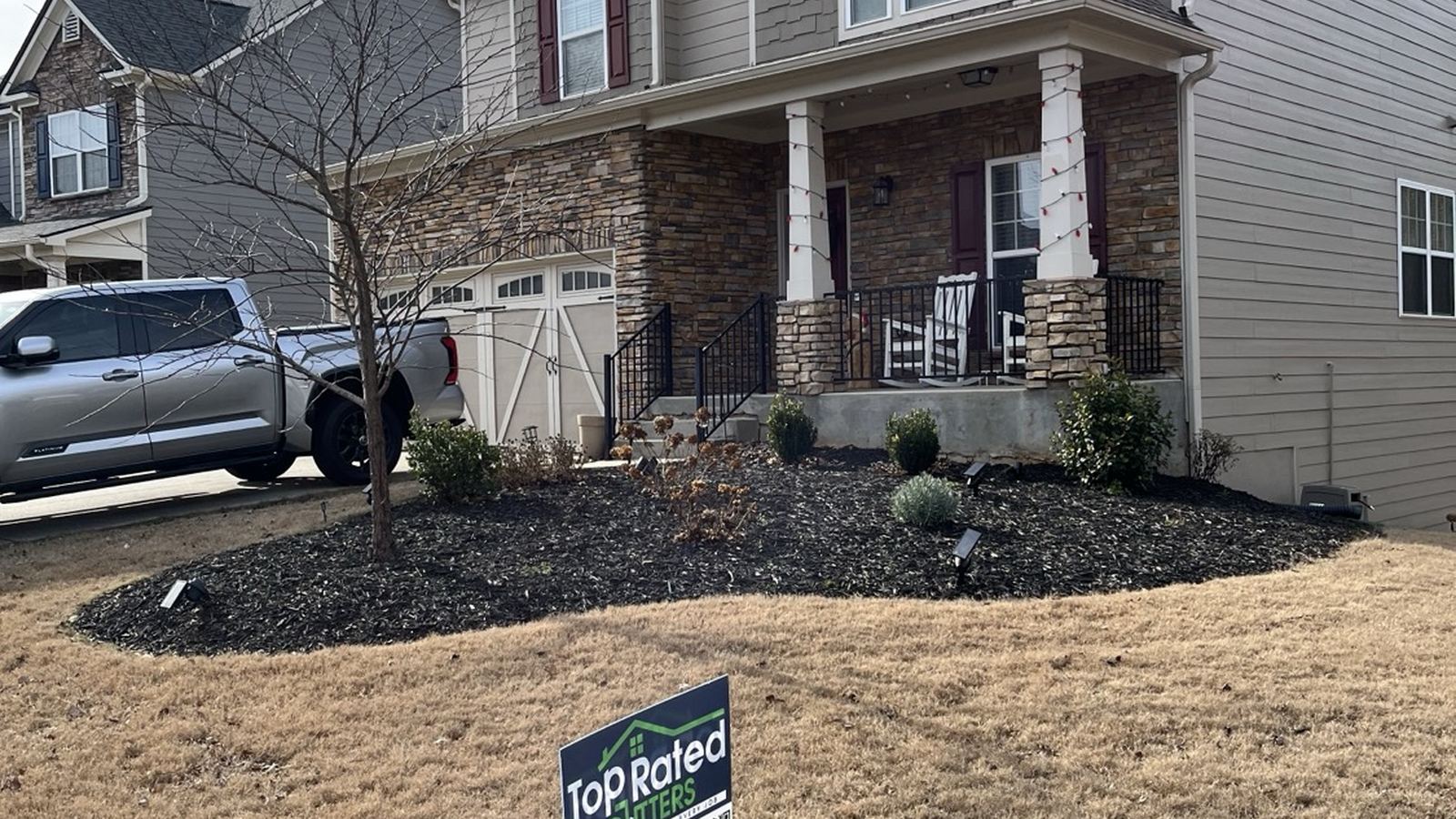
Consistent gutter overflow doesn’t just send water in the wrong direction, it concentrates that water at specific points and erodes everything beneath it. For commercial properties, this means degraded mulch beds, washed-out gravel, cracked concrete from freeze-thaw erosion cycles, and damaged decorative plantings that are expensive to replace.
Beyond aesthetics, hardscape erosion near building entrances or along access paths can create uneven surfaces that are themselves a safety hazard. If you’re seeing channels worn into the soil or gravel near your building’s perimeter, trace them back to the gutter overflow point above.
BONUS: WHY COMMERCIAL PROPERTIES NEED HIGHER-CAPACITY GUTTERS
Most residential gutters are 5-inch K-style. Commercial properties, especially those with large flat roofs, multiple stories, or expansive drainage areas, typically require 6-inch gutters and 4-inch round downspouts at minimum. Some applications call for custom box gutter configurations or primary and secondary drainage systems to meet building code.
An undersized commercial gutter system will overflow during any significant rainfall event, regardless of how clean and well-maintained it is. If your building was retrofit with residential-grade gutters at some point, that’s worth investigating with a professional who understands commercial drainage requirements.
Commercial property owners and managers in NE Georgia, including the Cumming area, can reach out to Top Rated Gutters for a commercial property assessment. We serve businesses across the region and understand the drainage challenges specific to Georgia’s high-rainfall environment. topratedgutters.com/gutter-installation/
Ready to Get Started: Commercial Gutters?
Your commercial property is an investment, protect it with professional commercial gutter services designed for commercial drainage demands. Top Rated Gutters serves commercial clients across NE Georgia, including the Cumming area, and offers professional assessments and installation.
👉 Get started at topratedgutters.com/gutter-installation/
—
Frequently Asked Questions: Commercial Gutters
Q: How often should commercial gutters be cleaned?
A: Most commercial properties benefit from professional cleaning at least twice a year, in spring and fall. Properties with significant tree coverage, flat roofs, or high debris loads may need quarterly service. A professional can assess your building and recommend the right schedule.
Q: Is commercial gutter work covered under a facilities maintenance contract?
A: It can be, and it should be. Gutter maintenance is a predictable, recurring cost that fits well into a comprehensive maintenance agreement. Ask your gutter service provider whether they offer scheduled service contracts, it’s often more economical than reactive service calls.
Q: Can commercial gutters be repaired, or do they usually need full replacement?
A: Both are common. Seam leaks, separated sections, and individual downspout damage can often be repaired. Systemic sagging, widespread corrosion, or undersized systems typically call for full replacement. A professional assessment will tell you which situation you’re in before you commit to a cost.
Q: What material is best for commercial gutters?
A: Aluminum is the most common choice, it’s durable, rust-resistant, and cost-effective. Copper is used on high-end or historic commercial properties. Steel is sometimes used for very large or industrial applications. A professional can help you choose based on your building type, budget, and local climate.

Written by
Colin Nellis
Owner · Cincinnati, OH
Owner of Top Rated Gutters of Cincinnati, with a career built in home improvement on honest, high-quality service.