Winter weather brings a specific set of challenges for your home’s exterior. One of the most destructive issues you can face during the colder months is the formation of ice dams in gutters. When snow and freezing temperatures mix, your gutter system is often the first line of defense, and the first component to fail if things go wrong.
Many homeowners do not realize they have a problem until water starts leaking through their ceiling or they see their gutters pulling away from the house. By that point, the damage is already done, leading to expensive repairs for both your roof and your gutter system.
Understanding how ice dams form, recognizing the early warning signs, and knowing how to prevent them can save you a significant amount of money and stress. This guide breaks down exactly what happens when gutters freeze, how ice damages your home, and the practical steps you can take to protect your property before the worst of the winter weather hits.
What Are Ice Dams and Why They Form in Gutters
Ice dams are thick ridges of solid ice that form along the edge of a roof, usually directly inside or just above the gutters. This ice buildup prevents melting snow from draining properly. As the snow continues to melt, the water backs up behind the ice dam, pooling on your roof and eventually seeping under the shingles.
The process of ice dam formation is directly tied to temperature fluctuations on your roof. When the upper section of your roof is warm enough to melt the snow, water runs down the slope. However, the eaves and gutters extend past the exterior walls of your heated home. This means they remain at freezing temperatures.
When that melted snow hits the freezing cold eaves and gutters, it refreezes. Over a few days or weeks of this continuous melt-and-refreeze cycle, a solid block of ice forms. This winter gutter ice buildup quickly overtakes the gutter channel. Roof ice dams cause severe gutter damage because gutters are designed to handle flowing water, not thousands of pounds of solid, expanding ice.
What Causes Ice Dams in Gutters
Ice dams are not just a stroke of bad luck. They are usually the result of a combination of weather conditions and existing issues with your home’s roof or gutter system. If you are wondering what causes ice dams, the answer usually comes down to heat loss, poor drainage, or a lack of maintenance.
Poor Roof Ventilation and Heat Loss
The primary driver behind ice dams is heat escaping from your living space into your attic. If your attic lacks proper insulation or ventilation, the warm air rises and heats the underside of your roof deck. This causes the snow on the upper part of the roof to melt, even when the outside temperature is well below freezing. That water flows down to the unheated eaves and gutters, where it immediately refreezes.
Clogged Gutters Before Winter
Clogged gutters are a massive catalyst for ice dams. If your gutters are full of autumn leaves, pine needles, and debris, water cannot flow to the downspouts. When winter hits, that trapped, stagnant water freezes solid. Clogged gutters and ice dams go hand in hand because the debris acts like a sponge, holding moisture in the gutter channel where it quickly turns into a heavy ice block.
Improper Gutter Drainage
Even if your gutters are clean, improper gutter drainage creates major winter problems. If your gutters are sagging, improperly pitched, or have damaged downspouts, water will pool in the system instead of flowing away from the house. Any standing water left in a poorly pitched gutter will freeze as soon as temperatures drop, creating the foundation for a massive ice dam.
Heavy Snow Followed by Freezing Temperatures
Sometimes, the weather simply works against you. Heavy snow followed by deeply freezing temperatures creates the perfect environment for snow and ice gutter damage. The thick layer of snow acts as insulation on top of the roof, trapping the heat underneath and accelerating the melting process, while the outside air keeps the gutters frozen solid.
Lack of Gutter Maintenance Before Winter
Failing to prepare your system for the colder months is a guaranteed way to invite trouble. A lack of basic maintenance, such as checking for leaks, securing loose brackets, and clearing downspouts, makes your system highly vulnerable. Taking the time to prevent ice dams in gutters through routine autumn maintenance is the most effective way to avoid emergency repairs in January.
How Ice Dams Damage Gutters and Your Home
Gutters are built to catch rain and channel it away from your foundation. They are not engineered to hold heavy blocks of ice. Ice dam gutter damage can destroy your gutter system and compromise the structural integrity of your roof. Here is exactly how winter gutter damage happens.
Gutters Pulling Away from the Roofline
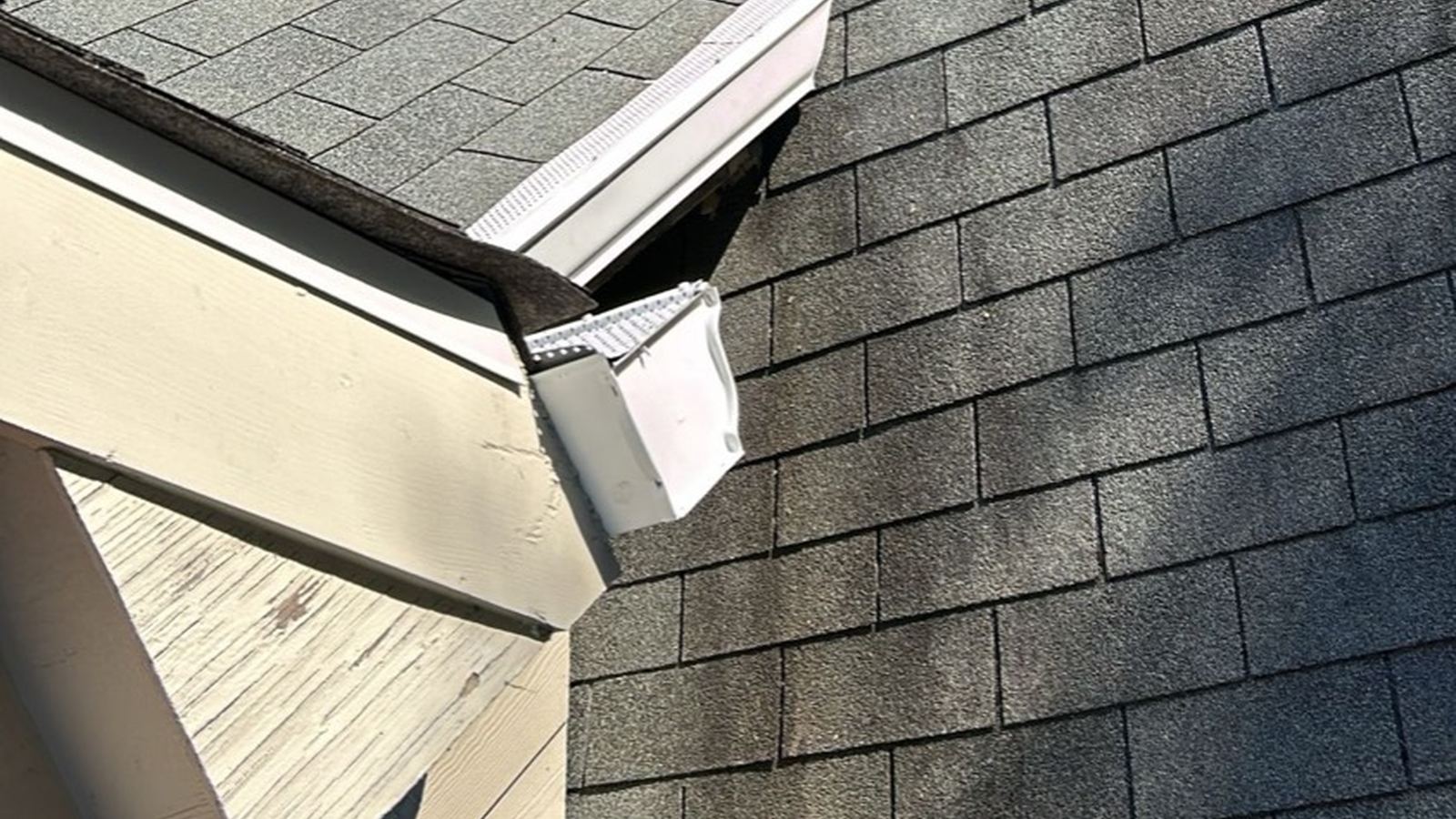
Water is heavy, but solid ice is heavier. A standard gutter filled with solid ice can weigh hundreds of pounds. This excessive weight puts immense strain on the hangers and screws securing the system to your home. Over time, the weight causes the hardware to fail, resulting in gutters pulling away from the house in winter. Once a gutter detaches, it loses its pitch and becomes completely useless.
Seam Separation and Leaks
When water freezes, it expands. If water gets trapped in the seams or corners of your gutters and freezes, the expanding ice forces the seams apart. This breaks the waterproof sealant. When the ice finally melts, you will be left with persistent leaks every time it rains.
Downspout Blockages from Ice
Ice does not just sit in the horizontal gutter channels; it also travels into the downspouts. When a downspout freezes solid, the entire drainage system is effectively plugged. As water continues to back up, it overflows the gutters, creating dangerous icicles and slippery patches of ice on your walkways and driveway.
Water Backing Up Under Shingles
The most severe ice dam roof damage occurs when the ice blockage forces pooling water backward. Because the water cannot flow off the edge of the roof, it backs up under the roof shingles. It then rots the roof decking, soaks the insulation, and eventually leaks through your ceiling, ruining drywall and paint.
Fascia and Soffit Water Damage
When gutters are full of ice, the overflowing water often runs down the backside of the gutter system. This constantly exposes your wooden fascia boards and soffits to moisture. Over a single winter, this continuous exposure can cause severe wood rot, meaning you will need to replace the rotting wood before you can even install new gutters.
Signs You Have Ice Dams in Your Gutters
Identifying the early signs of ice dams can help you take action before water starts pouring into your living room. You do not need to climb a ladder to spot the warning signs; you can usually see them from the ground.
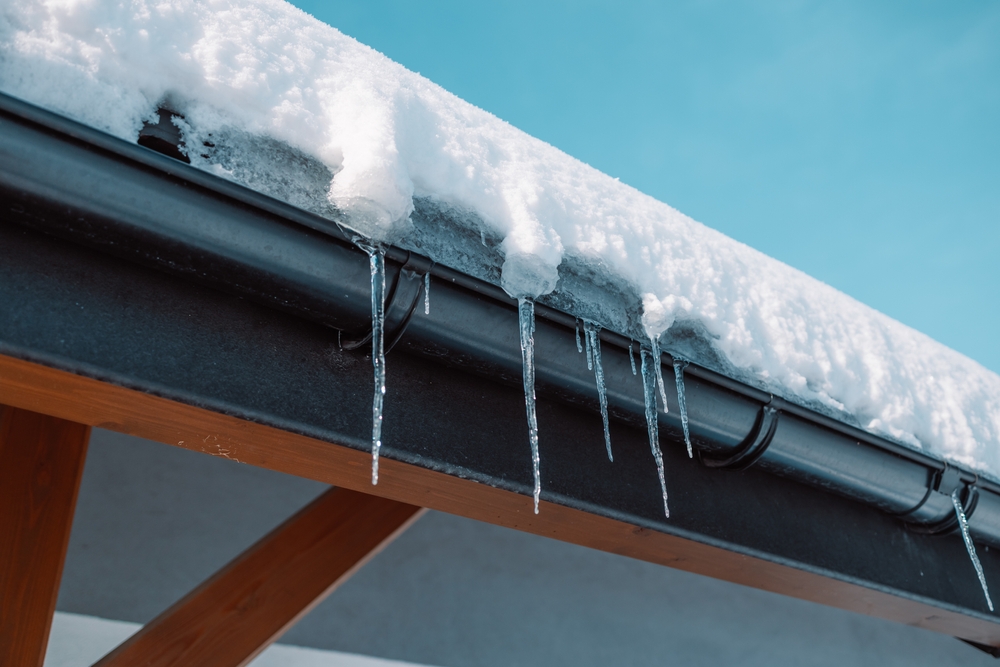
Look for large, continuous icicles hanging from the lip of your gutters. While a few small icicles are normal, a thick wall of icicles usually indicates a solid block of ice buildup in the gutters. Another clear sign is water dripping from the soffits or running down your exterior siding, which means the gutters are overflowing. You should also look for sagging gutter sections. If the gutters look weighed down or uneven, you likely have frozen gutters filled with heavy ice. Inside your home, look for water stains on the ceiling or walls near the exterior edge of the house, which indicates water is already backing up under the shingles.
How to Prevent Ice Dams in Gutters
The best way to handle ice dams is to stop them from forming in the first place. You can prevent ice dams in gutters by taking a proactive approach to home maintenance before the freezing weather arrives.
Clean Gutters Before Winter
The most critical step you can take is to clean your gutters before winter. Removing leaves, twigs, and roof grit ensures that water can flow freely to the downspouts. If water can drain quickly, it will not have the chance to sit in the gutter and freeze.
Install Gutter Guards to Reduce Ice Buildup
Many homeowners ask: do gutter guards prevent ice dams? While no product can stop ice entirely in sub-zero climates, high-quality gutter guards prevent the debris blockages that accelerate ice dam formation. Keeping debris out of the system ensures your gutters maintain proper flow, drastically reducing the severity of gutter guards ice dams.
Improve Attic Insulation and Ventilation
To truly prevent roof ice dams, you must address the heat loss from your home. Upgrading your attic insulation keeps the heat inside your living space, while proper soffit and ridge vents keep the attic air cold. A cold roof prevents the rapid snowmelt that creates ice dams at the eaves.
Ensure Proper Downspout Drainage
Winter gutter drainage relies entirely on clear downspouts. Make sure your downspouts are securely attached and direct water at least three to five feet away from your home’s foundation. If your downspouts empty directly onto a frozen driveway or sidewalk, the water will back up into the pipe and freeze.
Schedule Winter Gutter Inspection
Having a professional assess your system in the fall can save you thousands in winter gutter maintenance and repairs. A contractor can check the pitch of your gutters, reseal failing corners, and reinforce weak hangers before the weight of winter snow tests the system.
How to Safely Remove Ice Dams From Gutters
If you already have ice dams, you need to be extremely careful. Knowing how to remove ice dams safely is crucial to protecting your roof, your gutters, and yourself.
Never use an axe, hammer, or shovel to break up the ice. Hitting the ice will almost certainly crush the aluminum gutter, break the hangers, or chop right through your roof shingles. Gutter ice removal should never involve blunt force.
The safest way to remove ice from gutters is to melt a channel through the ice dam so the trapped water can drain. You can fill a pantyhose leg with calcium chloride ice melt (never use rock salt, as it corrodes aluminum and damages roofs) and lay it vertically across the ice dam. This creates a small channel for the water to escape. If the ice dam is severe and causing active interior leaks, you should hire a professional who uses specialized low-pressure steam equipment to safely melt the ice without damaging the roof.
When Ice Dam Damage Requires Gutter Repair
Once the snow melts and spring arrives, you need to assess the toll winter took on your system. Often, the damage is severe enough to require professional winter gutter repair.
You need to call a contractor to repair ice dam gutter damage if you notice any sagging or low spots where the gutters are pulling away from the fascia. If the hangers are bent or the screws are stripped out of the wood, the system needs to be re-secured and re-pitched. Additionally, if you notice water dripping from the corners or seams during the first spring rain, the expanding ice likely broke the seals. Damaged gutters in winter rarely fix themselves; ignoring these issues will only lead to foundational water damage during heavy spring rainstorms.
Professional Help for Ice Dam Gutter Problems
Ice dams are a serious threat to the structural integrity of your home. They destroy gutter systems, rot fascia boards, and cause extensive interior water damage. While proper insulation and keeping your gutters clean are the best ways to prevent these issues, sometimes winter weather simply overpowers an aging or improperly installed gutter system.
At Top Rated Gutters, we understand how destructive winter weather can be. Whether you need a comprehensive fall cleaning to prepare for the snow, the installation of seamless gutters and heavy-duty hangers to withstand the winter weight, or premium gutter guards to keep debris out, we have the practical solutions you need. If winter has already taken its toll, our team provides expert gutter repair and replacement to get your home’s drainage system back in working order. Contact Top Rated Gutters today to protect your home from ice dams and winter weather damage.
< Previous Next >

Written by
Dan McMillan
Owner · Northwest Georgia
Owner of Top Rated Gutters of Northwest Georgia, serving Marietta, Woodstock, Kennesaw and Cobb County.