Severe weather takes a major toll on your home’s exterior, and your gutter system is often the first line of defense. When high winds, heavy rain, hail, and flying debris hit, gutters take the brunt of the impact. Ignoring storm damage to gutters can lead to serious water management issues, putting your roof, siding, and foundation at risk.
Homeowners often miss the early signs of gutter storm damage until water starts pouring over the sides or pooling around the foundation. Understanding exactly how storms affect your seamless gutters or traditional systems makes it easier to spot the warning signs early.
Here is a breakdown of how severe weather impacts your water drainage system, the most common types of storm damaged gutters, and the steps you need to take to protect your home.
How Storms Can Damage Your Gutter System
A severe storm brings a combination of destructive elements. High winds create upward and outward pressure on the aluminum or steel. Flying debris acts like projectiles, striking the metal and causing structural weakness. Heavy rain forces massive volumes of water through the channels, testing the strength of the mounting hardware.
When you combine wind, debris, rain, and blunt impact, the structural integrity of the gutter system is heavily compromised. Fasteners loosen, metal bends, and seams split. Gutters damaged by wind can even pull adjacent fascia boards loose, leading to expensive wood rot and roof edge damage.
Common Types of Storm Damage to Gutters
Storms hit from multiple angles, causing different types of structural failure. Here are the most common ways severe weather wrecks a gutter system.
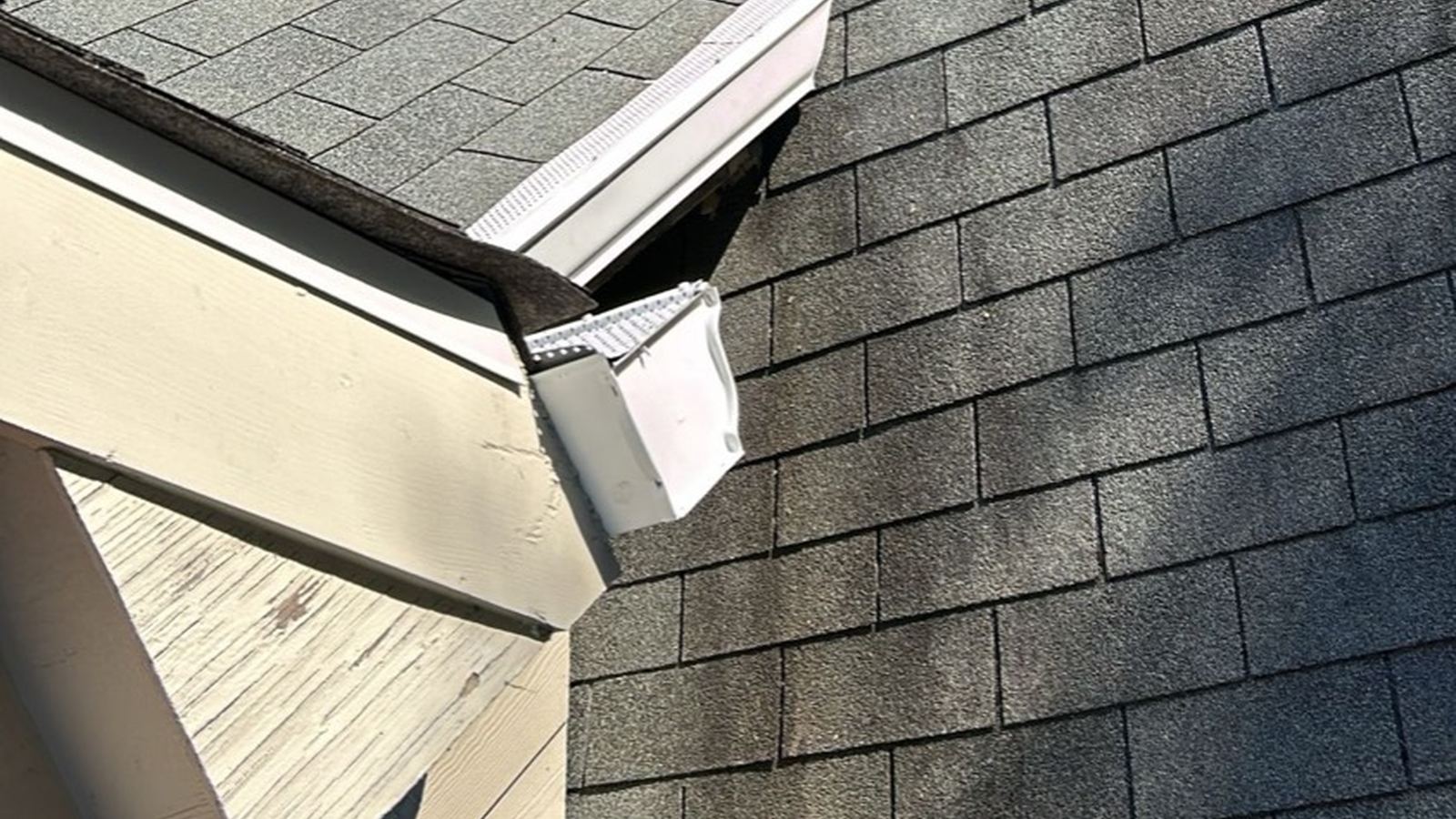
Gutters Pulled Away by High Winds
High velocity wind catches the front lip of the gutter, essentially acting like a sail. This upward and outward force stresses the hidden hangers or spikes. Over time, or during a sudden microburst, this pressure causes wind damaged gutters to pull completely away from the fascia board. Gutters pulling away after a storm leave a massive gap where rainwater runs directly behind the system and down your siding.
Falling Branches Denting or Crushing Gutters
Trees are a major hazard during severe weather. Heavy winds snap branches, sending them crashing down onto your roof line. Tree damage to gutters during a storm often results in crushed aluminum, severe dents, or sections ripped entirely off the house. Even small, heavy branches can cause dented gutters after a storm, restricting water flow and causing overflow later.
Downspouts Torn Loose During Storms
Downspouts are secured to your exterior walls with metal straps. High winds easily catch the long vertical surface area of the downspout. If the mounting straps are old or improperly secured, you will end up with downspout storm damage. A detached downspout after a storm dumps thousands of gallons of concentrated rainwater directly at the base of your foundation.
Heavy Rain Overwhelming Storm Gutters
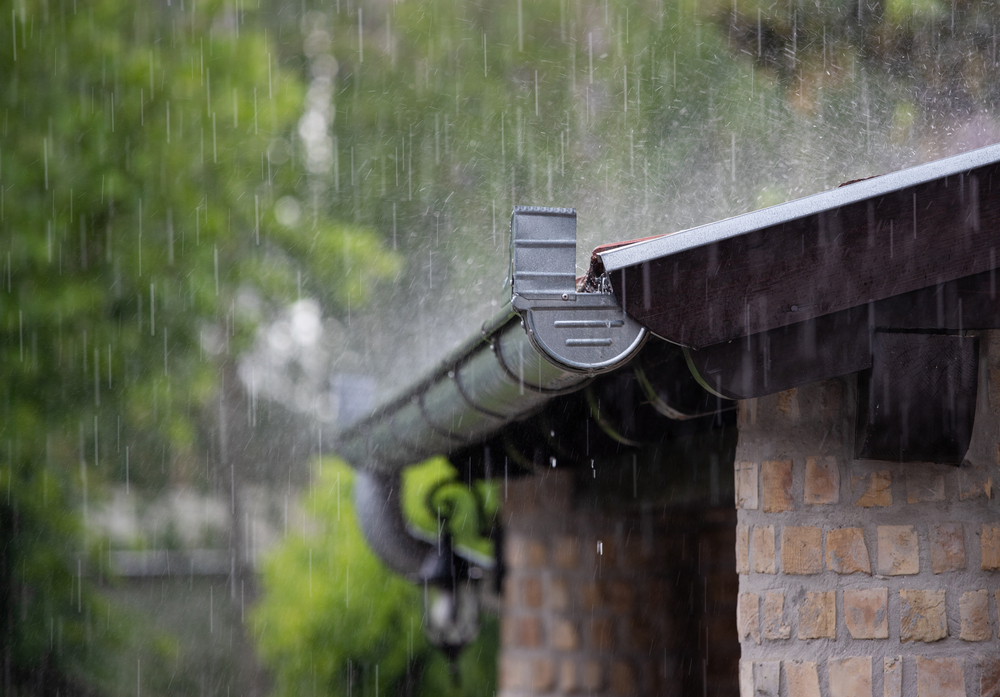
Sometimes the sheer volume of water is the problem. Heavy torrential downpours drop more water than standard five-inch gutters can handle. Storm rain gutter overflow pushes water over the front lip, but worse, it pushes water backwards toward the roof fascia. The massive weight of overflowing water also strains the mounting brackets, causing the entire run to sag.
Hail Damage to Gutters
Hail storms act like a hammer against your home’s exterior. Hail damage to gutters ranges from minor cosmetic dimples to massive structural dents that impede water flow. Hail dented gutters often suffer from compromised protective coatings, which leads to early rust in steel systems or weakened structural rigidity in aluminum systems. Hail damage to aluminum gutters is especially common due to the softer nature of the metal.
Signs Your Gutters Were Damaged by a Storm
You do not need to climb a tall ladder to spot the signs of storm damaged gutters. Walk around your property the morning after a severe weather event and look for these common indicators:
- Visible sagging: The horizontal lines of the gutter dip in the middle.
- Gaps at the roofline: You can see daylight between the back of the gutter and the fascia board.
- Debris in the yard: Pieces of aluminum, broken brackets, or sheared screws are lying in the grass.
- Dented metal: Visible dimples or crushed sections along the outward-facing metal.
- Water marks: New water stains on your siding or foundation walls.
A prompt storm gutter damage inspection helps catch these issues before the next rain rolls in.
What to Do After Storm Damage to Gutters
Taking immediate action after a storm prevents secondary water damage to your home. Here is a practical checklist for homeowners.
Inspect Gutters from the Ground
Grab a pair of binoculars and walk the perimeter of your house. Look up at the roofline and check for obvious bends, missing sections, or hanging metal. Never climb onto a wet roof after a storm. Ground-level observation is the safest way to spot initial damage.
Check Downspouts and Drainage
Examine the vertical pipes running down the sides of your house. Wiggle them gently to see if the straps are loose. Make sure the elbow joints are still connected and that the bottom extension is directing water at least three feet away from your foundation.
Look for Leaks After Rain
The true test of your system comes during the next light rain. Walk outside with an umbrella and watch how the water flows. Look for drips coming from the seams, water running behind the back of the gutter, or water overflowing a specific section.
Check for Sagging Sections
Pay close attention to the pitch of the gutter. It should slope slightly toward the downspout. If you notice a heavy dip in the middle of a run, the storm likely snapped a hidden hanger or pulled the mounting screws out of the wood.
Schedule Professional Inspection
If you spot any of the warning signs above, call a professional gutter contractor. Top Rated Gutters can accurately assess the structural integrity of the system and tell you if a simple repair or a full replacement is necessary.
Why Storm-Damaged Gutters Should Be Fixed Quickly
Delaying repairs on storm damaged gutters is a massive risk. The primary job of your gutter system is to move water away from your home’s foundation. When that system fails, water dumps directly at the base of your house.
This leads to soil erosion, flooded basements, and severe foundation cracking. Fixing storm gutter repair issues quickly costs significantly less than repairing a cracked concrete foundation or replacing rotted framing inside your walls.
Storm Damage That Requires Gutter Repair
Not every storm requires a complete gutter replacement. Many issues can be fixed by a professional gutter repair crew.
Loose or Detached Gutters
If the metal itself is undamaged but the system is pulling away from the house, contractors can re-secure it. This involves removing the old, stripped fasteners and installing heavy-duty hidden hangers with larger screws that bite deeply into the solid wood truss tails.
Bent or Warped Gutter Sections
If a falling branch caused localized damage, a contractor can sometimes splice in a new section. However, heavily warped runs usually need to be replaced, as bent metal loses its structural rigidity and will never flow water correctly again.
Broken Downspouts
A broken downspout is a straightforward fix. Contractors will remove the crushed or detached aluminum, install a new drop outlet if necessary, and secure a fresh downspout with reinforced masonry or wood screws.
Gutter Pitch Problems After Storm
The massive weight of storm water and debris easily knocks a gutter out of alignment. Contractors can re-pitch the gutter by adjusting the hangers, ensuring water flows rapidly toward the downspouts instead of pooling in the center.
How to Prevent Storm Damage to Gutters
While you cannot stop severe weather, you can prepare your exterior drainage system to handle it better.
Reinforce Gutter Mounting
Standard spikes and ferrules loosen over time. Upgrade your system with heavy-duty hidden brackets spaced every 16 to 24 inches. This significantly increases the wind resistance and load-bearing capacity of the system.
Trim Overhanging Tree Branches
Keep tree limbs cut back at least ten feet from your roofline. This eliminates the risk of heavy branches snapping and crushing your gutters during high winds.
Install Seamless Gutters
Traditional sectional gutters have weak points at every seam. Seamless gutters are custom-rolled on-site from a single piece of heavy-gauge aluminum. They are inherently stronger, more rigid, and highly resistant to wind and storm damage.
Ensure Proper Drainage
Keeping your gutters clean prevents storm overflow. Consider installing high-quality gutter guards to keep leaves and debris out. When the channels are clear, heavy rain can flow freely through the system without backing up and adding thousands of pounds of stress to the brackets.
Schedule Seasonal Inspections
Have a professional gutter contractor inspect and clean your system twice a year. Catching a loose screw or a failing downspout strap in the fall prevents the entire system from tearing off the house during a spring storm.
Professional Help for Storm Damaged Gutters
Dealing with the aftermath of severe weather is stressful. If you notice signs of wind damaged gutters, hail dents, or detached downspouts, do not wait for the next storm to hit.
Top Rated Gutters provides expert storm damage assessments, professional gutter repair, and full seamless gutter replacement. Our team ensures your water management system is securely fastened, properly pitched, and ready to protect your foundation from the next heavy downpour. Contact us today to schedule an inspection and get your home’s exterior back in peak condition.
< Previous Next >
Written by
Anthony Kulikowski
Owner · South Bend, IN
Owner of Top Rated Gutters of South Bend, with 25+ years serving Indiana homeowners.