Gutters have one main job on your house. They catch rainwater rolling off your roof and direct it safely away from your foundation. When they work, you probably never think about them. When they fail, you can end up with thousands of dollars in water damage.
Gutter drainage problems happen when something interrupts that flow of water. Instead of moving smoothly through the system, the water stops, pools, or spills over the edges. We see these issues every day. Sometimes the fix is as simple as removing a handful of leaves. Other times, the entire system needs an adjustment or an upgrade.
If you have water pouring over the sides of your gutters during a storm, you have a drainage issue. Ignoring it will only lead to bigger headaches down the road. We put together this guide to help you identify what is going wrong with your system and what needs to happen to get the water flowing correctly again.
What Causes Gutter Drainage Problems?
Gutters rely on gravity to move water. The channels are installed with a slight tilt toward the downspouts. If anything gets in the way of that gravity-fed system, you end up with gutters not draining.
Drainage failures almost always lead to overflow. When the water has nowhere to go, it fills the gutter trough and spills over the front or back edges. This defeats the entire purpose of having gutters in the first place. Instead of protecting your home, the overflowing water drops right next to your house.
Poor gutter drainage usually comes down to blockages, alignment issues, or capacity problems. Identifying exactly where and why the water is stopping is the first step in solving the issue. Let’s look at the specific reasons why you might be dealing with gutter water flow problems.
Most Common Gutter Drainage Problems
We inspect hundreds of homes, and the reasons for poor gutter drainage usually fall into a few distinct categories. Here are the most common culprits we find when homeowners call us about water not draining from gutters.
Clogged Gutters Blocking Water Flow
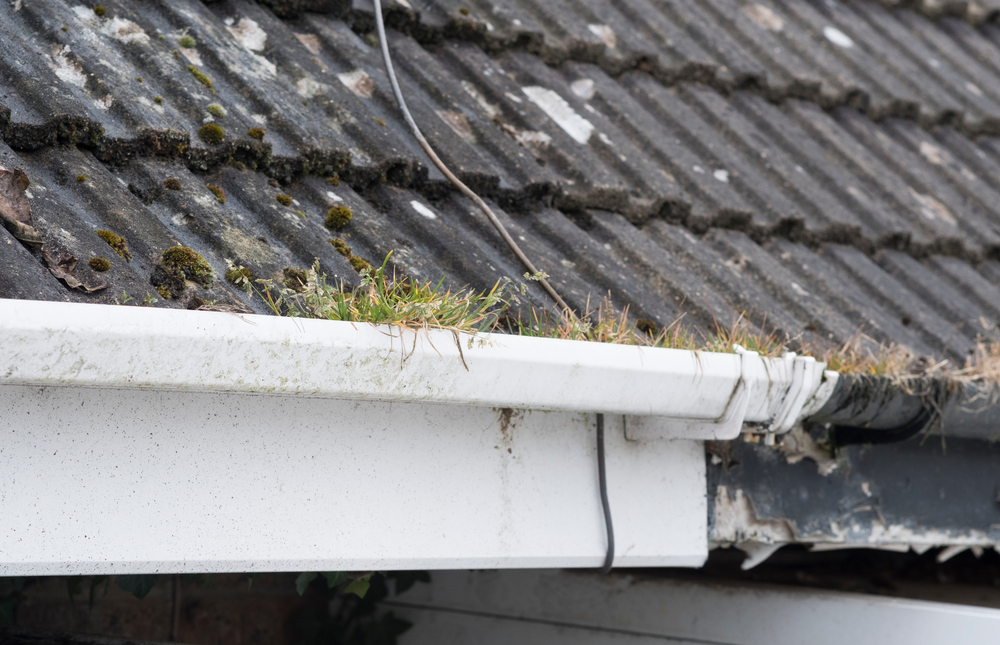
The number one reason for clogged gutters drainage issues is debris. Leaves, pine needles, twigs, and roofing granules wash off your roof and land right in the gutter trough. Over time, this material builds up and creates a dam.
When debris blocking gutters gets thick enough, the water simply cannot push through it. The water backs up behind the clog, fills the gutter, and eventually spills over the edge. Gutters not draining due to clogs are especially common in the fall and spring, or if you live on a heavily wooded lot. Leaving leaves blocking gutters for too long can also cause the system to become heavy and pull away from the roofline.
Blocked or Slow Downspouts
Sometimes the main gutter trough is perfectly clean, but the water still will not drain. In these cases, you are usually dealing with a blocked downspout. The downspout is the vertical pipe that carries water from the roof to the ground. If a clump of wet leaves or a stray tennis ball gets wedged inside, it stops the entire system.
Clogged downspout drainage is easy to spot during a rainstorm. The gutter will fill up entirely, but nothing will come out of the bottom of the pipe. You might also hear water backing up in gutters with a distinct gurgling sound. A downspout not draining is a serious issue because the trapped water adds a massive amount of weight to your gutter system.
Improper Gutter Pitch or Slope
Water cannot flow uphill. If your gutters are perfectly level, or if they tilt away from the downspout, the water will just sit there. This is known as improper gutter pitch. Gutters need to be angled slightly downward toward the downspouts to keep water moving.
Gutter slope problems are common on older homes or on systems installed by someone without enough experience. You will notice this problem if you look in your gutters a few days after a rainstorm and see standing water in gutters. Gutters holding water because of a bad pitch will quickly become breeding grounds for mosquitoes and will rust or corrode much faster than a system that drains properly.
Sagging Gutters Creating Low Spots
Even if your gutters were pitched perfectly on day one, they can shift over time. Heavy snow, ice dams, or the weight of wet debris can bend the metal or pull the hidden hangers loose from the fascia board. This creates sagging gutters drainage issues.
When a section of the gutter dips down, it creates a belly or low spot. Water rushes into this low spot and gets trapped because it cannot flow up and out to reach the downspout. Uneven gutters lead to low spots in gutters, which means you always have gutters holding water in those specific sagging areas.
Downspouts Draining Too Close to Foundation
Sometimes the gutters and downspouts work perfectly to move water off the roof, but the system fails at the ground level. Downspout drainage problems happen when the water dumps out right next to your exterior walls.
If you have short downspouts, the water exits the pipe and immediately soaks into the dirt against your foundation. This poor downspout placement can lead to basement flooding and structural issues. Water pooling near foundation walls is exactly what a gutter system is supposed to prevent.
Gutters Too Small for Water Volume
Sometimes the problem isn’t a clog or a broken part. Sometimes the system just cannot handle the amount of rain hitting your roof. Undersized gutters drainage problems happen when your roof surface area collects more water than the gutter trough can hold.
Gutters too small for roof sizes will overflow rapidly during heavy downpours. You might notice heavy rain drainage problems where the water just shoots right over the edge of the gutter. If you constantly experience gutter capacity issues even when the system is totally clean, your gutters are simply too small for your home.
Signs Your Gutters Are Not Draining Properly
You do not need to climb a ladder during a thunderstorm to know you have poor gutter drainage signs. The evidence is usually highly visible right from the ground.
The most obvious sign is gutters overflowing. If water is cascading over the edges like a waterfall, the system is failing. Another clear indicator is water sitting in gutters long after the rain has stopped.
You should also look for secondary signs gutters not draining properly. Peeling paint on your siding, water stains behind the gutters on the fascia board, and washed-out landscaping directly under the roofline all point to water escaping the system. If you see mud splashed high up on your siding, that means water is hitting the ground hard because it bypassed the downspouts entirely.
Problems Caused by Poor Gutter Drainage
Ignoring gutter drainage issues is a costly mistake. Gutters are your home’s first line of defense against water. When that defense fails, the damage spreads quickly.
The most severe issue is foundation damage gutters. When water constantly pools around the base of your house, it creates hydrostatic pressure against the foundation walls. Over time, this causes the concrete to crack, allowing water into your basement or crawlspace. Fixing a cracked foundation is incredibly expensive.
Water damage poor gutter drainage also attacks the wood on your home. Overflowing water rots the fascia boards and soffits. It can also cause roof damage gutter drainage issues, where water pushes back up under the shingles and rots the roof decking. On the ground level, excessive gutter drainage damage will drown your plants, ruin your flower beds, and create dangerous, slippery walkways.
How to Fix Gutter Drainage Problems
Once you know why the water is stopping, you can take steps to get it moving again. Some of these solutions are routine maintenance, while others require structural changes to the system. Here is how to fix gutter drainage issues safely and effectively.
Clean Debris from Gutters
If the issue is clogs, you need to physically remove the debris. Scoop out the leaves, dirt, and shingle grit by hand or with a small trowel. Flush the system with a garden hose to make sure the water flows smoothly. Regular cleaning is the easiest way to improve gutter drainage and stop overflows before they start.
Clear Downspout Blockages
If the main trough is clean but water will not go down the pipe, you need to clear the downspout. You can often dislodge the clog by spraying a high-pressure nozzle up from the bottom of the pipe. If that does not work, feeding a plumber’s snake down from the top can break apart the blockage. Once the clog clears, run water through it to ensure the path is totally open.
Adjust Gutter Pitch
To fix gutter drainage caused by bad angles, the gutters need to be re-pitched. This involves removing the hangers that attach the gutter to the house, adjusting the slope so it angles correctly toward the downspout, and securing the hangers back into the fascia board. Correct gutter slope requires a keen eye and a level to ensure the water drops a quarter-inch for every ten feet of gutter.
Repair Sagging Sections
If you have a low spot, you need a gutter drainage repair to lift that section back into place. Often, this means replacing bent or broken hangers. In some cases, the fascia board behind the sagging section might be rotted and will need to be replaced before the gutter can be secured tightly again.
Add Downspout Extensions
To stop water from pooling at the base of your home, you need to get it further away. Adding downspout extensions is a simple fix. Attach a length of corrugated plastic pipe or a downspout elbow to the bottom of the existing pipe. Direct the water at least four to six feet away from the foundation walls.
Upgrade Gutter Size
If your system is clean and pitched correctly but still overflows during heavy storms, you need to upgrade. Replacing standard five-inch gutters with larger six-inch gutters will drastically increase the volume of water the system can handle. You may also need to install larger downspouts to allow the water to exit the system much faster.
When to Call a Professional for Drainage Issues
While scooping a few leaves out of a lower-level gutter is something many homeowners can handle, a lot of drainage problems require professional help. Climbing tall ladders is dangerous, and adjusting the pitch of a long run of seamless metal without bending it takes experience.
You should look for a gutter repair company if you notice your gutters are sagging, pulling away from the wood, or holding water after a storm. Re-pitching and replacing hardware are precise jobs. A professional gutter inspection can identify exactly why the system is failing and whether the wood behind the gutters has started to rot. If you are dealing with undersized gutters or need a full gutter drainage repair service, bringing in the experts will ensure the job is done right the first time.
Fix Gutter Drainage Problems with Top Rated Gutters
Dealing with gutters not draining is frustrating, and the resulting water damage is entirely preventable. Whether you are dealing with severe clogs, improper slopes, or a system that is simply too small for your roof, Top Rated Gutters has the expertise to solve the problem.
We understand exactly why gutters fail. Our team can inspect your home, pinpoint the exact cause of your poor gutter drainage, and provide the right solution. From routine cleaning and targeted gutter drainage repair to installing heavy-duty, high-capacity systems, we keep the water flowing where it belongs.
Don’t wait for water to start pouring into your basement. Reach out to Top Rated Gutters today to fix your gutter drainage problems and protect your home for good.
< Previous Next >

Written by
Scott Specker
Owner · Northeast Georgia
Owner of Top Rated Gutters of Northeast Georgia, serving Cumming, Alpharetta and surrounding communities.