A high-performance gutter system is a crucial element for protecting your home, especially in a place with weather as dynamic as South Bend, Indiana. Homeowners often focus on the horizontal troughs that collect rainwater, but a gutter system is only as effective as its exit strategy. The downspouts, the vertical pipes that carry water from the gutter to the ground, are the unsung heroes of water management. Improper placement of these critical components can render even the most expensive gutter system useless, leading to severe water damage.
Placing downspouts is not an arbitrary decision or a matter of convenience. It is a calculated science that considers roof size, pitch, rainfall intensity, and landscape features. For South Bend homeowners, who contend with everything from torrential spring downpours to massive winter snowmelt, an optimized downspout strategy is not just best practice; it is essential for safeguarding their property’s foundation, landscaping, and structural integrity.
For homeowners looking for expert guidance on installing or upgrading gutter and downspout systems in South Bend and surrounding areas such as Mishawaka, Granger, LaPorte, and Michigan City, Top Rated Gutters of South Bend and their partner locations offer customized solutions tailored to local weather challenges.
This comprehensive guide will explore the best strategies for downspout placement on South Bend homes. We will cover the principles of water volume calculation, optimal locations, the non-negotiable role of extensions, and how professional installation makes all the difference. By understanding these strategies, you can ensure your home’s water management system is designed for maximum protection.
The Critical Role of Downspouts in Water Management
To appreciate the importance of placement, you first need to understand the sheer volume of water a downspout is asked to handle. The primary purpose of a gutter system is to collect the massive amount of water that falls on your roof and divert it safely away from your home.
Consider this: for every inch of rain that falls, a 1,500-square-foot roof will collect approximately 900 gallons of water. During a heavy South Bend thunderstorm that drops two inches of rain in an hour, your roof is shedding 1,800 gallons of water. Your downspouts are the narrow funnels responsible for channeling this incredible volume away from the house.
If there are too few downspouts, or if they are in the wrong locations, the system will be overwhelmed. Water will back up in the gutters, overflowing the sides and dumping directly against your foundation. This is the exact scenario a gutter system is designed to prevent, and it can lead to a host of devastating problems:
- Foundation Damage: Water pooling around the foundation creates hydrostatic pressure, which can cause cracks, bowing walls, and basement flooding.
- Landscape Erosion: A concentrated torrent of water from an overflowing gutter can wash away expensive landscaping, mulch, and topsoil.
- Siding and Masonry Damage: Water splashing back against the house can stain siding and deteriorate the mortar in brick or stonework.
- Ice Buildup: In winter, an overwhelmed system can lead to water freezing in and around the downspout opening, causing blockages and contributing to ice dam formation.
Proper downspout placement is the key to preventing these issues and ensuring your gutter system functions as intended. For specialized help and transparent services across Michiana, providers such as Top Rated Gutters of Mishawaka , Top Rated Gutters of Granger , Top Rated Gutters of LaPorte , and Top Rated Gutters of Michigan City can assess your home’s specific situation.
Strategy 1: Calculate for Capacity, Not Just Convenience
The most common mistake in downspout placement is treating it as an afterthought, simply putting them at the ends of a gutter run because it’s easiest. The number and placement of your downspouts must be determined by the amount of water they need to carry.
Understanding Water Load and Gutter Capacity
A standard rule of thumb is that one downspout is needed for every 20 to 40 linear feet of gutter. However, this is a vast oversimplification. A more accurate calculation must also consider the area and pitch of the roof that feeds into that gutter section. A long, narrow roof section will deliver less water than a short, wide one. A steeply pitched roof will shed water much faster than a flatter one, increasing the peak flow rate during a storm.
A professional gutter installer, such as those at Top Rated Gutters of Plymouth , will perform these calculations to determine the precise needs of your home. They will assess each roof plane and calculate the water load to ensure there are enough downspouts to handle the peak flow during a heavy storm. This often means placing a downspout in the middle of a long gutter run, not just at the corners. For homes in areas like Mishawaka and Granger, where new construction and complex rooflines are common, this professional calculation is essential.
The Importance of Gutter Slope (Pitch)
For downspouts to work, water must be directed toward them. This is accomplished by installing the gutter trough with a slight slope, or pitch. The ideal pitch is a drop of about one-quarter inch for every 10 feet of gutter.
- Long Gutter Runs: On a long gutter run (over 40 feet), it’s not feasible to slope the entire length in one direction, as one end would hang noticeably lower than the other. The professional solution is to place a downspout in the center of the run. The installer then pitches the gutters from both ends down toward the central downspout, effectively splitting the water load. This high point/low point system is a hallmark of a properly designed gutter installation, available from reputable companies like Top Rated Gutters of Bremen .
Strategy 2: Place Downspouts to Avoid Obstacles and Hazards
Once you know how many downspouts you need, the next step is to decide on the optimal physical location for each one. This involves considering the landscape and man-made features of your property.
Key Placement Considerations:
- Avoid Walkways and Driveways: Never terminate a downspout directly onto a sidewalk, patio, or driveway. In the summer, this creates a slipping hazard from algae and moss growth. In the winter, the water will freeze into a dangerous sheet of ice. The downspout should be placed so that its extension can run parallel to the walkway or be routed underneath it using a drainage pipe.
- Work with, Not Against, Your Landscape: The goal is to discharge water where it can flow naturally away from the house. Identify the high and low points in your yard. Place downspouts in locations where the natural grade of the property will help carry the water away. Avoid placing them in low-lying areas or natural depressions where water will pool. This is a critical consideration for properties across the region, from the flatlands near LaPorte to the rolling hills in other parts of the county. Providers like Top Rated Gutters of Goshen can help with complex site assessments.
- Protect Flower Beds and Plantings: Discharging thousands of gallons of water directly into a delicate flower bed will destroy it. Position downspouts so their extensions can route water around or beyond these landscaped areas.
- Consider Aesthetics: While function is paramount, a good installer will also consider aesthetics. They will try to place downspouts where they are least conspicuous, such as behind shrubs or on less visible sides of the house, provided it does not compromise the hydraulic performance of the system.
Strategy 3: The Non-Negotiable Rule of Downspout Extensions
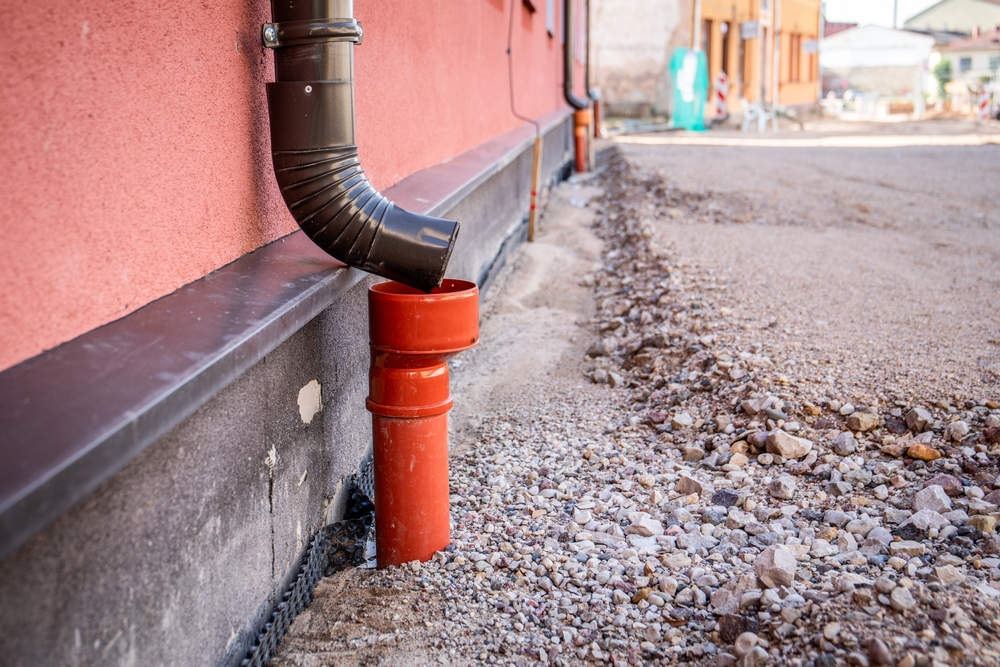
A downspout that simply ends at the foundation is a failure. Its job is only half-done. The final, critical step is to move the collected water far away from your home’s foundation. This is the job of the downspout extension.
Every single downspout on your home should have an extension that carries water a minimum of four to six feet away from the foundation. A distance of ten feet is even better.
Types of Downspout Extensions:
- Above-Ground Extensions: These are the simplest and most common type. They can be a continuation of the metal downspout material or a flexible plastic pipe. While highly effective, they can be an obstacle for lawnmowers and may be considered unsightly by some. Hinged extensions are available that can be flipped up and out of the way during yard work.
- Underground Drainage (Buried Extensions): For the most effective and aesthetically pleasing solution, downspouts can be connected to buried PVC pipes. These pipes are installed in a trench and pitched to carry water far away from the house, releasing it through a pop-up emitter in the lawn or at a curb. This is an excellent solution for managing water discreetly and is a popular upgrade for homeowners in communities like Plymouth and Bremen, both of which can benefit from tailored solutions by Top Rated Gutters of Plymouth or Top Rated Gutters of Bremen .
- Splash Blocks: A concrete or plastic splash block placed under a downspout is better than nothing, but it is not a true extension. It primarily prevents erosion at the point of discharge but does little to move the bulk of the water away from the foundation. They should only be used in combination with proper grading.
The importance of extensions cannot be overstated. This single, often inexpensive component is one of the most effective tools you have for preventing basement leaks and foundation damage.
Strategy 4: Choose the Right Size and Style for Your System
Not all downspouts are created equal. The size of your downspouts should be matched to the size of your gutters and the expected water volume.
- Standard vs. Oversized: The most common residential downspout size is 2×3 inches. For many homes, this is adequate. However, in regions like South Bend with heavy rainfall and for homes with large or steep roof areas, upgrading to oversized 3×4-inch downspouts is a wise investment. A 3×4-inch downspout can handle more than double the water volume of a 2×3-inch one and is far less likely to become clogged with debris or ice. For best practice, consult with a local expert like Top Rated Gutters of Elkhart .
- K-Style vs. Round: Downspouts come in two primary shapes. K-style (rectangular) downspouts are the modern standard and pair with the K-style gutters found on most homes. Round downspouts are typically used with half-round gutters, which are often chosen for historic or custom-built homes to achieve a specific architectural look.
A professional installation will always pair the right size and style of downspout with your gutter system to ensure maximum efficiency. Gutter replacement specialists in cities like Elkhart and Goshen almost universally recommend oversized downspouts as a default for new installations, as described on the Goshen service page .
The Professional Advantage: Why Installation Matters
Properly designing a downspout strategy is a complex task that requires specialized knowledge. While a handyman might be able to attach a downspout, a professional gutter installer designs a complete water management system integrating downspouts, gutters, guards, and foundation considerations.
When you hire a reputable professional, you are paying for expertise in:
- Hydraulic Calculation: They will accurately determine the water load and specify the correct number, size, and location of downspouts.
- Precise Installation: They will ensure gutters are pitched correctly toward the downspouts for optimal flow.
- Secure Attachment: They use the right techniques to securely fasten the downspouts to your home so they don’t rattle in the wind or come loose.
- Systemic Approach: They will advise you on the best extension strategies and can often install underground drainage systems as part of the project.
- Pairing with Seamless Gutters: Professional installers are the only ones who can provide seamless gutters. A seamless system, with its smooth interior and lack of clog points, allows water to flow much more efficiently to the downspouts, maximizing the effectiveness of your placement strategy. This is a key advantage for properties from South Bend to Michigan City .
To learn about all available services or to schedule an assessment, homeowners can refer to the main service listings:
Conclusion: Build Your Exit Strategy
Your gutter system is your home’s first and most important defense against water damage. But the entire system is only as good as its exit strategy. By implementing intelligent downspout placement strategies, you ensure that the thousands of gallons of water collected by your gutters are transported safely away from your home’s vulnerable foundation.
For your South Bend home, this means insisting on a system designed for capacity, not convenience. It means strategically placing downspouts to work with your landscape and avoid hazards. It means demanding that every downspout has an effective extension to carry water far from your walls. And most importantly, it means relying on professional expertise, like that available from South Bend’s top-rated gutter teams, to design and install a cohesive system that will perform flawlessly through every season.
Don’t let poorly placed downspouts undermine your home’s protection. Take the time to assess your current system and, when it’s time for a replacement, invest in a professionally designed strategy that will keep your home safe and dry for decades.
< Previous Next >
Written by
Anthony Kulikowski
Owner · South Bend, IN
Owner of Top Rated Gutters of South Bend, with 25+ years serving Indiana homeowners.