Your home’s gutter system has one vital job: moving rainwater safely away from your roof, siding, and foundation. When gutters work properly, you probably do not even think about them. But when they start to fail, the resulting water damage can cost thousands of dollars in major home repairs.
As the team at Top Rated Gutters, we spend our days inspecting, repairing, and installing seamless gutter systems. We regularly talk to homeowners who ask us, “do I need new gutters?” Often, the warning signs have been visible for months, but the homeowner just didn’t know what to look for.
Waiting too long to address failing gutters can lead to rotted fascia boards, flooded basements, and cracked foundations. This guide will walk you through exactly how to tell if gutters need replacing. We will cover the clear visual cues, the hidden red flags, and the practical differences between a quick repair and a full gutter replacement .
How Do You Know When Gutters Need to Be Replaced?
Figuring out when to replace gutters usually comes down to regular observation. You want to walk around your house on a sunny day to look for physical damage, and then walk around again during a heavy rainstorm to see how the system actually handles the water.
There are several clear signs you need new gutters. Some are obvious, like sections of metal hanging off your roof. Others are subtle, like a small line of peeling paint behind a downspout. Recognizing these gutter replacement signs early allows you to act before water finds its way inside your home.
Here are the top 10 indicators that your home needs a new gutter system.
1. Cracks or Splits in the Gutters
Small cracks might not look like a massive issue from the ground, but they defeat the entire purpose of having a gutter system. Cracked gutters allow water to escape before it ever reaches the downspout.
In cold weather, a small crack can quickly turn into a massive problem. Water gets trapped in the fissure, freezes, and expands. This ice expansion will leave your gutters splitting wide open. Once you have badly damaged gutters with large splits, sealants and caulking will not hold up for long. The metal has lost its structural integrity, and water will consistently leak behind the fascia board or drip down to the ground below.
2. Gutters Are Sagging or Pulling Away From the House
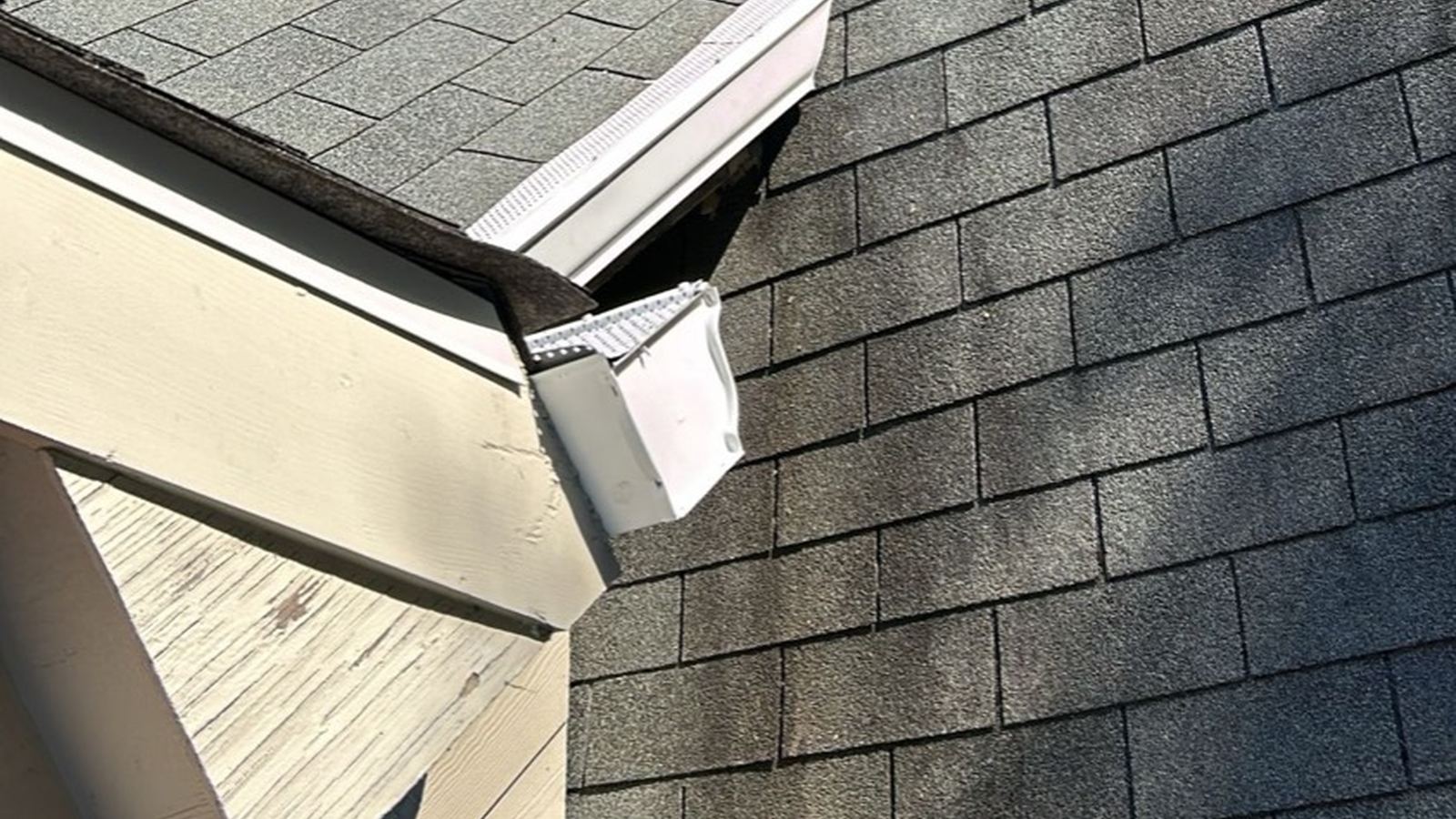
Gutters should sit flush against your home’s fascia boards and maintain a slight, continuous pitch toward the downspouts. If you notice sagging gutters dipping in the middle, or gutters pulling away from the wood, you have a serious problem on your hands.
Loose gutters usually mean the fasteners (the spikes or hangers holding the gutter to the house) have backed out. This happens when gutters are full of heavy debris or standing water. Sometimes, you can replace the hangers. But if the metal is permanently warped from the weight, or if the fascia board behind it has rotted away, simply pounding a nail back in won’t work. The system will continue to sag, water will spill over the edges, and the structure will eventually collapse.
3. Water Overflowing During Rain
A properly sized and pitched gutter system should be able to handle a standard heavy downpour. If you walk outside during a storm and see gutters overflowing like a waterfall, the system is failing.
Water spilling over gutters can happen for a few reasons. The most common is a blockage in the downspout. However, if you have cleaned the system and the water still cascades over the front edge, you likely have clogged or undersized gutters. Many older homes were fitted with standard 5-inch gutters that simply cannot handle the volume of water running off modern, steep-pitched roofs. If your system is too small to handle the runoff, no amount of cleaning will stop the overflow.
4. Rust, Corrosion, or Holes
Galvanized steel gutters were very popular decades ago, but they have a major flaw: they eventually rust. If you see orange flecks, bubbling paint, or deep brown stains on the bottom of your gutters, the metal is breaking down.
Rusted gutters will quickly develop weak spots. Once rust eats through the metal, you end up with corroded gutters that leak continuously. Holes in gutters cannot be permanently fixed with a patch or a tube of silicone. The rust will simply spread around the patch. If your system is showing widespread rust and pitting, it is absolutely time to upgrade to seamless aluminum gutters, which do not rust.
5. Peeling Paint or Water Stains on Siding
Sometimes the clearest signs of gutter failure are not on the gutters themselves, but on your house. Take a close look at the exterior walls directly below your roofline.
If you see water stains from gutters running down your brickwork, or peeling paint near gutters on your wood siding, moisture is escaping the system. Gutter water damage on your siding usually means water is slipping behind the gutter channel instead of flowing into it. This happens when the gutters are improperly pitched or pulling away from the fascia. Over time, that constant moisture will rot the wood siding and ruin your exterior paint job.
6. Pooling Water Around Your Foundation
Your foundation is the most critical part of your home’s structure. Gutters exist to protect it. If you notice puddles of water near foundation from gutters after a rainstorm, your drainage system is not doing its job.
Drainage issues from gutters happen when water overflows, leaks, or gets dumped too close to the base of the house. When water sits against the foundation, it seeps into the soil, creating hydrostatic pressure against your basement walls. This leads to foundation water damage from gutters, resulting in basement leaks, cracked concrete, and massive structural repair bills.
7. Frequent Leaks at Seams or Corners
Traditional sectional gutters are pieced together every 10 to 20 feet. Every single one of those seams is a weak point where two pieces of metal are joined by a sealant.
Over the years, the sun bakes that sealant, causing it to dry out, crack, and shrink. This results in leaking gutters. While you can scrape out the old caulk and reseal them, gutter seam leaks will inevitably return. If you find yourself constantly up on a ladder fixing gutters leaking at joints and corner miters, the system has reached the end of its useful life. Seamless gutters solve this problem entirely by eliminating the splices along the straight runs of your roof.
8. Gutters Constantly Clogging
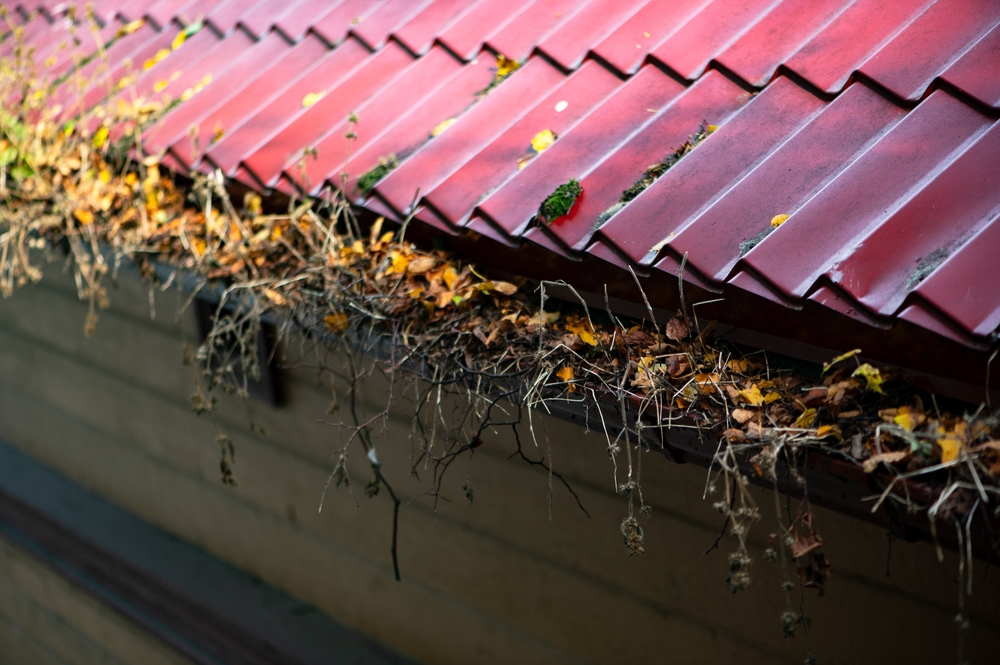
If you feel like you are cleaning your gutters every few weeks and they still back up, the system might be fundamentally flawed. Gutters clogging frequently is incredibly frustrating for homeowners.
Often, this points to clogged gutters problems caused by an improper pitch. If the gutters do not slope correctly toward the downspouts, water simply sits in the channel. Dirt, roof grit, and leaves stick to this standing water, quickly forming a heavy sludge that blocks the flow. If your gutters hold standing water even when it hasn’t rained in days, no amount of scooping will fix the pitch issue. You will need to replace clogged gutters with a properly pitched, seamless system.
9. Mold, Mildew, or Rot Near Roofline
Water always finds the path of least resistance. When gutters fail, water frequently backs up under your roof shingles or drips directly onto the wooden boards supporting the roof edge.
Look up at your soffits (the underside of the roof overhang) and fascia boards (the flat boards the gutters are attached to). If you spot black or green streaks, peeling wood, or soft spots, you are looking at gutter water damage to the roof. Fascia rot from gutters is a massive red flag. If the wood behind the gutter is rotting, the gutter has nothing solid to hold onto. You will need to replace the damaged wood and the soffit damage from gutters before hanging a new, functional system.
10. Gutters Are Over 20 Years Old
Everything on the exterior of your home has a lifespan, and gutters are no exception. If you live in an older home and have no idea when the gutters were last replaced, age alone might be the culprit behind your water issues.
The average old gutters lifespan for aluminum or galvanized steel is roughly 20 years. When considering how long gutters last, factor in the severe weather, heavy snow loads, and falling branches they endure year after year. Aging gutters eventually suffer from metal fatigue. The fasteners wear out, the seams fail, and the metal gets dented and bent. If your system has celebrated its 20th birthday, it is time to start planning for a replacement.
Should You Repair or Replace Your Gutters?
One of the most common questions we get as contractors is whether a homeowner should repair vs replace gutters. It is a fair question. Nobody wants to spend money on a full replacement if a simple fix will do the job.
Gutter repair vs replacement usually depends on the extent of the damage. If a tree branch falls and dents one small three-foot section of a relatively new gutter, a contractor can easily repair that specific area. If one downspout has come loose, we can reattach it.
However, if you are constantly applying sealant to fix leaks, pounding loose spikes back into the wood, or dealing with widespread rust, repairs are just a temporary bandage. Spending money to patch up old gutters problems is usually a bad investment. Eventually, you will have to replace old gutters entirely, meaning the money you spent on constant repairs was wasted.
When Gutter Replacement Makes the Most Sense
Making the final call to tear down the old system and install a new one comes down to protecting your home. Here is how to know if gutters are bad enough to warrant a full replacement.
Multiple Problem Areas
If you have leaks on the front porch, sagging on the back of the house, and overflowing water on the sides, the entire system is failing. Fixing one side will not stop the damage occurring on the others.
Recurring Leaks
If you seal a joint and it starts leaking again six months later, the metal is likely warped or expanding and contracting too much for the sealant to hold.
Undersized Gutters
If your gutters are in decent physical shape but still overflow during normal rainstorms, they are simply too small for your roof’s square footage. You cannot repair an undersized gutter; you have to upgrade to a larger 6-inch system.
Frequent Maintenance
If you are constantly having to re-pitch sagging areas, replace hangers, and deal with standing water, the system’s structural integrity is gone. A new seamless installation will eliminate these headaches.
What Happens If You Don’t Replace Failing Gutters?
Ignoring failing gutters is one of the most expensive mistakes a homeowner can make. Gutters are relatively inexpensive compared to the repairs required when they stop working.
When water is allowed to run wild down the side of your house, severe gutter water damage is inevitable. The water will rot out your window frames and ruin your exterior siding. More importantly, it will pool at the base of your house. Foundation damage from gutters includes cracked concrete walls, flooded basements, and shifting floorboards.
Furthermore, overflowing water often backs up under your shingles. Roof damage from gutters can lead to water leaking directly into your attic, destroying your insulation and causing dangerous black mold to grow inside your home’s framing.
Get New Gutters Installed
If you have walked around your house and noticed any of the warning signs we covered today, it is time to take action before the next heavy storm rolls in. From sagging sections and rusted metal to pooling water at your foundation, failing gutters put your entire home at risk.
At Top Rated Gutters, we specialize in helping homeowners protect their property. If you are ready to stop dealing with leaks and clogs, we provide professional gutter replacement services tailored to your home’s exact specifications. Our crews remove the failing materials and perform high-quality new gutter installation using durable, custom-cut seamless metal.
Don’t wait for water damage to force your hand. Contact us today to evaluate your current system and replace gutters that are no longer protecting your biggest investment.
< Previous Next >

Written by
Michael Nungesser
Owner · Central Georgia
Owner of Top Rated Gutters of Central Georgia with 20+ years in home improvement across the state.