A failing gutter system puts your entire home at risk. Water pouring over the sides of a damaged channel quickly leads to flooded basements, rotting siding, and cracked foundations. You see the water spilling, and you know you need a fix. The immediate question is whether you need a simple patch job or an entirely new system.
Choosing between fixing a localized issue and tearing down the whole system depends on the extent of the damage, the age of the materials, and your long-term goals for the property. A few loose screws require a completely different approach than widespread rust. You do not want to waste money patching a system that will fail again next season. At the same time, tearing down perfectly good aluminum just because of one small leak is an unnecessary expense.
Understanding how a contractor evaluates your drainage system will help you make the right call. We will walk through exactly what types of damage can be fixed, when an entire system is beyond saving, and what you should expect regarding cost and project timelines.
Gutter Repair vs Replacement: Quick Comparison
Making the gutter repair vs replacement choice requires looking at the overall health of your roofline.
A gutter repair makes sense when the damage is isolated to one or two specific spots. The rest of the system remains structurally sound, firmly attached, and properly pitched. Fixing gutters without replacing them usually involves sealing small cracks, re-securing loose hangers, or swapping out a single crushed downspout. It is a quick, budget-friendly solution that extends the life of your current setup.
A gutter replacement is necessary when the core integrity of the system has failed. This happens with extreme age, severe weather impacts, or long-term neglect. If you are constantly paying to repair gutters, or if the metal itself is rotting away, a new installation is the only permanent solution. A full replacement involves removing all existing materials, inspecting the wooden fascia boards behind them, and installing brand-new, correctly pitched channels.
Evaluating your options involves weighing the repair gutters cost vs replace cost. While repairs save money upfront, a full replacement secures your home for decades.
When Gutter Repair Is the Right Choice
Many common drainage issues look terrible during a heavy rainstorm but are actually quite simple to fix. You can usually repair damaged gutters if the problem is confined to a small section.
Minor Leaks
Small drips from the seams or end caps are very common. Constant expansion and contraction from temperature changes cause the old sealant to dry out and crack. A professional can clean out the old caulking and apply a high-grade polyurethane sealant to repair leaking gutters quickly and effectively.
Loose or Detached Sections
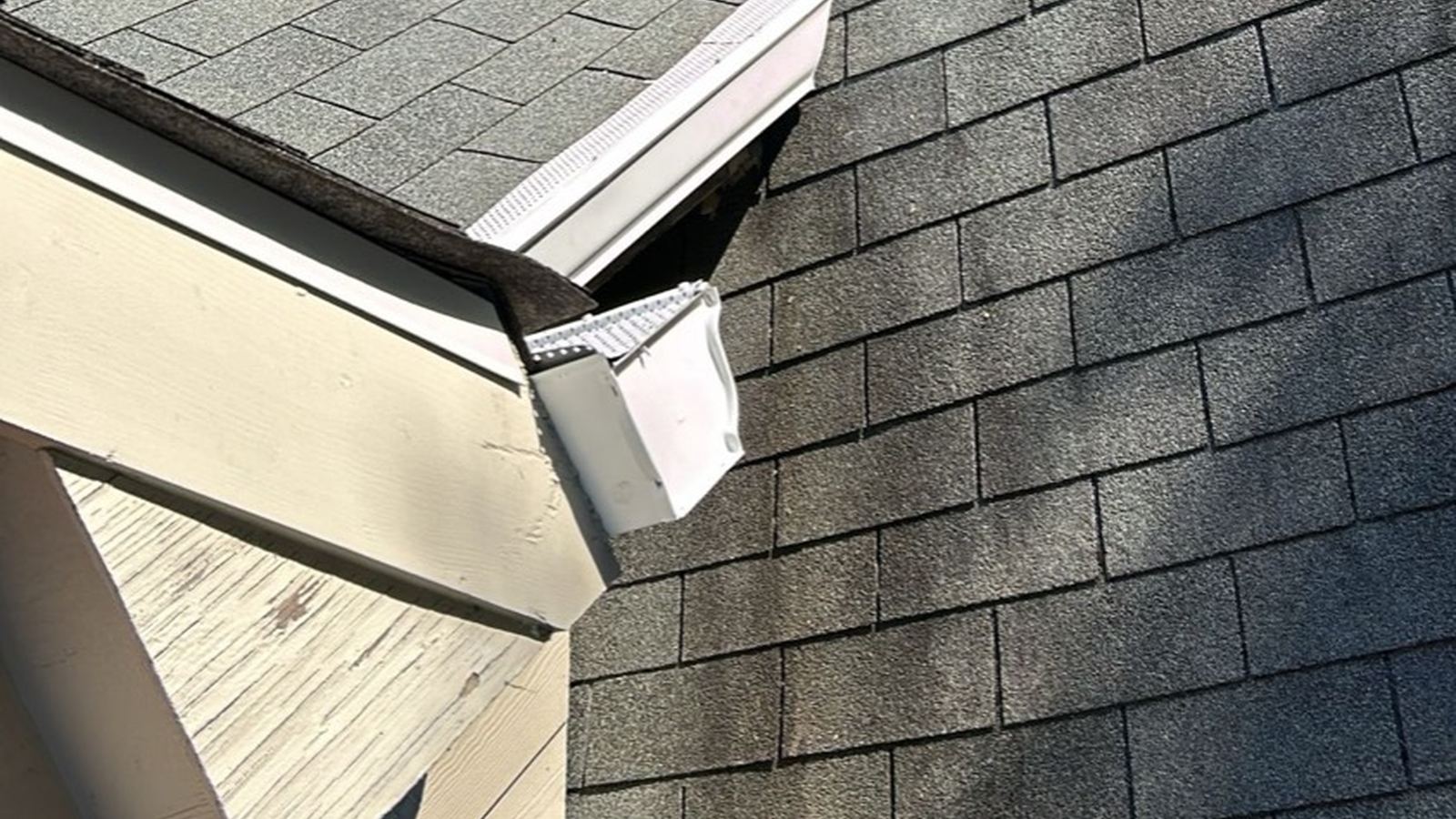
Sometimes a section of the channel pulls away from the roofline. This usually happens when the spikes or hidden hangers holding the system pull loose from the wood. As long as the wood itself is not completely rotten, a contractor can install new, heavy-duty hidden hangers with long screws to pull the section tightly back against the house.
Small Sagging Areas
Water is heavy. If debris builds up in one spot, the weight can bend the metal or stretch the brackets, causing a localized sag. If the metal has not permanently warped, you can fix sagging gutters by adjusting the pitch and adding extra support brackets to that specific area.
Clogged Downspouts
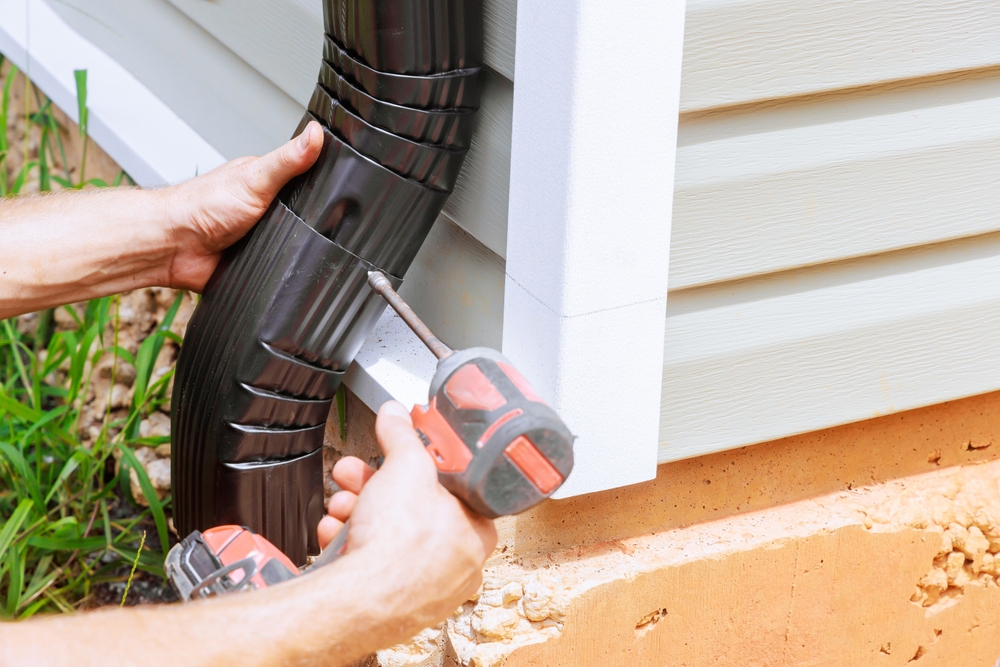
A downspout packed tight with wet leaves and twigs will cause water to back up and overflow the main channels. This looks like a massive failure, but it only requires a thorough cleaning. If the downspout has a small split from freezing water, a minor gutter repair can swap out that single vertical pipe while leaving the rest of the system intact.
Damaged Fasteners
Old gutter spikes tend to back out over time. You might look up and see long nails sticking halfway out of your system. A contractor can easily pull those old spikes out and replace them with modern threaded screws, securing the entire run without needing new materials.
When Gutter Replacement Is the Better Option
There comes a point where patching is just throwing good money after bad. Knowing when to replace gutters saves you from repeated service calls and serious foundation issues.
Multiple Leaks
If every seam on your house is dripping, the entire system is reaching the end of its lifespan. Sealing one joint today just means another joint will break open tomorrow. When the sealant fails uniformly across the board, a gutter replacement needed decision is clear.
Severe Sagging
When large sections of the channel look like a rollercoaster, the metal itself is stretched and fatigued. You cannot bend heavily warped aluminum or steel back into a perfect shape. Water will always pool in those low spots, leading to mosquito breeding grounds and rapid corrosion.
Rusted or Corroded Gutters
Rust is a death sentence for metal drainage systems. Once orange rust spots appear or the metal begins flaking away, the structural integrity is compromised. You cannot repair rusted-through holes permanently. Replace damaged gutters before the bottom completely falls out during a storm.
Cracked or Split Gutters
Vinyl gutters get brittle under intense UV rays and freeze-thaw cycles. Aluminum can split if water freezes solid inside it. Once the main horizontal channel develops long longitudinal cracks, the material is ruined. A new gutters vs repair choice heavily favors a fresh installation here.
Repeated Repairs
If you find yourself calling for a professional gutter repair every single spring and fall, the system is failing. The cumulative cost of constant patches will quickly exceed the price of a brand-new, seamless installation.
Cost Difference: Gutter Repair vs Replacement
Understanding the gutter repair vs replacement cost helps you set a realistic budget.
Repairing a specific issue is almost always cheaper initially. A typical repair service call involves a flat diagnostic fee plus the cost of minor materials like sealant, brackets, or a few feet of downspout. You pay primarily for the contractor’s time and expertise to stop a specific leak.
A full replacement requires a larger investment. The cost depends on the linear footage of your home, the number of corners, the height of the roof, and the material you choose. However, replacing the system provides a predictable, long-term return on investment. You eliminate the constant drip-feed of repair bills and gain the security of a new warranty.
How Long Gutter Repair vs Replacement Takes
Project timelines vary significantly between fixing a problem and installing a completely new system.
A gutter repair time is usually measured in hours. A skilled technician can re-pitch a sagging section, seal a few seams, and replace a damaged downspout in a single morning or afternoon. Your home is protected before the next rain cloud rolls in.
Gutter replacement time requires a bit more planning. A standard residential installation usually takes a full day. The crew must carefully remove and dispose of the old materials, inspect the underlying fascia board for water damage, custom-cut the new seamless runs on-site, and secure everything properly. Larger or more complex multi-story homes might take two days to complete.
Signs Your Gutters Can Be Repaired
How do you spot repairable gutters? Look closely at the hardware and the water flow.
If the metal channel itself looks straight, clean, and free of rust, you are in a good position. Minor damage is usually isolated to the accessories, the end caps, the slip joints, the miters, or the downspout elbows. If water is overflowing simply because of a localized blockage or a single loose bracket, minor gutter damage repair is completely viable.
Signs Your Gutters Should Be Replaced
You can visually identify signs gutters need replacement from the ground. Look for peeling paint on the siding directly behind the channels; this indicates constant, widespread overflow. Look for fasteners that constantly pull out, which means the wood behind them is likely rotting and the whole system needs to come down to fix the fascia.
If the gutters look wavy, dented, or are visibly pulling away from the house on multiple sides, they are beyond repair.
Repair vs Replacement for Seamless Gutters
The rules change slightly for seamless systems. Because a seamless system is formed from one continuous piece of metal custom-cut for the side of your house, repairing them requires a specific approach.
A seamless gutter repair vs replacement decision often depends on where the damage occurred. If a falling tree branch crushes the exact middle of a 40-foot seamless run, you cannot easily cut out the bad part and splice a new piece in without creating two new seams. You effectively ruin the “seamless” advantage. In cases of severe middle-run damage, replacing that entire run of seamless gutters is the standard professional practice.
However, you can still repair seamless gutters if the issue is at the corners, the end caps, or the downspout connections, as these areas still rely on sealant and fasteners.
Repair vs Replacement After Storm Damage
Severe weather dictates an immediate response. When heavy winds, hail, or fallen branches strike, you need to evaluate the storm damaged gutters repair or replace options quickly.
If high winds simply rip a downspout loose, a quick gutter storm damage repair will secure it back to the brick or siding. Hail damage is a different story. Heavy hail dents the metal, destroying the pitch and making the channels look terrible. While hail dents might not cause immediate leaks, they ruin the aesthetic and can impede water flow. In cases of heavy impacts, it is usually necessary to replace storm damaged gutters entirely, which is often covered by homeowner’s insurance. If you have an active emergency, consider seeking emergency gutter repair immediately to prevent interior flooding.
How Professionals Decide Between Repair and Replacement
A reputable contractor does not guess; they perform a comprehensive gutter repair evaluation.
During a gutter inspection repair or replace assessment, a professional will check the pitch using a level. They will run water through the system to identify exactly where pooling occurs. They inspect the structural integrity of the fascia board. If the wood is solid, the metal is thick, and the pitch is correctable, they will recommend gutter repair services. If the metal is fatigued, the seams are uniformly failing, and the system is undersized for your roof’s water volume, they will advise a replacement.
Should You Upgrade Instead of Repair?
Sometimes, a breakdown is an opportunity. Instead of just fixing an outdated system, you can implement a gutter upgrade vs repair strategy to permanently solve your drainage issues.
Upgrade to Seamless Gutters
If you have old, sectional plastic or aluminum gutters with seams every ten feet, do not bother patching them. Replace gutters with seamless aluminum. Seamless systems look better, last longer, and drastically reduce the chances of future leaks.
Upgrade Downspouts
Standard 2×3 downspouts often clog easily. If you are having issues with overflowing water, ask your contractor to upgrade your gutters with larger 3×4 or 4×5 downspouts. This allows water and debris to flush out much faster during heavy downpours.
Add Gutter Guards
If your repair issue stems from constant clogs caused by heavy tree coverage, adding a high-quality gutter protection system is a smart upgrade. This keeps the leaves out and significantly reduces the need for manual cleaning.
Improve Drainage Design
A failing system might be a sign of poor initial design. A professional can redesign the layout, adding extra downspouts or repositioning them to move water further away from your foundation more efficiently.
Gutter Repair vs Replacement FAQs
Is it better to repair or replace gutters?
It is better to repair if the damage is minor, isolated, and the rest of the system is in good condition. It is better to replace if the system is constantly leaking, heavily rusted, or structurally compromised across multiple areas.
When should gutters be replaced instead of repaired?
Gutters should be replaced when the metal is heavily corroded, multiple sections are severely sagging, the material is cracked, or you find yourself paying for repairs multiple times a year.
How long do gutters last?
A well-maintained aluminum or galvanized steel system typically lasts 20 to 20 years. Copper systems can last 50 years or more. However, poor maintenance or severe weather can significantly shorten this lifespan.
Can sagging gutters be repaired?
Yes, minor sagging can be repaired by adjusting the pitch and installing new, stronger hidden hangers. However, if the metal is permanently warped and stretched out of shape, the sagging section must be replaced.
Is gutter repair worth it?
Yes, professional gutter repair is absolutely worth it for minor issues like small leaks or loose brackets. It is a cost-effective way to extend the life of your drainage system and protect your home’s foundation from water damage.
Should I replace gutters after storm damage?
You should replace them if a storm causes severe denting, crushes long sections of the channel, or rips the system completely off the fascia board. Minor storm damage, like a detached downspout, can usually be repaired.
Make an Actionable Decision for Your Home
Protecting your home from water damage starts at the roofline. Ignoring a dripping corner or a sagging channel only leads to massive foundation bills later on. Whether you need to fix a single leak or completely overhaul your drainage with a seamless installation, take action before the next heavy rain. Evaluating the health of your system today ensures your property remains safe, dry, and structurally sound for years to come.
< Previous Next >

Written by
Michael Nungesser
Owner · Central Georgia
Owner of Top Rated Gutters of Central Georgia with 20+ years in home improvement across the state.