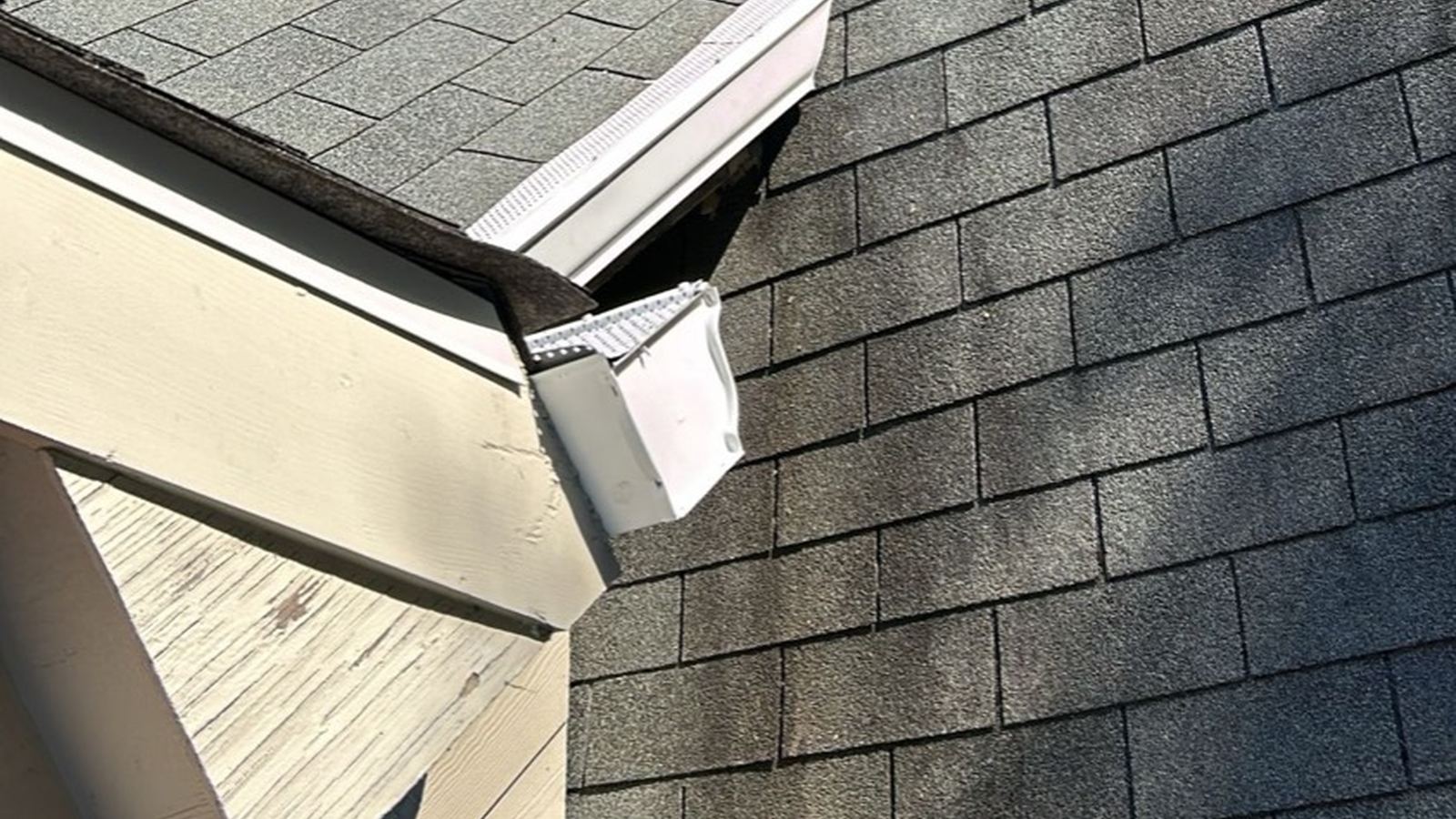
Your gutter system is an essential network designed to protect your home from water, but the gutters themselves are only half of the equation. The downspouts are the crucial exit points, tasked with the vital job of carrying thousands of gallons of rainwater away from your house. If your gutters are the collectors, your downspouts are the distributors. Where they distribute that water is one of the most critical, yet frequently overlooked, aspects of home protection.
For homeowners in the Greater Cincinnati area, proper downspout placement is not a one-size-fits-all proposition. Our region is characterized by a unique and often challenging terrain. From the rolling hills of the “Seven Hills” to the dense, heavy clay soil beneath our feet, the landscape presents specific obstacles to effective water management. A poorly placed downspout in this environment doesn’t just fail to solve a problem; it actively creates new ones, channeling water exactly where you don’t want it to go.
This guide offers expert tips on strategic downspout placement tailored specifically for Cincinnati’s unique terrain. We’ll explore why our local landscape demands a thoughtful approach and provide practical advice for ensuring your downspouts are protecting, not damaging, your most valuable asset.
Understanding Cincinnati’s Terrain: The Core Challenges
Before you can correctly place your downspouts, you must understand the specific environmental factors you’re up against. In Cincinnati, there are two primary challenges: our topography and our soil composition.
Challenge #1: Hilly and Sloping Lots
Cincinnati is famously built on and around numerous hills. This creates beautiful vistas but results in many homes being situated on sloping lots. This topography presents several drainage dilemmas:
- The Downhill Battle: If your home is built into a hill, the ground on the uphill side naturally directs water toward your foundation. A downspout that deposits water on this side only adds to the problem, overwhelming your foundation drains.
- The Uphill Challenge: Conversely, if your yard slopes away from the house, that’s great for drainage, but a downspout must still be long enough to clear the initial “negative grade” often found right next to the foundation, where soil settles over time.
- Terraced and Retaining Walls: Many properties in areas like Terrace Park or Mount Adams feature terraced yards and retaining walls. Downspouts must be placed to avoid dumping water behind these walls, which can cause them to bow, crack, or fail due to hydrostatic pressure.
A generic approach to downspout placement simply won’t work on these complex properties. Strategic planning is essential.
Challenge #2: Heavy Clay Soil
Much of the soil in the Ohio River Valley is dense, heavy clay. Unlike sandy or loamy soils, clay soil has very poor percolation, meaning it absorbs water incredibly slowly. During a heavy Cincinnati downpour, the ground becomes saturated almost instantly.
This has serious implications for your downspouts:
- Water Doesn’t Soak In: A downspout that empties onto a patch of clay soil will create a persistent puddle. The water has nowhere to go but to sit against your foundation or flow back towards the house.
- Intense Hydrostatic Pressure: As this saturated clay soil expands, it exerts tremendous pressure on your basement walls. This is a leading cause of foundation cracks and basement leaks in our region.
- Erosion and Instability: Concentrated water flow from a downspout can easily erode clay soil, creating gullies and potentially destabilizing the ground on a slope.
Because you can’t rely on the ground to simply absorb the water, your downspout strategy must focus on actively moving water across the surface to a safe location.
The Golden Rule: How Far is Far Enough?
The single most important rule of downspout placement is to discharge water a sufficient distance from your home’s foundation.
The minimum recommended distance is five feet, but in Cincinnati, 10 feet is a much safer target.
This distance ensures that the water is deposited outside the “backfill zone”, the area of disturbed soil around your foundation that is particularly porous and prone to settling. A downspout that empties right next to the wall is essentially injecting thousands of gallons of water directly into the most vulnerable area around your home. The cost of this mistake, measured in foundation repairs and basement waterproofing, can be astronomical.
Achieving this distance is the primary goal of all the placement strategies that follow.
Tip #1: Assess Your Property’s Grading
The first step in planning your downspout placement is to understand the slope, or “grade,” of your property. You don’t need a surveyor’s tools; a careful walk around your house during a rainstorm can tell you a lot.
- Observe Water Flow: Where does water naturally run? Where does it puddle? Your goal is to work with this natural flow, not against it.
- Identify High and Low Points: Find the highest and lowest points of your yard. Ideally, downspouts should be placed on the sides of the house that allow for a clear, downhill path to the lowest point of the property or a street drain.
- Check the Grade Immediately Around the House: Many homes develop a “negative grade” over time, where the soil immediately adjacent to the foundation sinks slightly. This creates a mini-moat that traps water. Your downspout extensions must be long enough to clear this zone.
For homeowners on tricky lots, consulting with a professional who offers gutter services in Loveland can provide an expert eye on your property’s unique drainage challenges.
Tip #2: Position Downspouts to Leverage the Landscape
Once you understand your property’s grade, you can start thinking about where on the house to locate the downspouts. While aesthetics play a role, function should always be the priority.
Ideal Downspout Locations:
- At the Corners of the House: This is the most common and often most effective placement, as it allows for extensions to be run in two different directions.
- On the “Downhill” Side of the House: If your lot has a clear slope, concentrate your downspouts on the side of the house where gravity will help carry the water away.
- Near Paved Surfaces: A downspout that can empty onto a driveway or sidewalk that is sloped toward the street is an excellent option, as it provides a ready-made channel to get water away from the property.
- Away From Patios and Walkways: Avoid terminating a downspout where it will flood a patio or create an icy, hazardous patch on a walkway in the winter.
A professional gutter installation in Mason involves more than just hanging the gutters; it includes a strategic plan for downspout locations to ensure the entire system functions effectively.
Tip #3: Use the Right Tools to Achieve Distance
Getting water 10 feet away from your foundation requires more than just the standard elbow at the bottom of your downspout. You need to use specific tools to extend the drainage path.
Splash Blocks
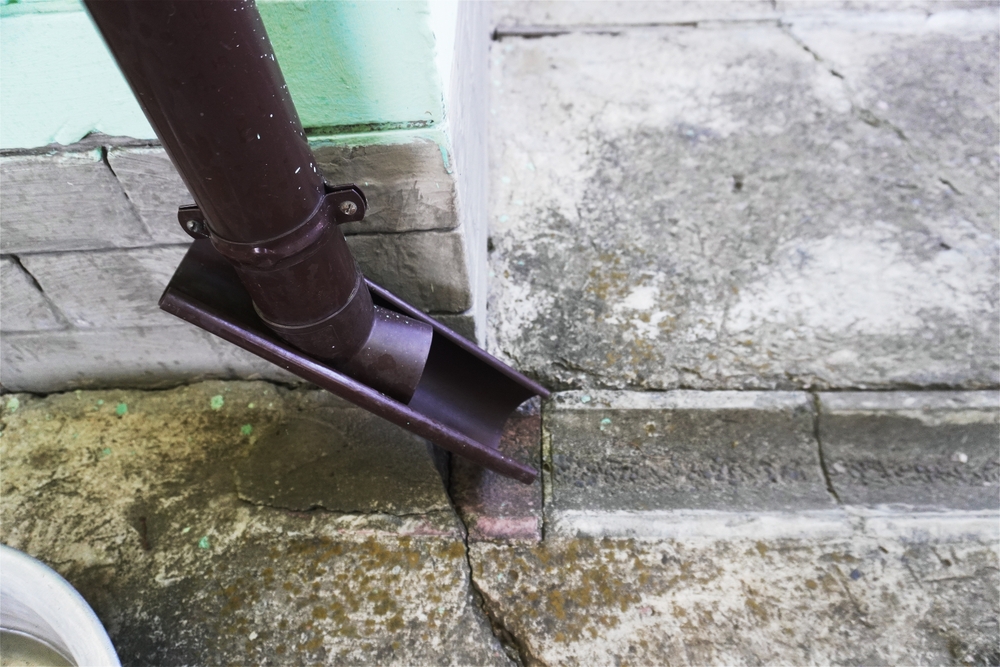
A splash block is a simple, inexpensive concrete or plastic trough placed under the downspout opening.
- Pros: Prevents erosion at the downspout exit and helps direct the initial flow of water.
- Cons: On its own, a splash block does not move water far enough away from the house. It must be used in conjunction with a properly graded slope. On the flat, heavy clay soil common in areas like Liberty Township , a splash block alone is insufficient.
Downspout Extenders
These are attachments that connect to the end of your downspout to carry water further away.
- Corrugated Plastic Tubing: Inexpensive and flexible, these can be easily bent around landscaping. However, they can be unsightly and are prone to getting crushed or damaged by lawnmowers.
- Roll-Out Extenders: These automatically unroll with the force of water and roll back up when the rain stops. They can be effective but are prone to clogging and may not unroll fully in light rain.
- Hinged Extensions: A solid metal extension that matches your downspout can be attached with a hinge, allowing you to flip it up and out of the way for mowing. This is a durable and functional option.
When selecting an extender, remember the goal: get the water to a point where it will continue to flow away from the house on its own.
Tip #4: Go Underground for the Ultimate Solution
For many properties in Cincinnati, especially those with complex grading or where above-ground extensions are impractical or unsightly, an underground drainage system is the gold-standard solution.
This involves burying a solid, smooth-walled PVC pipe in a trench, connecting it to the downspout, and running it to a safe exit point.
Benefits of Underground Drains:
- Aesthetics: The system is completely hidden, preserving your landscaping and curb appeal.
- Durability: A properly installed PVC pipe is permanent and won’t be damaged by lawn care or foot traffic.
- Effectiveness: It can carry large volumes of water over long distances, completely bypassing problem areas near your foundation. It’s the most reliable way to solve drainage issues on a flat or negatively graded lot.
Where to Terminate an Underground Drain:
- A Pop-Up Emitter: The pipe can terminate in your lawn with a pop-up emitter, which sits flush with the grass and opens under water pressure to release water over a wide area.
- A Curb Outlet: In many municipalities, you can core a hole through the street curb and have the pipe empty directly into the street.
- A Dry Well or Rain Garden: The pipe can lead to a buried dry well (a pit filled with gravel) or a specially designed rain garden that allows the water to be absorbed slowly and safely back into the ground table.
Installing an underground drainage system is a complex job that requires careful planning of slope and depth. This is a project best left to professionals who specialize in water management, often the same experts who handle a full gutter installation in Kenwood or other local communities like Landon .
Tip #5: Don’t Forget Capacity, Number and Size Matter
Proper placement means nothing if your downspouts are overwhelmed. During a torrential downpour, a gutter system needs enough “exits” to handle the deluge of water.
- Number of Downspouts: A standard rule of thumb is to have at least one downspout for every 30-40 feet of gutter. However, on long runs or on roofs with complex valleys that concentrate water flow, more downspouts may be needed.
- Size of Downspouts: Standard residential downspouts are typically 2×3 inches. For larger roof areas or in regions with heavy rainfall like ours, upgrading to oversized 3×4 inch downspouts is a wise investment. A 3×4 inch downspout can handle more than double the water volume of a 2×3 inch one, significantly reducing the risk of overflow.
When getting a quote for a new system in places like South Lebanon or Northern Kentucky , be sure to ask about the size and number of downspouts included in the plan.
Protecting Your Investment with Professional Expertise
Achieving optimal downspout placement on Cincinnati’s challenging terrain requires more than just a little DIY know-how. It demands a professional understanding of hydrology, grading, and construction best practices.
A reputable gutter professional will not just give you a price per foot; they will conduct a comprehensive assessment of your entire property. They will:
- Analyze your roof size and pitch to calculate water runoff volume.
- Study the grading of your lot to map the safest drainage paths.
- Inspect your soil and landscaping to identify potential problem areas.
- Develop a customized plan that specifies the ideal number, size, and location of downspouts.
Whether you’re in an established neighborhood with mature trees like Mariemont or a newer development in Maineville , professional expertise is invaluable. From simple gutter services in Blue Ash to a full-scale gutter installation in Lebanon , an expert ensures that your entire water management system is designed to work in harmony with your unique property.
Your Downspouts: The Last, Best Line of Defense
In the battle to keep your Cincinnati home safe and dry, your downspouts are your final and most important soldiers. Their strategic placement determines whether water becomes a harmless runoff or a destructive force that attacks your foundation, floods your basement, and erodes your landscape.
Take the time to walk your property and critically evaluate your current downspout situation. Are they directing water far enough away? Are they working with or against your property’s natural slope? Are they overwhelmed in heavy rain?
By applying these tips and leveraging professional expertise when needed, you can transform your downspouts from a potential liability into a powerful asset. A well-planned drainage system is a fundamental component of responsible homeownership in our region, protecting your property’s value and providing priceless peace of mind. From the historic homes of Montgomery and Indian Hill to the growing communities in Beechmont and Milford , a smart downspout strategy is the key to conquering Cincinnati’s challenging terrain.
< Previous Next >
Written by
Colin Nellis
Owner · Cincinnati, OH
Owner of Top Rated Gutters of Cincinnati, with a career built in home improvement on honest, high-quality service.