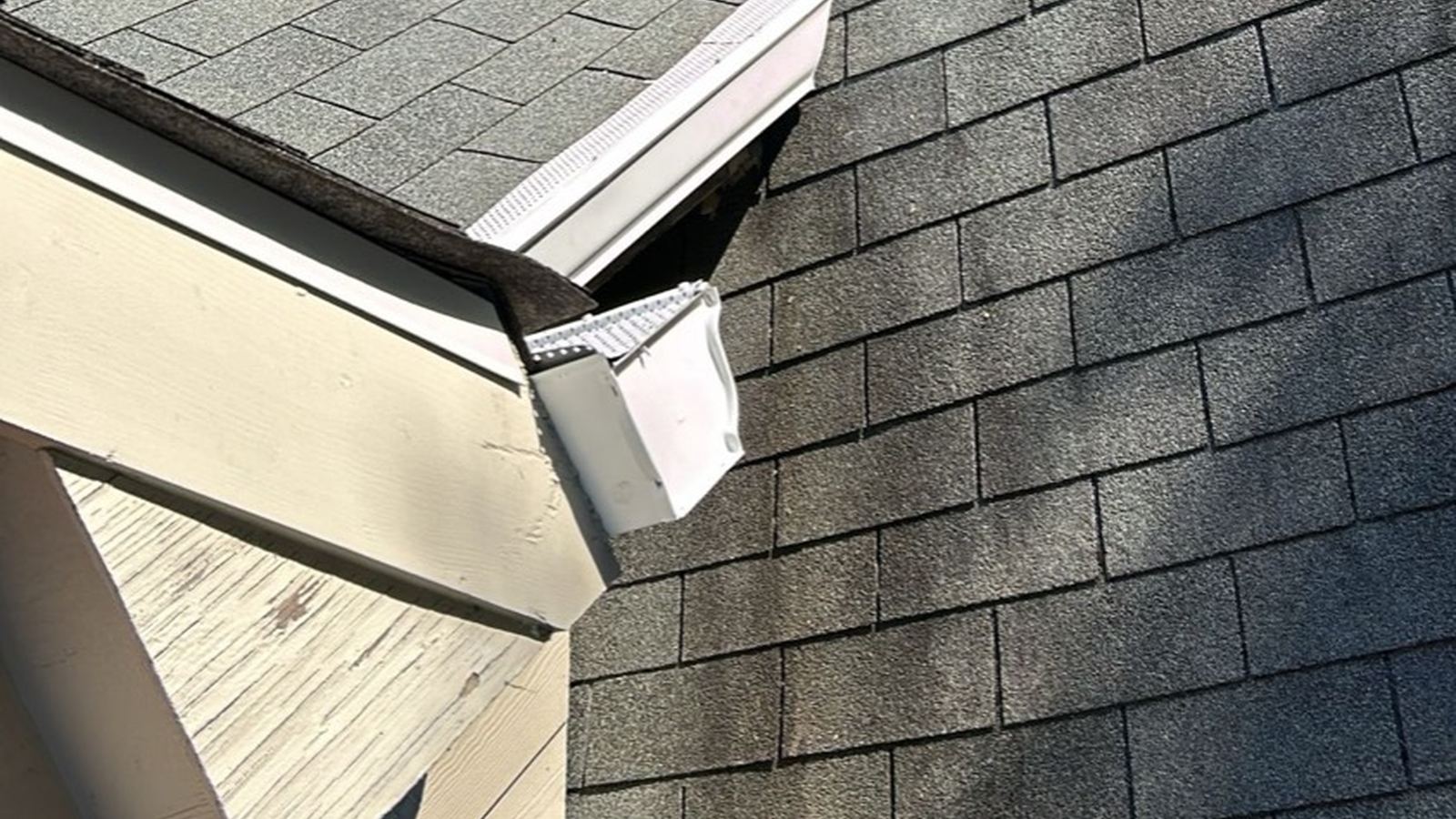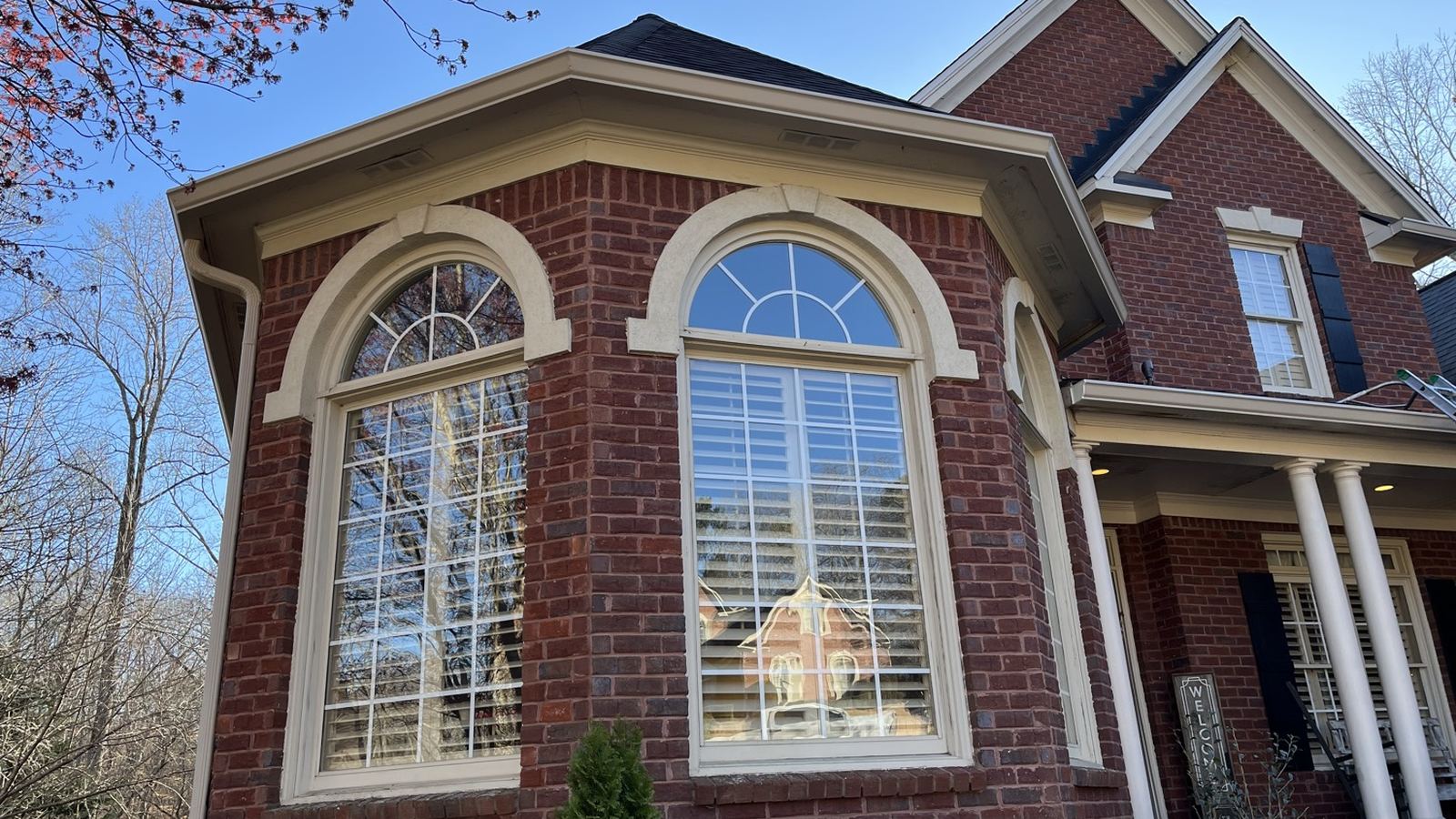
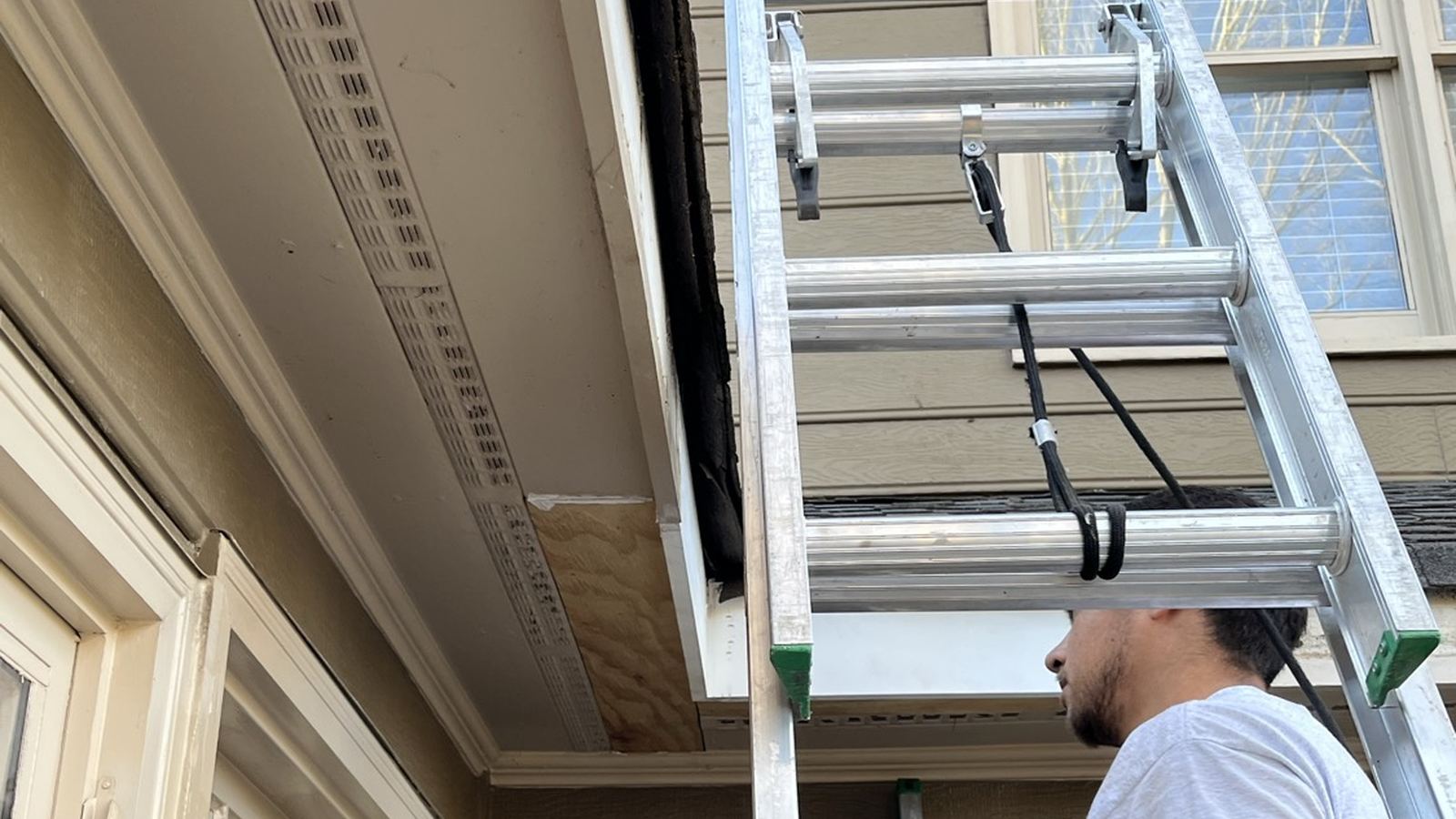
Most gutter advice answers a big question: repair the system or replace it. On an actual job the question is usually smaller and more immediate. A crew is on a ladder looking at three feet of gutter, and the decision is whether to seal it, cut it out, or take down the whole run.
Here is how that call gets made, so you can follow the reasoning when someone makes it on your house.
Reseal, when the metal is sound and the joint is not
Sectional gutters leak at their joints long before the metal fails, and a joint is a maintenance item. If the gutter either side of the seam is straight, unpitted and holding its shape, resealing is the right answer and it is not a compromise.
What makes a reseal legitimate: the metal is sound, the joint is accessible, the run drains, and the old sealant can actually be removed. What makes it a false economy: sealing over old sealant, which is the most common reason a repair fails within a year, or sealing a joint on a run that is still holding standing water, which just moves the leak along.
Patch, rarely, and with a short expected life
A patch over a hole is a legitimate temporary measure and an honest crew will tell you it is temporary. Aluminum that has corroded through in one place is usually thin around that place too, so a patch tends to be followed by another hole nearby.
There is one situation where it is genuinely right: mid-winter, on a run that cannot safely be worked on until the weather breaks, where the job is to stop water going somewhere damaging until a proper repair is possible. Sold as a permanent fix, it is not one.
Replace a section, when the damage is local and the run is not
Cutting out a damaged length and splicing in new is the middle option, and the deciding factor is usually whether the run is sectional or seamless.
On a sectional system, sections are how the gutter was built. Replacing one is routine and adds no joints that were not already there.
On a seamless run, there are no joints along the length, and that is the point of it. Cutting a section out introduces two new joints into a system whose whole advantage was not having any, and those joints become the next thing to leak. On a short run it is often cheaper and better to replace the full length in one piece than to splice.
Replace the run, when the count stops making sense
Three signals move the decision to the whole run:
- More than two or three faults along it. At that point the labour of repairing each one approaches the cost of replacing the length, and you still have an old gutter afterwards.
- The run has lost its shape. Distortion from ice load or a ladder means the profile no longer sits right against the fascia, and no amount of sealing fixes geometry.
- The fasteners have failed along its length. If the whole run needs re-hanging, the gutter is already coming down, and the marginal cost of putting new material back up instead of old material is small.
The question underneath all of them
Before any of the above: does this run drain? A gutter with correct pitch, clear outlets and sound fastening does not generate repeated seam failures. One that holds water does, and it will keep doing it after whichever repair you choose.
So the honest sequence is to fix the drainage first and then decide what the damaged length needs, rather than the other way round. A crew that reseals four joints without mentioning that the run has no fall has sold you four repairs and one return visit.
Our gutter repair services quote the rung we think the job is on and say why, including when the answer is that a section is not worth saving.

Written by
Scott Specker
Owner · Northeast Georgia
Owner of Top Rated Gutters of Northeast Georgia, serving Cumming, Alpharetta and surrounding communities.