A leaking seam, a sagging section, or a downspout that’s come loose, do you fix it, or replace the whole system? It’s a question homeowners face all the time, and the answer isn’t always obvious. Replacing gutters you didn’t need to is a waste of money. But pouring repair costs into a system that’s past its useful life is equally frustrating. Here are six practical ways to figure out which call is right for your home.
—
6 WAYS TO TELL IF YOU NEED NEW GUTTERS OR JUST A REPAIR
1. Age of the Gutters
Age alone doesn’t tell the whole story, but it’s a useful starting point. Well-installed aluminum gutters can last 20–30 years. Sectional vinyl gutters often start failing in 10–15 years. A general rule of thumb: gutters under 15 years old are usually repair candidates if the problem is isolated. Once you’re past 20 years, you’re likely better off replacing, especially if there are multiple issues throughout the system. You’ll save money in the long run by not patching a system that’s approaching end of life.
—
2. Localized Damage vs. Widespread Damage
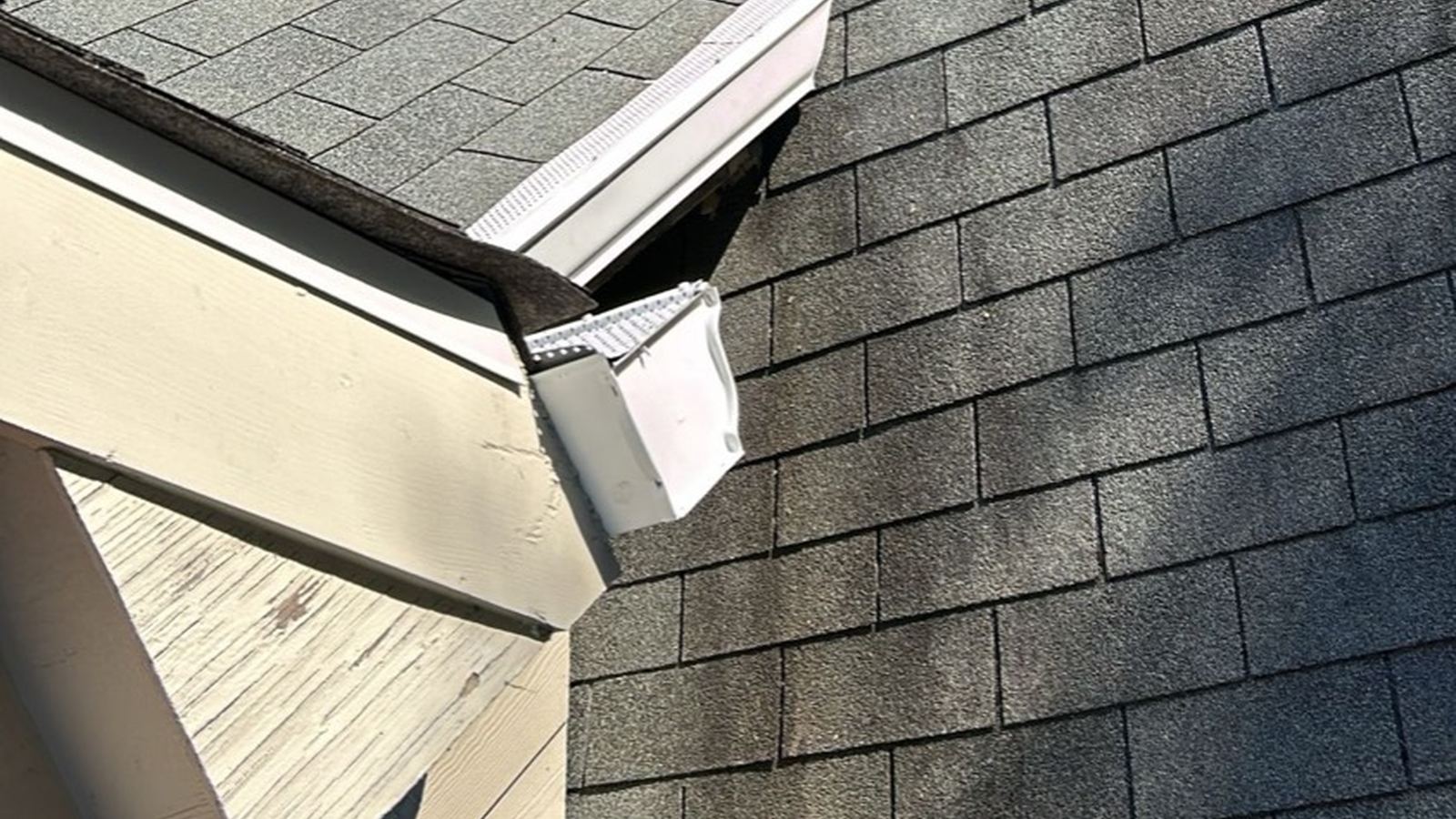
Ask yourself: is the problem limited to one spot, or is it showing up in multiple places? A single section that’s sagging, one seam that’s opened up, or a single downspout that’s come loose, those are solid candidates for targeted gutter repair. But if you’re finding issues at multiple points along the gutter run, different leaks, multiple sections pulling away, sagging in several places, that pattern points to systemic failure. Repairing one spot while others are ready to fail is rarely a good investment.
—
3. Sectional vs. Seamless Gutters, Multiple Leaks Change the Math
If your home has sectional gutters (the kind with visible joints every 10 feet or so, usually installed as a DIY project or by a budget contractor), each seam is a potential leak point. One or two leaking seams can be sealed with gutter caulk. But if you’ve got four or five seams leaking across a single run, you’re looking at a system that’s simply reached the end of its functional life. In that situation, replacement with seamless gutters is typically far more cost-effective than trying to re-seal every joint.
—
4. Fascia Damage, If the Wood Is Rotted, You’re Likely Replacing Both
Before any gutter repair or replacement decision gets made, check the fascia board. If the wood directly behind your gutters is soft, spongy, or crumbling, the gutters need to come off regardless, you can’t hang anything securely on rotten wood. Once the fascia is replaced, it usually makes sense to install new gutters at the same time rather than re-hanging an aging system on fresh wood. Think of it as a natural trigger point for a full upgrade.
—
5. How Many Times Have They Already Been Repaired?
There’s a compounding cost problem with repeated gutter repairs. If this would be the third or fourth time you’ve paid someone to fix the same system, or you’ve been patching seams and reattaching hangers every couple of years, that history is telling you something. Each repair adds cost without addressing the root problem: an aging system that’s simply worn out. First-time repairs are usually worth doing. A fourth repair on the same gutters almost never is.
—
6. Cost Comparison, When Repair Approaches 50% of Replacement, Replace
This is the most straightforward financial test. Get a repair estimate and a replacement estimate. If the repair costs 50% or more of what full replacement would cost, opt for replacement. You’ll get a fully warrantied system with a decades-long lifespan instead of patching something that’s already proven unreliable. This calculation changes a little based on how old the gutters are, a repair that costs 50% of replacement might still be worthwhile on a 5-year-old system but makes no sense on a 25-year-old one.
Our team in Indiana, including South Bend and the surrounding areas, can walk you through an honest repair vs. replacement assessment for your home, visit topratedgutters.com/indiana/ for local service options.
—
THE HIDDEN COST OF REPEATED REPAIRS VS. ONE REPLACEMENT
It’s easy to focus on the lower upfront cost of a repair, and sometimes that’s absolutely the right call. But repeated repairs carry hidden costs that don’t always show up in the estimate:
– Water damage that accumulates between failures (fascia rot, foundation moisture, landscape erosion)
– Your time scheduling and coordinating multiple repair visits
– The labor cost of each visit, which often exceeds the cost of the materials being used
– The mental overhead of worrying about whether the repair will hold
A single, properly installed seamless aluminum gutter system eliminates all of those compounding costs. When you’re running the numbers, factor in what repeated repairs are actually costing you, not just the invoice amount, but the downstream effects.
—
Ready to Get Started: Gutter Repair?
Not sure whether your gutters are worth saving or due for replacement? Our team can give you an honest assessment, no pressure, just a straight answer based on what we see.
👉 Request a repair inspection
👉 E xplore new gutter installation options for your home
—
Frequently Asked Questions: Gutter Repair
How long should gutters last?
Quality aluminum gutters installed by a professional can last 20–30 years. Seamless aluminum systems tend to outperform sectional gutters because they have no joints to fail. Vinyl gutters typically have a shorter lifespan, often 10–15 years, especially in climates with significant temperature swings or UV exposure. Steel gutters can last even longer than aluminum but are more vulnerable to rust if the coating is compromised. Copper gutters are the longest-lasting option at 50+ years, though they come with a significant upfront cost.
Is it worth repairing old gutters?
It depends on how old the gutters are and the nature of the damage. Gutters that are under 15 years old with isolated, minor damage are usually good candidates for repair. Once gutters are 20-plus years old, have multiple issues, or have already been repaired several times, replacement tends to be more cost-effective in the long run. The key question to ask: will this repair last, or am I just delaying the inevitable?
What is the average cost to replace gutters?
Gutter replacement costs vary based on linear footage, material, and local labor rates. For aluminum gutters (the most common choice), expect to pay roughly $5–$12 per linear foot installed, depending on style and region. A typical single-family home might need 150–200 linear feet of gutters, putting total replacement costs in the $750–$2,400 range for standard aluminum. Seamless gutters, copper, or oversized profiles will increase that figure. Always get at least two quotes before making a decision.
When should I replace vs. repair gutters?
Replace when: gutters are 20+ years old, damage is widespread across multiple sections, the fascia board is rotted and needs replacement anyway, repair cost is 50% or more of replacement cost, or the gutters have been repaired multiple times already. Repair when: damage is isolated and localized, gutters are relatively new (under 15 years), the overall system is in otherwise good condition, and the repair cost is clearly worthwhile relative to the remaining useful life of the system.
< Previous Next >
Written by
Colin Nellis
Owner · Cincinnati, OH
Owner of Top Rated Gutters of Cincinnati, with a career built in home improvement on honest, high-quality service.