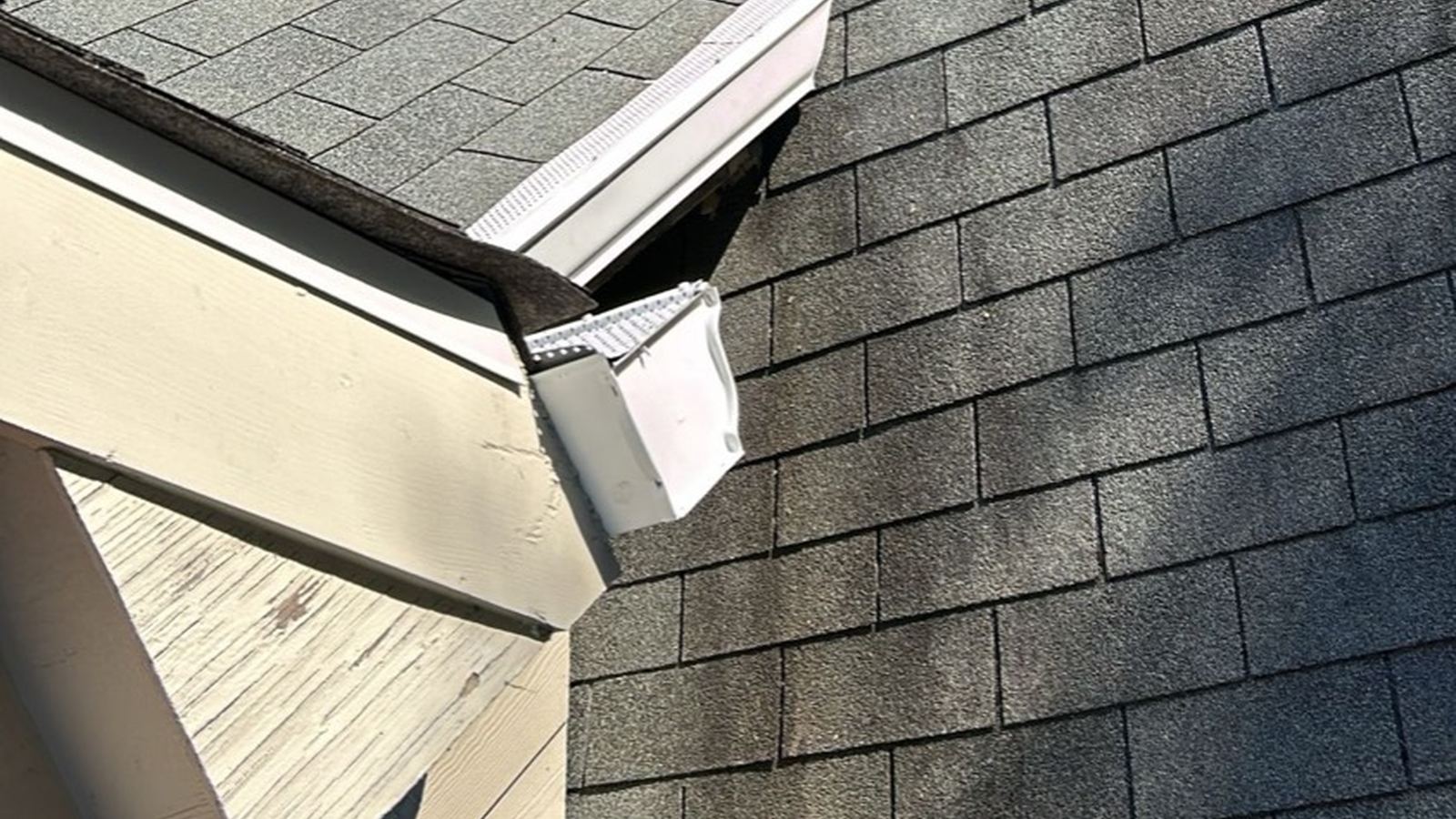
Most homeowners understand that clogged gutters can cause water to spill over the sides, leading to a messy landscape or a damp basement. What many fail to realize is that the most severe damage from a clogged gutter often happens above, not below. Your roof and your gutter system have an intimate, codependent relationship. When one fails, the other is placed in immediate jeopardy. In Northeast Georgia, where heavy rainfall and dense tree cover create the perfect conditions for clogs, this connection is especially critical.
A clogged gutter doesn’t just stop working; it transforms into a reservoir of stagnant water and decaying debris held directly against the most vulnerable part of your roofline. This initiates a slow-motion disaster that can lead to rotted wood, compromised structural integrity, and ultimately, a premature and expensive roof replacement. This guide will explore the specific ways clogged gutters cause devastating roof damage in Northeast Georgia and explain why proactive maintenance is the only way to protect your home.
The Vicious Cycle: How a Clog Begins the Attack
To understand the damage, we must first visualize the process. Your roof is designed as a watershed, with every shingle and slope engineered to shed water downwards, off the edge, and into the gutters. The gutters are then supposed to carry this water safely away from the house. A clog breaks this entire chain of command.
The Anatomy of a Northeast Georgia Clog
In this region, gutters face a year-round assault from debris:
- Fall: A thick blanket of oak, maple, and hickory leaves.
- Spring: A sticky mixture of oak tassels, pine pollen, and flower petals.
- Year-Round: A constant supply of pine needles, twigs, and shingle grit.
When this debris blocks the gutter, especially at the downspout opening, a dam is formed. The next time it rains, a frequent occurrence in Northeast Georgia, the gutter channel fills with water. Instead of flowing away, the water level rises until it has nowhere to go but up and over the sides. While the overflow you see on the front is problematic, the real danger is the water backing up over the rear of the gutter, directly against the fascia board and the edge of your roof.
This trapped water creates a perpetually damp environment where wood, shingles, and other building materials were designed to stay dry. This is the starting point for a cascade of roof-related problems. The consequences are a frequent concern for homeowners throughout the region, from the dense suburbs of Cumming to the more rural landscapes beyond. Addressing the root cause with professional gutter services in Cumming, GA , is the first step in preventing this damage.
Consequence 1: Rotting Fascia and Soffits – The Roof’s Foundation
The first victim of a clogged gutter is almost always the fascia board. This is the long, straight board that runs along the lower edge of your roof, and it’s the surface to which your gutters are directly attached. The soffit is the exposed underside of your roof’s overhang.
How the Rot Sets In
When water backs up, it saturates the fascia board from behind. Wood is like a sponge; it will soak up this moisture and hold it. Since the back of the fascia is shielded from the sun and wind, it never has a chance to fully dry out between rainstorms. This constant dampness creates the perfect conditions for wood rot (a fungal decay).
You may notice the effects of this as peeling or bubbling paint on the fascia. This isn’t just a cosmetic issue; it’s a sign that the wood underneath is saturated and beginning to break down. As the rot progresses, the wood loses its structural integrity. It becomes soft, spongy, and unable to hold the screws and fasteners that secure your gutter system.
The Domino Effect of Rotted Fascia
- Detaching Gutters: As the fascia weakens, the weight of the gutters (especially when filled with water) will cause the fasteners to pull loose. You’ll see the gutters begin to sag and pull away from the house, creating a gap.
- Soffit Damage: Water dripping from the compromised fascia will run down and saturate the soffits. This can lead to rot in the soffit panels and provide an entry point for insects and small animals into your attic.
- Compromised Rafter Tails: The fascia board is attached to the ends of your roof’s rafters, known as rafter tails. If the rot is severe and left unchecked, it can spread from the fascia into the rafter tails themselves. Repairing rotted rafter tails is a major structural repair that can be incredibly expensive.
Replacing fascia and soffits is a complex and costly job that requires removing the entire gutter system. This type of damage is common in older homes in communities like Milton, where original gutter systems may be failing. A thorough inspection from a provider of gutter services in Milton can identify fascia rot before it spreads.
Consequence 2: Roof Decking and Sheathing Decay
While the fascia board is rotting from behind, the backed-up water is simultaneously launching an attack on the roof itself. Your shingles are designed to shed water, but they are not designed to be submerged in it.
How Water Infiltrates the Roof Deck
Water pooling in a clogged gutter can “wick” its way uphill, defying gravity through capillary action. It travels up underneath the first course of shingles, directly exposing the underlying roof components to moisture.
- Roof Decking (or Sheathing): This is the layer of plywood or oriented strand board (OSB) that forms the structural skin of your roof. It’s what the shingles are actually attached to. When this wood becomes saturated from water wicking up from the gutters, it begins to delaminate, warp, and rot.
- Underlayment: A layer of water-resistant material (like felt paper or a synthetic barrier) is installed between the decking and the shingles. However, it’s only designed to be a secondary barrier against incidental moisture, not to withstand constant submersion. Prolonged contact with standing water will cause it to degrade and fail, allowing water to reach the decking.
You may not see this damage from the ground. The first sign might be a soft or spongy feeling when walking on the edge of the roof (which should only be done by a professional). Other signs include visible warping of the roof edge or water stains appearing on the ceiling inside your home.
The High Cost of Rotted Decking
Once roof decking is rotted, it cannot be repaired; it must be cut out and replaced. This repair involves stripping away the shingles and underlayment in the affected area, replacing the damaged wood, and then re-installing new underlayment and shingles. It’s a significant roofing job, and if the damage is extensive, it can trigger the need for a full roof replacement years ahead of schedule. Homeowners in Suwanee, where property values are high, understand that protecting the roof is paramount. Investing in a functional gutter system with the help of local gutter services in Suwanee is a key part of that protection.
Consequence 3: The Destructive Power of Ice Dams
In the winter, Northeast Georgia experiences periods of freezing and thawing. When combined with a clogged gutter, this cycle creates one of the most destructive phenomena in home maintenance: the ice dam.
How an Ice Dam Forms
- Heat Escapes: Heat from your home escapes through the attic and warms the underside of the roof, melting snow or frost on its surface.
- Water Flows Down: This meltwater runs down the roof until it reaches the cold eaves (the roof edge), which are not heated by the attic.
- The Clog Creates a Pool: The water reaches the gutter, but it is blocked by a frozen clog of old leaves and debris. The water has nowhere to go and pools at the edge of the roof.
- The Pool Freezes: As temperatures drop, this pool of water at the roof’s edge freezes, forming a thick ridge of ice, an ice dam.
- Water Backs Up: Subsequent meltwater flowing down the roof is blocked by this dam and is forced to back up even further under the shingles, where it can refreeze and expand, or leak directly into your attic.
The Damage Caused by Ice Dams
- Torn Gutters and Fascia: The immense weight of the ice can bend, break, or completely tear your gutters off the house, often taking the fascia board with them.
- Lifted and Damaged Shingles: As the backed-up water refreezes, the expanding ice can lift shingles, crack them, and destroy their watertight seals. This creates permanent pathways for water intrusion.
- Attic Flooding and Interior Damage: When the weather warms and the trapped water melts, it can pour into your attic, saturating insulation, rotting ceiling joists, and causing water stains and damage to the ceilings and walls of the rooms below.
Ice dams are a direct result of a clogged gutter combined with specific weather conditions. Keeping your gutters clean and free-flowing is the single most effective way to prevent them from forming. This is a crucial piece of winter preparation for homeowners in areas like Roswell, which can experience these freeze-thaw cycles. A pre-winter check-up from a professional provider of gutter services in Roswell is a wise precaution.
Consequence 4: A Welcome Mat for Pests and Mold
The saturated, rotting wood in your roof structure created by clogged gutters is more than just a structural problem; it’s an open invitation for pests and mold.
- Pest Infestations: Wood-destroying insects like termites and carpenter ants are drawn to soft, moist wood. A rotted fascia board or roof deck is an ideal place for them to establish a colony. From there, it’s a short journey into the main structure of your home, leading to widespread and incredibly expensive damage.
- Mold Growth: The constant moisture in the attic from leaks caused by clogged gutters creates a perfect breeding ground for mold. Mold not only continues to decay the wood but also releases spores into the air that can cause serious respiratory issues and allergies for your family.
The cost of pest extermination and mold remediation can run into the thousands of dollars, adding another layer of expense on top of the necessary structural repairs. In family-focused communities like Johns Creek, ensuring a healthy indoor environment is a top priority, making functional gutters essential. Local experts offering gutter services in Johns Creek can help secure your home against these threats.
The Solution: A Proactive Defense for Your Roof
The connection between clogged gutters and roof damage is undeniable. The good news is that this damage is almost entirely preventable. Protecting your roof requires a proactive approach to gutter maintenance.
Step 1: Regular Cleaning and Inspection
In Northeast Georgia, cleaning your gutters is not a once-a-year task. It should be done, at a minimum, twice a year: once in the late spring after the pollen and seeds have fallen, and once in the late fall after the leaves are down. If you have heavy tree cover, more frequent cleanings may be needed. This simple act of removing debris prevents the entire destructive cycle from beginning.
Step 2: Invest in High-Quality Gutter Guards
The most effective long-term solution to prevent clogs is to install a high-quality gutter guard system. While there are many types on the market, a professionally installed micro-mesh system is the superior choice for this region.
- How they work: A fine stainless steel mesh covers the gutter, allowing only water to pass through. Leaves, pine needles, oak tassels, and even shingle grit are blocked and washed or blown harmlessly to the ground.
- The benefit for your roof: By preventing clogs from ever forming, gutter guards ensure your gutter system never becomes a reservoir of water against your roofline. They are the single best defense against fascia rot, decking decay, and ice dams.
The upfront cost of gutter guards is an investment that pays for itself many times over by eliminating the need for regular professional cleaning and, more importantly, by preventing tens of thousands of dollars in potential roof and water damage repairs. Homeowners across the region, from Duluth to Flowery Branch and Gainesville to Oakwood, are turning to this solution for permanent peace of mind. To find the right system for your home, it’s best to consult with local professionals who can provide expert gutter services in Duluth , gutter services in Flowery Branch , gutter services in Gainesville , or gutter services in Oakwood .
Step 3: Don’t Delay Repairs
If you already see signs of damage, such as sagging gutters or peeling paint on your fascia, do not wait. What seems like a small problem can escalate quickly. Contact a professional gutter contractor to assess the situation. They can determine the extent of the damage and recommend the best course of action, whether it’s a repair or a full replacement of the failing system.
Your roof is one of the most expensive and important components of your home. It makes little sense to leave it vulnerable to a threat that is so easily preventable. By viewing your gutters not as a separate entity, but as an integral part of your roofing system, you can better appreciate the critical role they play. Keeping them clean and free-flowing is a fundamental aspect of homeownership in Northeast Georgia and the most important step you can take to ensure the health and longevity of your roof.
< Previous Next >
Written by
Scott Specker
Owner · Northeast Georgia
Owner of Top Rated Gutters of Northeast Georgia, serving Cumming, Alpharetta and surrounding communities.