
Homeowners who move to Middle Georgia from further north often keep a northern gutter habit: clean them once, in late autumn, after the leaves come down. It does not work here, and September is when that becomes obvious.
Macon, Warner Robins and the surrounding counties do not get one clean autumn drop. They get a long, overlapping season of different debris, starting before the first hardwood leaf falls and running well past it. Knowing what arrives when is the difference between a schedule that keeps the gutters clear and one that keeps missing.
September: needles, not leaves
The first material of the season into a Central Georgia gutter is almost always pine. Loblolly and slash pines shed needles heavily through late summer and early autumn, well ahead of the hardwoods, and they keep doing it in smaller quantities year-round.
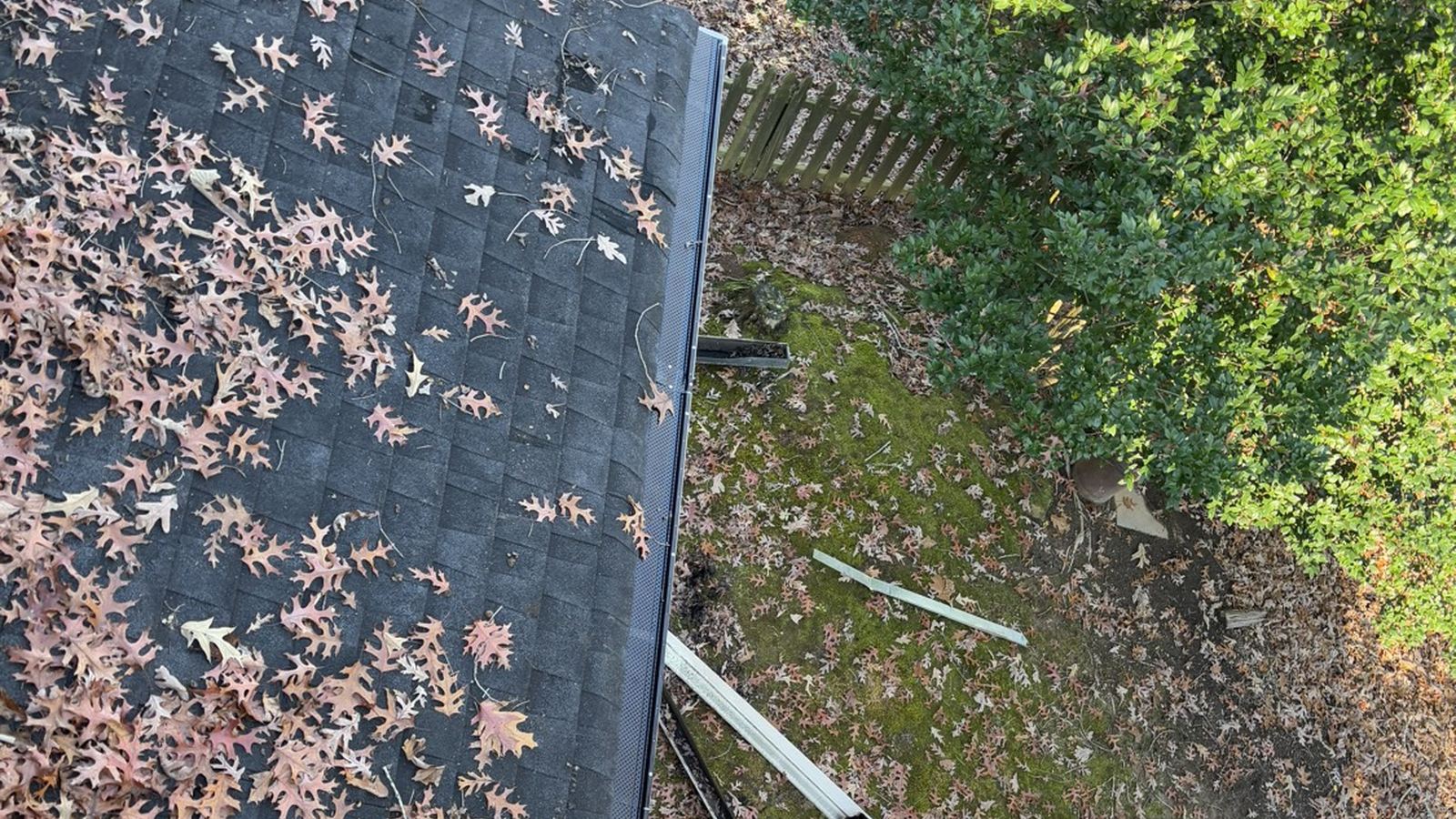
Pine needles behave differently from leaves. A leaf lies flat and either blocks an outlet or does not. Needles interlock. They form a mat that holds water and silt, and they thread themselves through anything with a wide opening, which is why basic screens disappoint so consistently on Georgia lots. A gutter that looks only lightly covered in needles can already be draining at a fraction of its capacity.
October and November: the hardwoods arrive on top
Water oak, willow oak and sweetgum drop later, and they drop onto whatever the pines already left. This is the compounding problem specific to a mixed Middle Georgia lot: the needle mat is the filter that catches the leaves and holds them in place, and the sweetgum balls that follow sit on top and block outlets outright.
A single cleaning in this window removes all of it and looks like a complete job. It is, until the pines carry on.
The part people miss: it does not stop
Pines shed all year. So a Central Georgia gutter cleaned thoroughly in December is not clear by March, and the spring storm season arrives to find it partially blocked. Add the pollen load in spring, which cements fine debris into a sludge rather than a loose fill, and the run that was clear in December can be genuinely restricted by April.
This is why the general advice of "twice a year, spring and autumn" fits Middle Georgia better than "once, in autumn" does, and why homes with heavy pine cover often need a third visit. The schedule follows the trees, not the calendar.
Why it matters more here than the debris alone suggests
Central Georgia's summer storms deliver a great deal of water in a short time, and clay soil does not absorb it quickly. A partially blocked gutter in a slow, steady rain simply drains slowly. The same gutter in a Middle Georgia thunderstorm overflows, and that water lands in a concentrated line at the base of the wall, on soil that will hold it against the foundation rather than take it away.
The damage from a clogged gutter here is rarely the gutter. It is the fascia behind it, and the foundation below it.
What to do with this
Ask what came out of your gutters at the next cleaning. If the answer is mostly needles, your schedule needs to reflect a year-round shedder rather than a single autumn event, and a fine micro-mesh guard is worth pricing because needles are precisely what it is good at. If the answer is mostly leaves, you have more latitude and a cheaper guard may serve.
Nobody can tell you your interval from a map. They can tell you from what is in your gutters, which is why it is worth asking. Our Central Georgia crews will tell you what they pulled out and what that implies for timing, and if the honest answer is that twice a year is plenty, that is what you will hear.

Written by
Michael Nungesser
Owner · Central Georgia
Owner of Top Rated Gutters of Central Georgia with 20+ years in home improvement across the state.