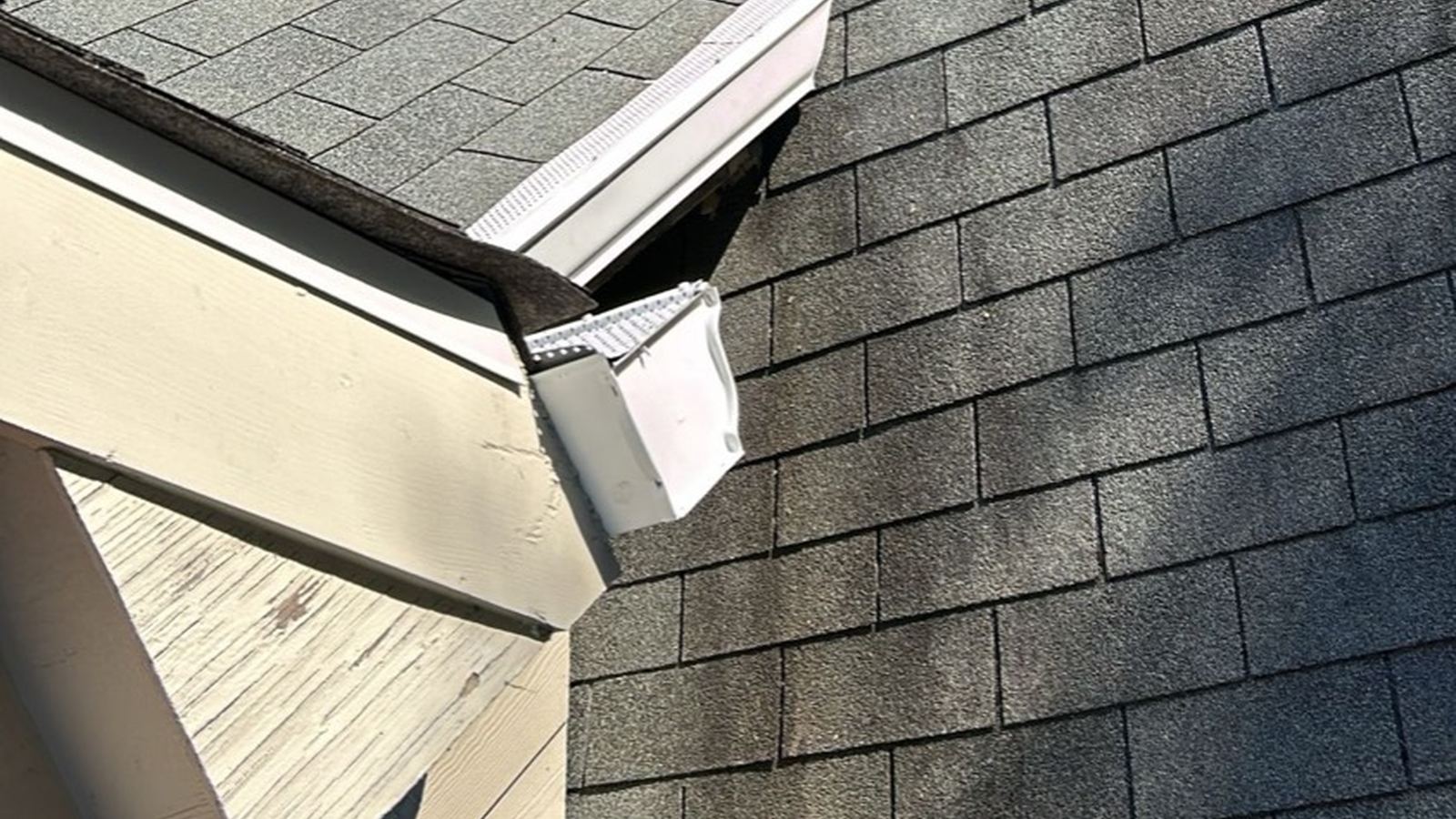
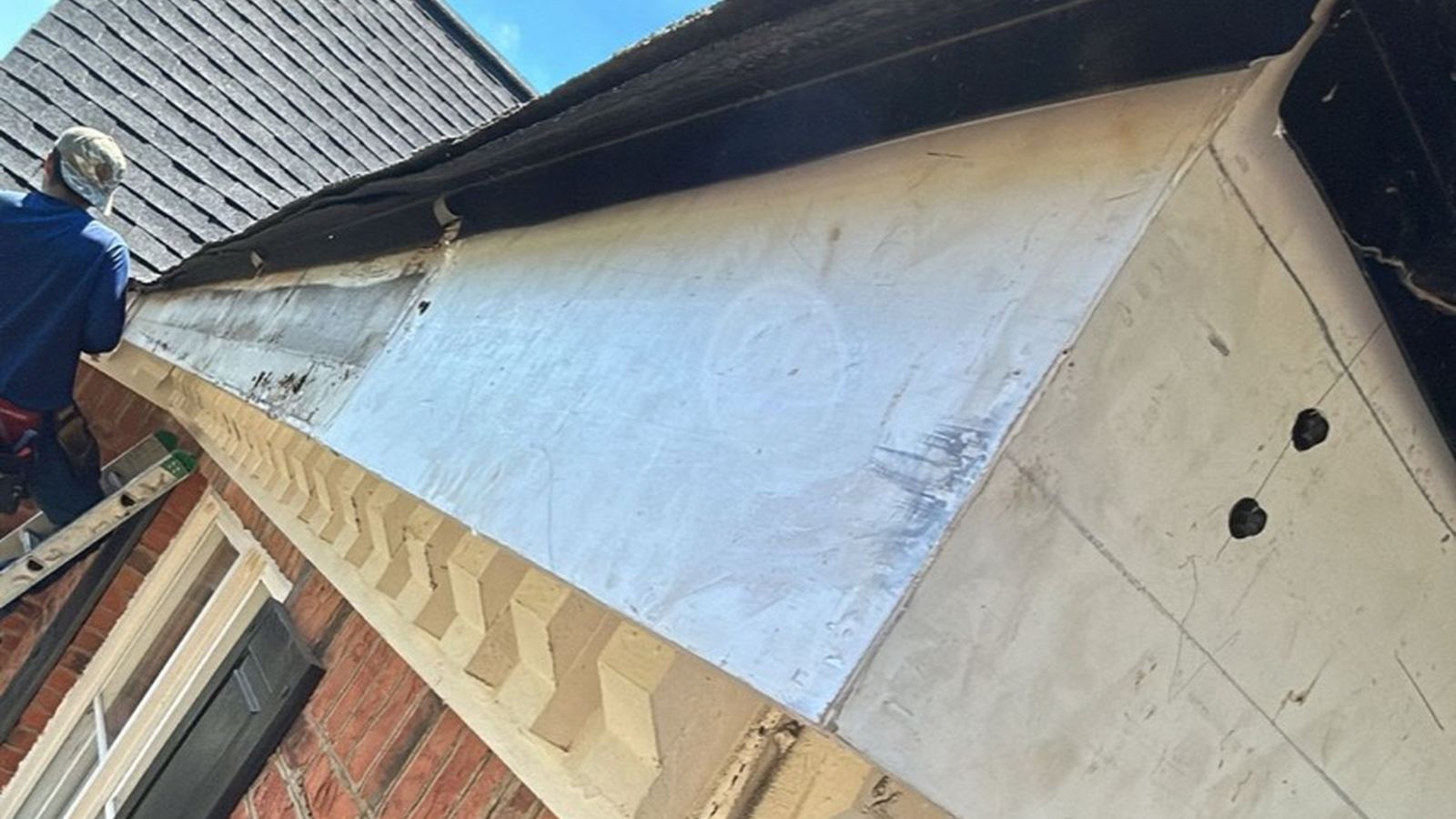
Almost every gutter on a house hangs off the fascia, the flat board running along the eave behind the gutter. Hidden hangers screw through the back of the gutter into it. Which means that when the fascia is soft, the gutter is fastened to something that cannot hold it, and no quality of gutter fixes that.
This is the single most common thing that turns a straightforward gutter replacement into a larger conversation on site, and homeowners are understandably suspicious when it comes up. So here is how to tell whether it is real, and what the honest options are.
How fascia rots in the first place
Fascia rot is almost always caused by the gutter that was on it. Water that should have gone into the gutter went behind it instead, and stayed there. The usual routes are a gutter pitched slightly backwards, a missing or damaged drip edge letting water track behind the gutter's back edge, a clogged gutter overflowing over its back rather than its front, or ice sitting in an unpitched run through a Cincinnati or South Bend winter.
That matters for the decision, because it means fascia rot is a symptom. Replacing the board and re-hanging the same badly pitched gutter buys a few years at most.
Telling repair from replacement
The test is mechanical, not visual. Paint hides a great deal, and a board can look sound and be soft. What we are actually checking:
- Does it hold a fastener? A screw that spins without biting, or pulls out under hand pressure, is the definitive answer. This is the test that matters, because it is exactly what the gutter will be asking of the board.
- How deep is it? Surface weathering and flaking paint on an otherwise firm board is not rot. A probe that sinks in is.
- How far does it run? Rot concentrated at a joint, a corner, or under one downspout is usually a local failure with a local cause. Softness along a whole run points at pitch or drip edge.
- What is behind it? If the rot has reached the rafter tails the fascia is nailed to, the job is no longer a fascia job, and you want that found now rather than after the new gutters are up.
The three honest options
Repair a section. Where the damage is local and the surrounding board is firm, cutting out the bad length and scarfing in a new piece is legitimate and considerably cheaper. It is the right call for one soft metre under a downspout on an otherwise good run.
Replace the run. Where the board is soft along its length, or where a repair would leave you fastening into questionable material, replacing the full run is the honest recommendation. It is also the only point at which it is cheap to do, because the gutters are already off. Coming back to do it later means paying to remove and rehang gutters that are only a year old.
Fix the cause as well. Whichever of the above, the pitch and the drip edge get corrected at the same time, or you have bought the same problem again on a delay.
Why the sequence is not negotiable
The reason this cannot wait until after the gutters go up is simply order of operations. The fascia is behind the gutter. Getting at it means taking the gutter down. If you install new seamless gutters over compromised fascia, the eventual fascia work costs you the removal and rehanging of those gutters on top of the carpentry, and in the meantime the hangers are pulling out of soft wood under every load of rain.
If an estimate for new gutters does not mention the fascia at all, it is worth asking whether anyone checked. A contractor who tells you the board is fine when it is has not saved you money; they have moved the cost into next year and added the price of taking the new gutters back off.
Our gutter repair services include the fascia check as part of any replacement quote, and we would rather tell you about a soft board before the install than explain a sagging run afterwards.

Written by
Scott Specker
Owner · Northeast Georgia
Owner of Top Rated Gutters of Northeast Georgia, serving Cumming, Alpharetta and surrounding communities.