Every gutter guard works on the day it is installed. The question worth asking before you spend the money is not which one performs best in a brochure, but how each type fails, and what sets that failure off. Because the answer is different for each, and the conditions on your roof decide which failure you will actually meet.
Micro-mesh fails by blinding
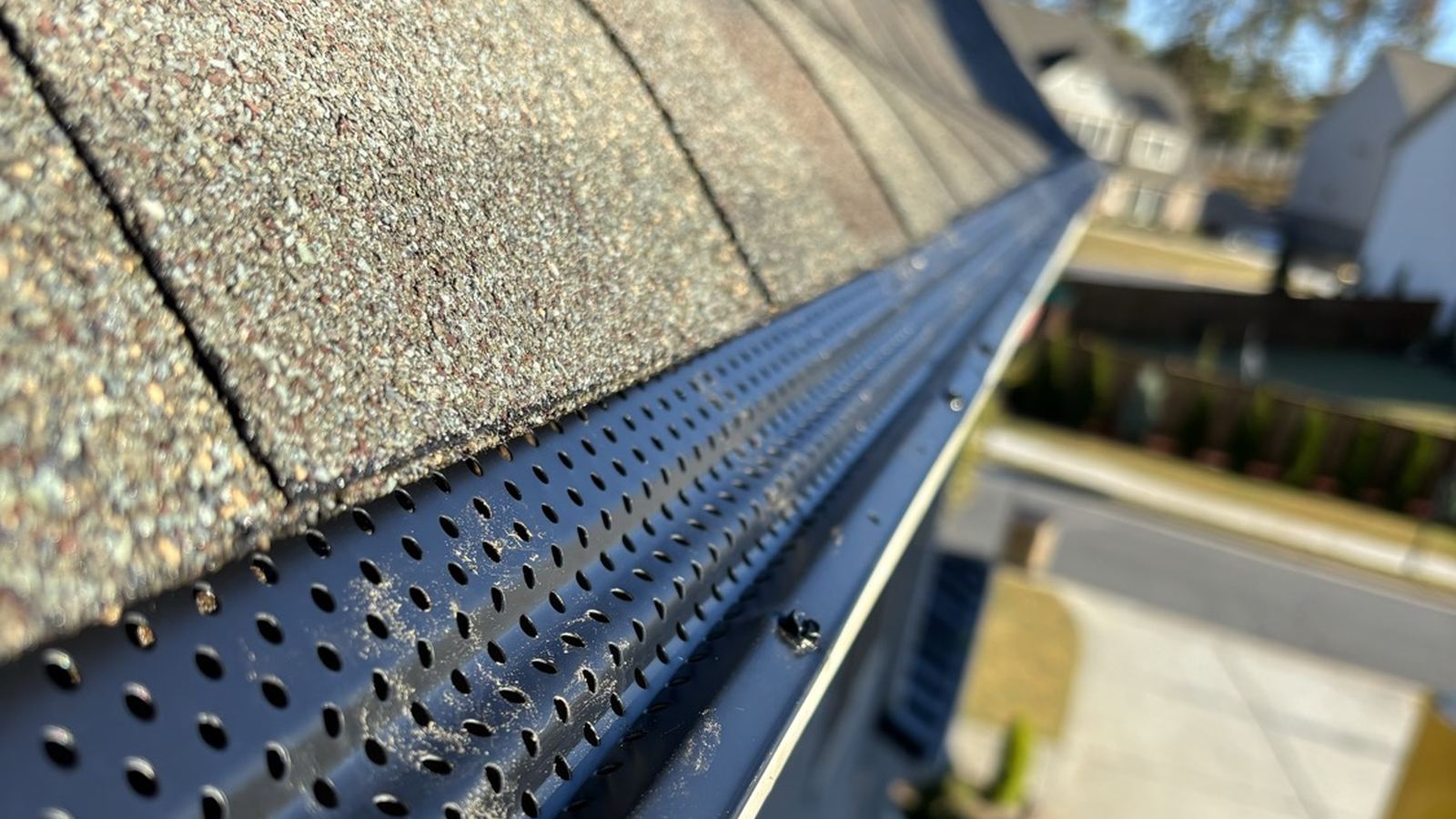
A micro-mesh guard is a fine stainless screen over a frame. Water passes through thousands of small openings; almost every solid stays out. That is genuinely the most complete debris exclusion available, and on a pine lot it is usually the right answer.
Its failure is a surface one. Pine pollen, shingle grit washing off an ageing asphalt roof, and roof algae can build a film across the mesh, and once that film closes the openings the water sheets straight over the front lip instead of going through. The gutter underneath is spotless; the water is on the ground anyway.
Two things matter about this failure. First, it is gradual and visible: you can see the water overshooting during a storm and see the film on the mesh from a ladder. Second, it is recoverable without replacing anything. Brushing the surface restores it. What micro-mesh asks of you is not that you never touch the gutters again, but that you touch the top of them occasionally rather than digging debris out of the inside.
Aperture size is the real trade-off inside the category. Too open and shingle grit passes through and settles in the gutter. Too fine and the mesh blinds sooner. A cheap micro-mesh with an aggressive aperture is buying you the worst of both.
Reverse curve fails by overshoot
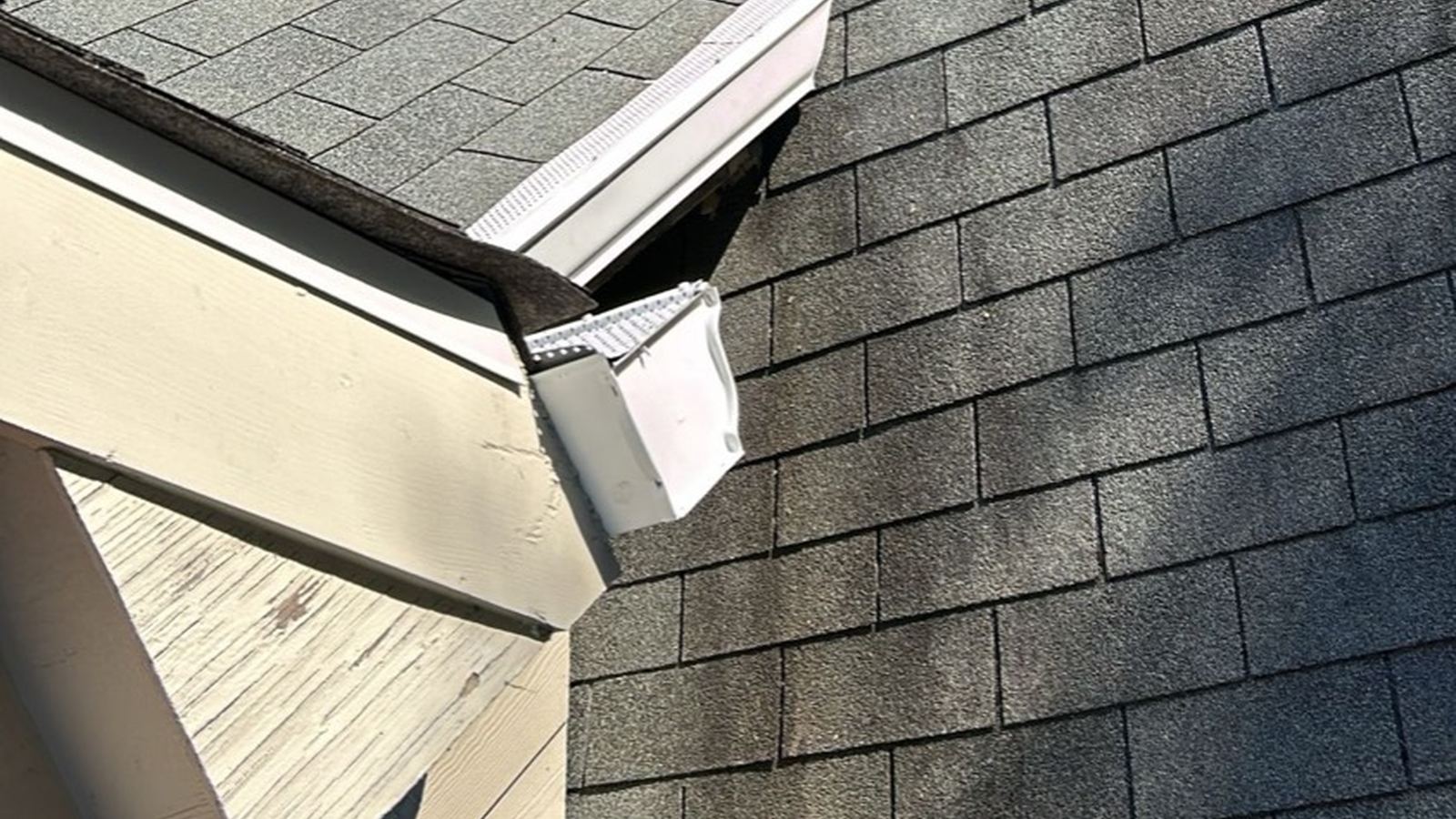
A reverse-curve guard, sometimes sold as a surface-tension or helmet system, works on a different principle. The cover is solid. Water running down the roof clings to the curved nose, follows it around, and drops through a slot at the back into the gutter. Debris, having no such adhesion, carries on over the edge.
That adhesion has a limit. Past a certain flow the water's momentum simply carries it past the nose and over the front, and the whole roof's runoff lands in a sheet at the foundation. What sets the limit is not only the product: a steeper roof delivers water to the eave faster, and a long run with few outlets arrives with more of it at once. The same guard that behaves perfectly on a shallow roof in a moderate shower can overshoot on a steep one in a summer storm.
Its second failure is quieter. The slot that admits water also admits anything small enough to ride the water around the curve: shingle grit, seeds, pine needles fine enough to follow the flow. That material collects inside the gutter, where you cannot see it from the ground and cannot reach it without removing the cover. A reverse-curve gutter that has been quietly filling for three years looks perfect from the driveway.
Foam fails by colonisation
Foam inserts sit inside the gutter channel and let water pass through the material. They are inexpensive and genuinely easy to fit. Their failure is biological: the foam traps the organic material it filters, that material breaks down into something very like soil, and seeds germinate in it. A foam-filled gutter with plants growing out of it is not an unusual sight. The foam also degrades under UV, so the failure is on a clock whatever the debris does.
Screens fail by needle threading
A basic screen or perforated cover stops leaves at low cost. Pine needles are its specific undoing: they are narrow enough to stand upright in the openings, and once a few are wedged the rest mat on top of them. This is why screens disappoint on wooded lots in North Georgia in particular, and why "I tried gutter guards and they did not work" so often turns out to mean "I tried screens under pines".
So which one belongs on your house?
Four conditions decide it, and none of them are about the brand:
- What actually falls on your roof. Broadleaf debris in one autumn window forgives almost any guard. Pine needles rule out screens. Heavy pollen and an ageing asphalt roof mean you are choosing which surface to maintain, not whether to maintain one.
- Peak rainfall intensity where you live. This is the variable that turns reverse-curve overshoot from theoretical into routine, and it is local: the design figures come from NOAA's rainfall data for your specific location, not a national average.
- Roof pitch and run length. Steep roofs and long runs with few downspouts deliver more water, faster, to the point where surface tension has to hold.
- Whether anyone will ever get up there again. A guard that needs its surface brushed once a year is a fine choice if that will happen, and a poor one if it will not.
Across our four markets that resolves differently. Georgia pine and pollen point to micro-mesh with a maintenance expectation attached. Ohio and Indiana broadleaf debris is more forgiving on guard type but adds snow and ice load, which is a fastening question rather than a guard question. Nobody should be recommending you a guard without having looked at your trees, your pitch and your downspout spacing first.
If you want that assessment rather than a product pitch, our gutter guard installation team will tell you when the honest answer is two cleanings a year instead.

Written by
Michael Nungesser
Owner · Central Georgia
Owner of Top Rated Gutters of Central Georgia with 20+ years in home improvement across the state.