If you’ve ever gotten a gutter quote and been asked whether you want 5-inch or 6-inch gutters, you might have just shrugged and picked one. But gutter size actually matters, choose too small, and water overflows every time it rains; choose unnecessarily large, and you’ve spent more than you needed to. Here’s everything you need to know to make the right call.
WHAT THE SIZES MEAN
Gutter “size” refers to the width of the opening at the top of the gutter channel, the wider it is, the more water it can collect and move before overflowing. The two most common residential sizes in the U.S. are 5-inch and 6-inch, though 4-inch gutters exist for small applications and commercial buildings sometimes go even larger. The size you need depends on a few key factors: the square footage of your roof, the slope (pitch) of your roof, and the average rainfall intensity in your region.
WHEN TO CHOOSE 5-INCH GUTTERS
Five-inch gutters are the standard for most American homes and handle typical rainfall amounts with no problem. They work well for:
– Single-story homes or homes with a low-to-moderate roof pitch
– Smaller roof sections under 1,000 square feet per drainage area
– Regions with moderate rainfall (less than 4 inches per hour in a major storm event)
– Homes where appearance is a priority, as 5-inch gutters have a slimmer, less bulky profile
The majority of residential gutter installations use 5-inch gutters, and for most homes, they’re perfectly adequate. If you have a modest ranch-style home or a two-story home with a standard pitch, 5-inch is likely the right fit.
WHEN TO CHOOSE 6-INCH GUTTERS
Six-inch gutters flow nearly 40% more water than 5-inch gutters, which is a significant difference when the skies open up. They’re the right choice for:
– Larger homes with steep roof pitches that channel water rapidly
– Homes in regions with heavy or frequent rainfall (areas that regularly see tropical storms, heavy convective rainfall, or sustained downpours)
– Roof sections over 1,000–1,200 square feet draining to a single gutter run
– Homes where overflow has been a recurring problem with standard-size gutters
In Indiana, where communities like South Bend can see intense spring storms and significant snowmelt, some homeowners find the upgrade to 6-inch gutters is worth it. The team at Top Rated Gutters in Indiana (topratedgutters.com/indiana/) can assess your roof’s drainage needs and recommend the right size based on your specific home and local weather patterns.
K-STYLE VS HALF-ROUND GUTTERS
Beyond size, you’ll also encounter a choice of gutter profile: K-style or half-round.
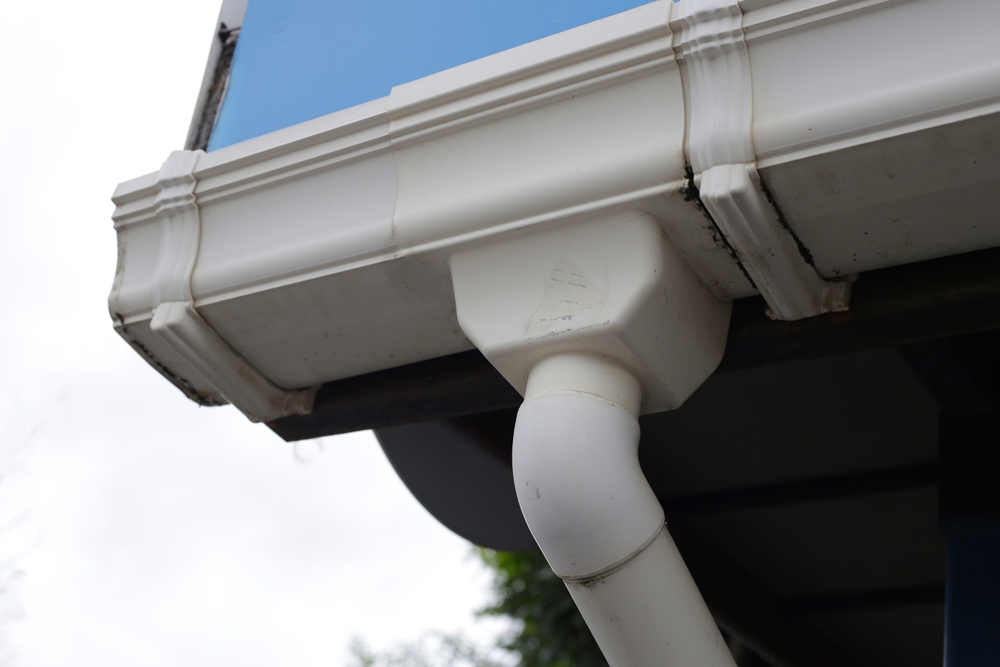
K-Style Gutters: The flat bottom and back give them a decorative profile that resembles crown molding. They’re the most common residential style and hold more water than a half-round of the same width. They’re easier to mount flush against fascia and are typically more affordable.
Half-Round Gutters: These are exactly what they sound like, a semicircle shape, like a pipe cut in half. They allow water and debris to flow more freely (less buildup in corners), which can mean less cleaning. They’re common on older, historic, or craftsman-style homes and often used with copper or zinc installations.
For most modern homes, K-style is the practical choice. If you’re restoring a historic home or want a more traditional look, half-round may be the better aesthetic fit.
HOW A PROFESSIONAL MEASURES CORRECTLY
Getting gutter size right isn’t guesswork, it involves calculating the roof’s drainage area (length × width, adjusted for pitch), cross-referencing that against regional rainfall intensity data, and factoring in the number and placement of downspouts. A properly designed gutter system accounts for all three, not just the width of the gutter channel. That’s why a professional assessment is so valuable: an experienced installer will catch situations where a standard 5-inch gutter would be undersized, or where adding a downspout would solve a problem without needing to upsize the gutter at all.
Ready to Get Started: Gutter Sizing?
Getting the right gutter size installed from the start saves you from overflows, water damage, and costly re-dos down the road. Let our team assess your home and recommend the perfect fit.
👉 Schedule your free gutter installation consultation at topratedgutters.com/gutter-installation/
—
Frequently Asked Questions: Gutter Sizing
What size gutters does most homes need?
The majority of residential homes in the U.S. use 5-inch K-style gutters. They handle standard rainfall volumes well and are the industry default for single-family homes with typical roof pitches. Homes with large, steep roofs or located in high-rainfall areas are better served by 6-inch gutters.
Are 6-inch gutters worth the extra cost?
For the right home, yes, and the cost difference is usually modest (often just $1–2 more per linear foot). If you have a steep roof, a large home, or live in an area with heavy rainfall, upgrading to 6-inch gutters can prevent chronic overflow problems and protect your foundation and landscaping. A professional can tell you whether the upgrade is warranted for your specific situation.
Does gutter size affect water flow?
Absolutely. Gutter size directly determines how much water the system can handle during peak rainfall. A 6-inch K-style gutter can carry roughly 40% more water than a 5-inch K-style gutter of the same length and slope. Pairing the right size gutter with properly sized and spaced downspouts is just as important as the gutter width itself.
Can I mix 5-inch and 6-inch gutters on the same house?
Yes, and it can sometimes make sense. For example, you might use 6-inch gutters on a large, steep back roof section that drains a lot of water, while using standard 5-inch gutters on a smaller front porch overhang. However, mixing sizes requires that each section be fully functional on its own, you can’t connect a 5-inch and 6-inch gutter run at the same downspout without an adapter. A professional installer will plan the system so each section is properly sized and drains independently.
< Previous Next >
Written by
Michael Nungesser
Owner · Central Georgia
Owner of Top Rated Gutters of Central Georgia with 20+ years in home improvement across the state.