Every September in Michiana someone gets quoted gutter guards on the strength of last winter's ice. It is worth separating what a guard genuinely does for you here from what it is sometimes sold as doing, because the two are not the same and the gap costs money.
What a guard does for a Michiana winter
Indirectly, quite a lot. A gutter that goes into December full of oak leaves and maple seeds is a gutter with nowhere for meltwater to go. Every thaw produces water that should run to the downspout and instead sits in the debris, freezes, and adds weight to a run already carrying snow. Keeping the channel clear through the autumn drop is a real winter benefit, and that is what a guard buys you.
It is an autumn purchase with a winter payoff, and that is a perfectly good reason to fit one.
What it does not do
No gutter guard prevents an ice dam. An ice dam forms because heat escaping the house into the attic melts snow on the upper roof; that meltwater runs to the cold eave, refreezes, and builds a ridge that traps whatever comes next. The process happens above the gutter and would happen on a house with no gutters at all. A cover over the gutter changes nothing about it.
If ice dams are your problem, the fixes are building fixes, in order: air sealing the attic penetrations first, then insulation, then balanced ventilation so the roof deck stays close to outside temperature. Heated cable is mitigation rather than a cure, keeping a channel open so meltwater escapes instead of backing up under the shingles.
Do guards make winter worse?
Sometimes, and it is worth knowing which way.
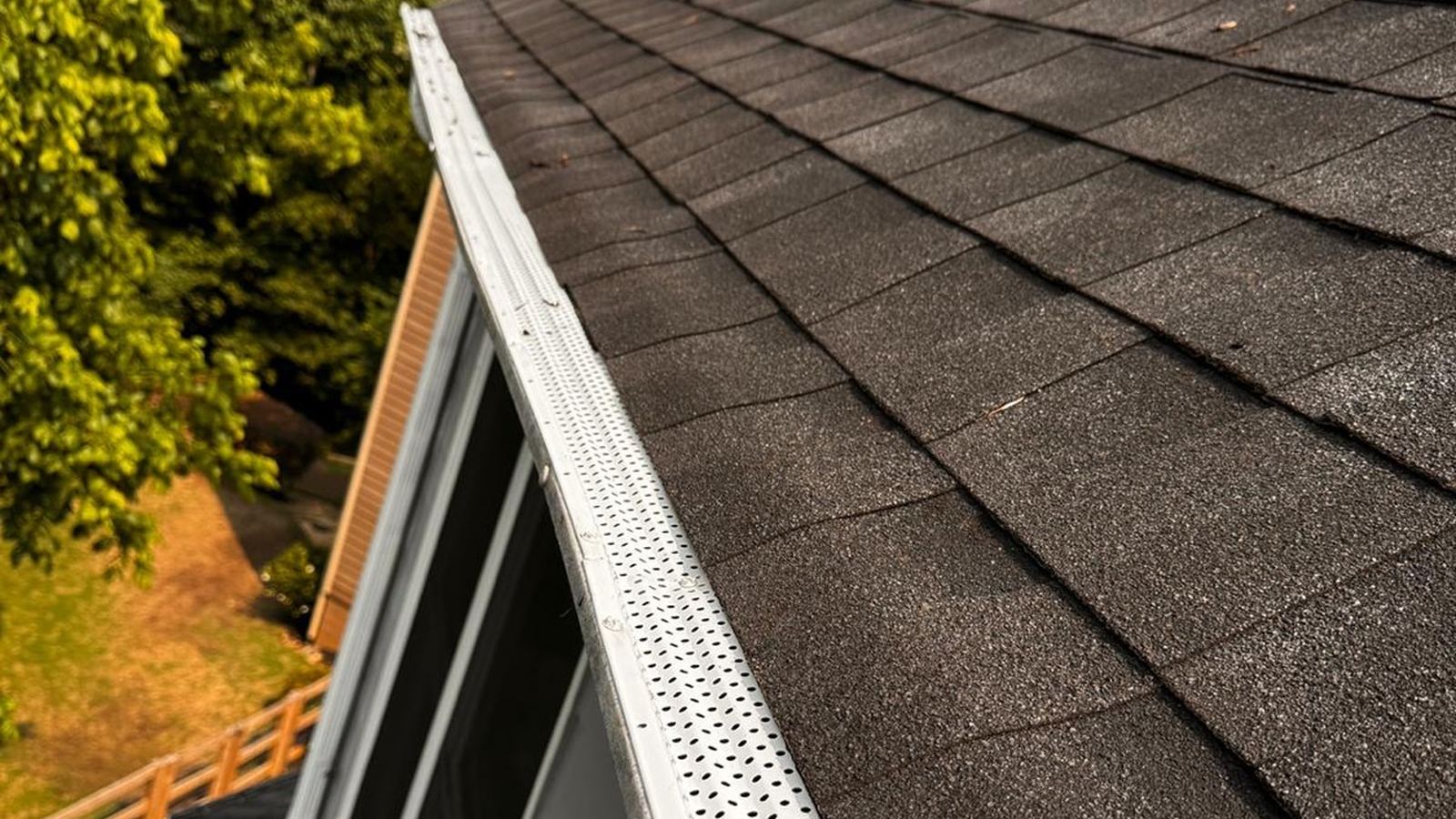
Micro-mesh can ice over on its surface. When it does, water sheets across the top and over the front rather than through, which looks alarming but is not damaging in the way an overflowing full gutter is. It clears when it thaws.
Reverse-curve covers give icicles something to form on and hang from, and the solid nose can hold a mass of ice at the eave. On a lake-effect roof that adds weight exactly where you least want it.
Foam is the poorest winter choice. It holds water inside the channel, and water held in a channel through a Michiana freeze becomes a block of ice the full length of the run.
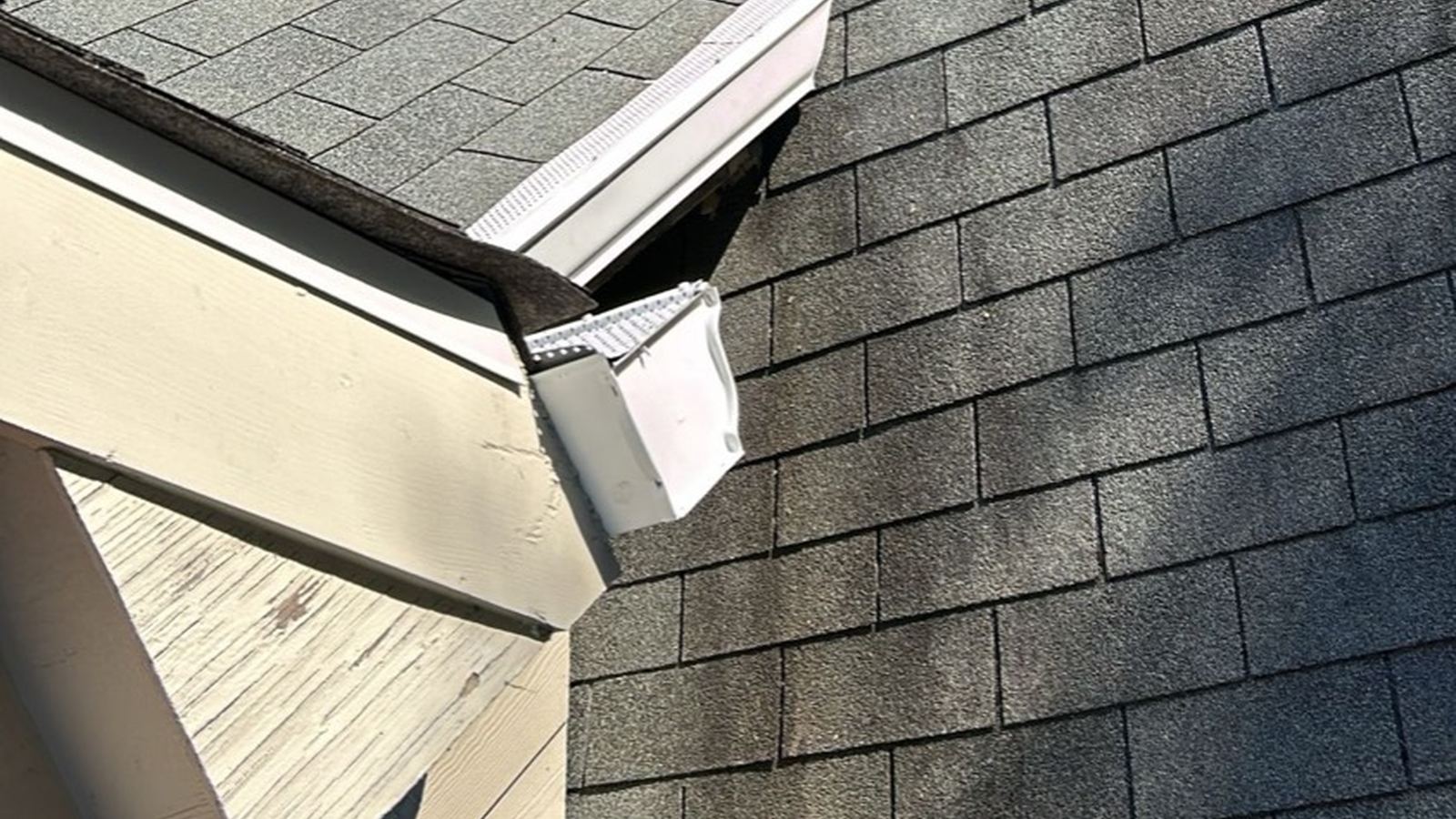
Any guard adds some weight. On a properly fastened gutter that is irrelevant. On a run held up by tired spike-and-ferrule hangers it is the straw that takes it off the house.
The order that actually works here
- Fastening and pitch first. Hidden hangers into the rafters at close spacing, and a run that genuinely drains. This is what survives wet snow, and it is cheaper than everything else on this list. If your gutters have come loose before, start and possibly stop here.
- Then a guard, for the debris. Choose it for what falls on your roof in October, not for what happens in January. Michiana's broadleaf debris is forgiving on guard type, which means you do not need the most expensive option to solve it.
- Then the attic, if you get ice dams. This is not gutter work and we do not pretend otherwise. If you are getting dams every winter, money spent on air sealing will do more than money spent on anything hanging off the eave.
We fit gutter guards in South Bend and across Michiana, and the assessment starts with whether your existing runs are hung well enough to justify putting anything on top of them.

Written by
Anthony Kulikowski
Owner · South Bend, IN
Owner of Top Rated Gutters of South Bend, with 25+ years serving Indiana homeowners.