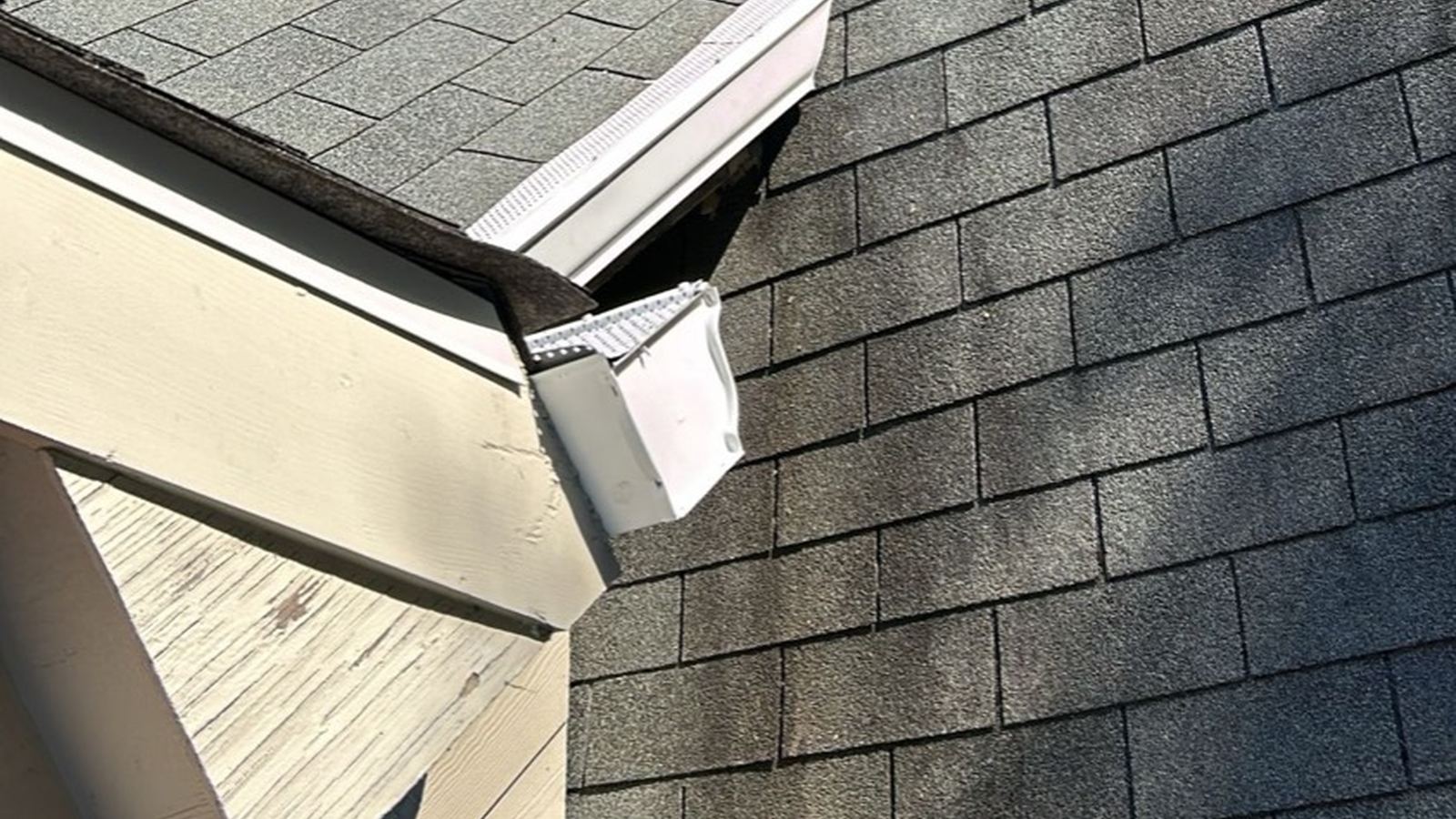
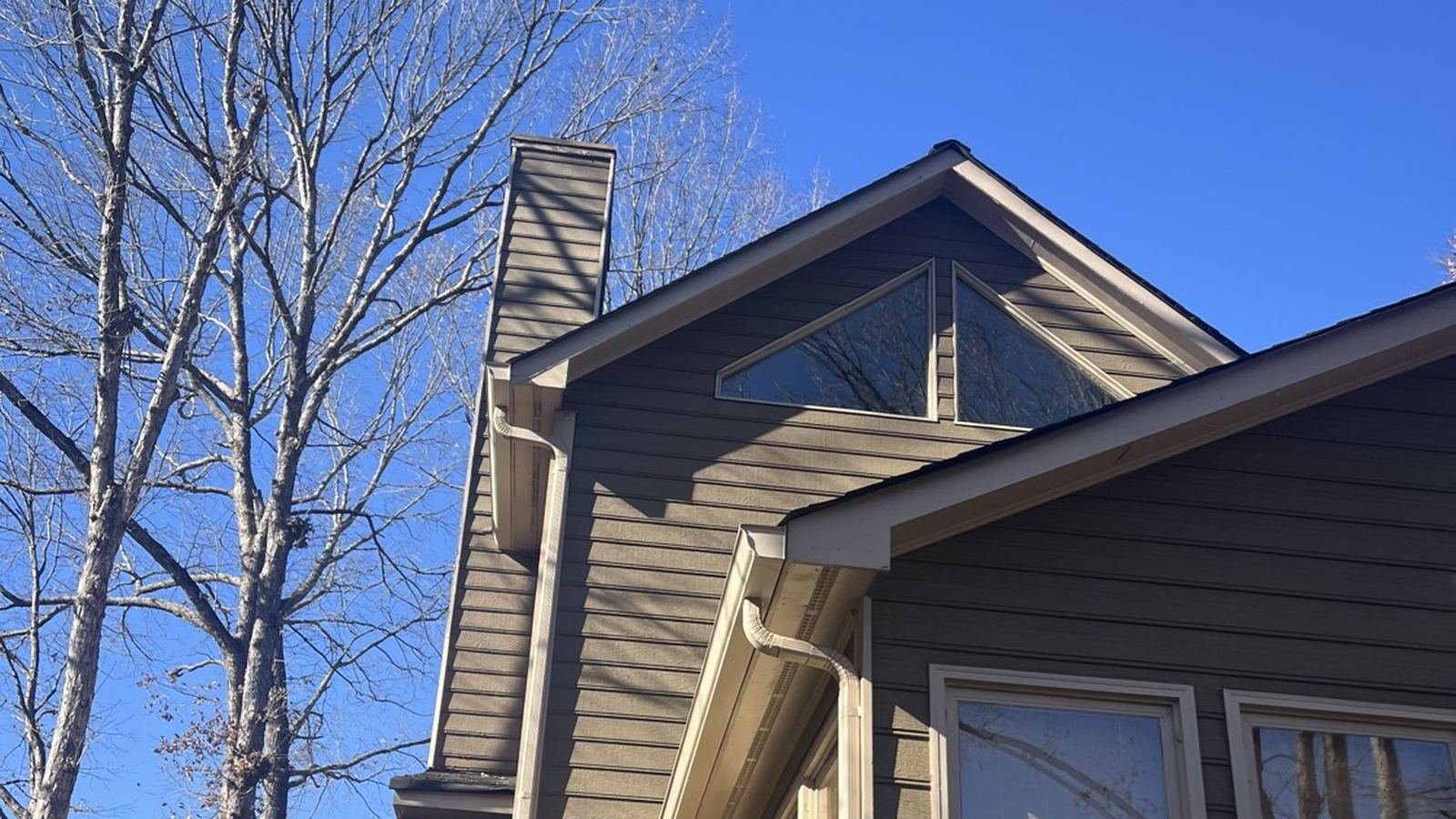
Gutters rarely fail dramatically. What usually happens is that a homeowner notices in March that a run has dropped an inch at one end, or that there is now a visible gap between the gutter and the fascia board. That gap was not there in November, and nothing obvious happened in between.
What happened is freeze-thaw, and Cincinnati's winter is unusually good at it.
Why a moderate winter is worse than a severe one
The damage here is not caused by cold. It is caused by crossing freezing, repeatedly. A climate that drops below freezing in December and stays there does its damage once. A climate that crosses 32°F back and forth through the winter does it dozens of times, and each crossing is another cycle of the same mechanism.
That is the Ohio River valley winter. Daytime thaw, overnight freeze, over and over from December into March.
The mechanism, step by step
Water gets somewhere it should not be. Usually into the gutter itself, which cannot drain because the run is holding debris or has lost its pitch. Sometimes into the joint between the back of the gutter and the fascia board, which is the more damaging version.
It freezes, and it expands. Water expands as it turns to ice, and in a confined gap that expansion has to go somewhere. In the seam behind a gutter, it goes into widening the seam.
It thaws, and the gap stays. This is the part that matters. The ice retreats; the widened joint does not close up again. So the next cycle starts with a slightly bigger gap, which admits slightly more water, which freezes into a slightly bigger wedge.
Repeat forty times. A winter of that is a ratchet, not a cycle. It only goes one way.
Then there is the weight
Ice in the channel is a separate problem and it is heavier than people expect. A 5-inch K-style gutter holds roughly 1.2 gallons per foot. A 40-foot run frozen solid is carrying somewhere in the region of 350 to 400 pounds, hanging off fasteners that were specified for a gutter carrying moving water.
It does not need to be solid to matter. A couple of inches of ice along a long run is still hundreds of pounds pulling downward and outward on hangers whose grip on the fascia is being widened by the mechanism above at the same time. The two failures work together, which is why the run that drops is so often the one that was also holding water.
What decides whether it happens to you
- Whether the gutter drains. A run that empties has nothing in it to freeze. This is the whole ball game, and it is why an autumn cleaning is a winter intervention rather than a cosmetic one.
- Pitch. A run that has lost its fall holds standing water at the low point even when it is clear of debris. That is where the ice forms first every year.
- Hanger type and spacing. Old spike-and-ferrule fasteners loosen under exactly this loading. Hidden hangers screwed into rafters at close spacing resist it.
- The state of the fascia. Wood that has already been wet does not hold a fastener well, and the widening joint keeps it wet. This is the loop that turns a gutter problem into a carpentry one.
- Drip edge. Missing or damaged drip edge lets water track behind the gutter in the first place, which is the version that attacks the seam rather than filling the channel.
What to look at before December
Stand back from the house and sight along each run. A run that is no longer straight, or that has visibly dropped at one end, is telling you the fasteners have already moved. Look for daylight between the gutter back and the fascia. Check that water actually leaves each downspout rather than that the gutter merely looks clean.
None of that requires a contractor. Fixing what it finds usually does, and it is considerably cheaper in November than in March.
Our Cincinnati gutter repair crews correct pitch and re-fasten runs before the freeze-thaw season rather than after it, which is the difference between a repair and a replacement.

Written by
Colin Nellis
Owner · Cincinnati, OH
Owner of Top Rated Gutters of Cincinnati, with a career built in home improvement on honest, high-quality service.