
Gutter Installation
Custom seamless gutter systems installed on homes and businesses, fabricated on-site for a perfect, leak-resistant fit.
Key Takeaways: Gutter Installation
- Gutters protect your home's foundation, siding, and landscaping by directing rainwater away.
- Seamless aluminum gutters are custom-fabricated on-site for a perfect, leak-resistant fit.
- Proper installation plus routine maintenance keeps your new gutters performing for decades.
- Free estimates and professional installation across Georgia, Ohio, Indiana & Michigan.
Do I Really Need Gutters?
Gutter installation is a crucial part of home maintenance and upkeep, as it helps protect your foundation and roof from water damage. Without properly installed gutters, rainwater can leak down the sides of your house, causing moisture to build up in the walls and frame. Over time this can lead to wood rot, mold growth, and even structural damage.
Installing gutters correctly is essential to ensure that they don’t clog or become damaged over time. The process starts by measuring the perimeter of your house to determine the length of gutter needed. Once you have chosen a type of gutter – typically either vinyl or aluminum – it must be cut to fit the exact dimensions of your building.
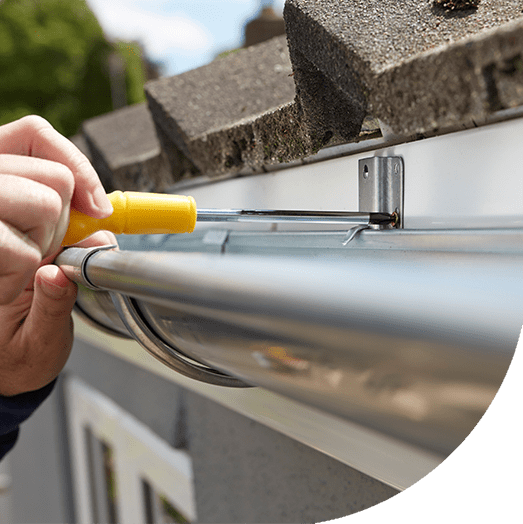
Next, mounting brackets need to be attached on either side of the gutter so it will stay firmly in place on your house. Finally, fasteners should be used along with silicone caulk for extra insurance against rusting or leaking due to weather conditions. It’s also important when installing gutters that you use properly spaced downspouts- too many or too few will cause an imbalance in water flow leading to overflow or improper drainage.
Maintaining Your New Gutters
In addition, proper gutter maintenance is key for preventing clogs and other costly damage caused by debris such as leaves and twigs getting stuck in the system. Regularly cleaning out your gutters will help extend their life span and maintain their efficiency long-term. As well as removing any organic material stuck in the system, make sure all nail heads are tightly secured and there are no signs of corrosion present- both of which could lead to leaks if left unchecked over time.
Finally, having a professional inspect your gutters every couple years is recommended as they may detect potential problems that are otherwise difficult for a homeowner to spot on their own. Taking these steps will help keep your gutters functioning optimally while protecting your home from potential damage due to water buildup!
Frequently Asked Questions: Gutter Installation
How long does gutter installation usually take?+
Most residential gutter installation projects can be completed within a day depending on the size of the home, roof layout, and weather conditions. Larger homes or properties with complex rooflines may require additional installation time.
What type of gutters are best for long-term durability?+
Aluminum seamless gutters are one of the most common choices because they resist rust, require less maintenance than sectional systems, and help reduce leaking at the seams. The right gutter material depends on the property, drainage needs, and local weather exposure.
How do I know if my home needs new gutters?+
Common signs include sagging sections, recurring leaks, overflowing during rainstorms, visible rust, separated seams, water pooling near the foundation, or gutters pulling away from the roofline.
Can improperly installed gutters cause drainage problems?+
Yes. Gutters that are incorrectly pitched or poorly supported may allow water to overflow or collect near the home instead of draining properly through the downspouts. Proper installation helps improve long-term water flow and drainage performance.
How many downspouts should a gutter system have?+
The number of downspouts depends on roof size, gutter length, water runoff volume, and the layout of the property. Homes with larger roof surfaces or steeper rooflines may require additional downspouts for proper drainage.
Are seamless gutters better than sectional gutters?+
Seamless gutters reduce the number of connection points throughout the system, helping minimize leak risks and improve overall water flow. They also create a cleaner appearance along the roofline compared to traditional sectional gutters.
How often should gutters be inspected after installation?+
Most gutter systems should be inspected periodically to check for debris buildup, drainage performance, loose fasteners, or signs of wear. Properties with heavy tree coverage may require more frequent inspections and maintenance.
Can new gutters help protect a home’s foundation?+
Yes. Properly installed gutters help direct water away from the structure, reducing the risk of erosion, standing water, and moisture buildup near the foundation.
See More Faq’s
More on Gutter Installation from Our Team
By market
Gutter Installation in Your Area
Every market runs its own crew, its own pricing, and its own seasonal calendar. Start with yours.
Rated 4.9 across 172 Google reviews in 4 states
Gutter Installation Client Reviews
“Anthony and his team are top notch. They do things with integrity and are very dependable. Thanks, Anthony, for being a great resource for my gutter needs.”
“I was very pleased. They arrived on schedule, completed the job efficiently, and kept me informed every step of the way. The crew was professional, courteous, and answered all my questions. Communication was clear and friendly.”
“WOW! I am in shock at how easy this process went. I am a nurse that works weird hours and hate making multiple appointments. I got 3 quotes for new gutters, this company was less than half the price of the other two. Great price and they made everything quick and easy.”
“I had an excellent experience with Top Rated Gutters of South Bend. Anthony did an amazing job installing our gutters, and the entire process was smooth from start to finish. He was extremely responsive and paid close attention to every detail.”
“Scott and his team were excellent. Estimate was reasonable and expectations were clearly stated up front. Contract execution was digital and easy, as was payment. Highly recommend.”
“They did a great job installing a new set of gutters on our house. They came up with unique solutions for new downspouts and gutter intersections and kept me informed of everything along the way. A quality job completed in less than a day.”
Ready for gutters done right?
Enter your zip code for a fast, free estimate from your local team.