



In Northeast Georgia, water is the architect of the region’s stunning natural beauty. It carves the valleys, nourishes the dense forests, and fills the sprawling lakes. For a homeowner, however, that same water presents a relentless challenge. Proper drainage is not just a feature of good landscaping; it is a fundamental requirement for protecting your home’s structural integrity and value. Without a well-designed system to manage rainfall, your property is vulnerable to a host of silent but devastating problems, from a cracked foundation to a flooded basement and severe soil erosion.
Many homeowners focus on the visible parts of their home—the roof, the siding, the windows—but the unseen systems that control water flow are arguably more critical. This guide will delve into the vital importance of proper drainage for homes in Northeast Georgia, exploring the specific risks posed by the local climate and topography and outlining the essential solutions, from your rooftop gutter system to the underground pipes that carry water safely away.
Northeast Georgia’s Challenge: Too Much Water, Not Enough Control
The climate of Northeast Georgia is defined by its ample precipitation, averaging 50 to 60 inches of rain annually. This rainfall often comes in the form of intense, concentrated downpours, especially during spring and summer thunderstorms. A home with a 2,000-square-foot roof will have to manage over 1,200 gallons of water for every single inch of rain. During a heavy storm, this can mean tens of thousands of gallons of water sheeting off the roof in a matter of hours.
Compounding this issue is the region’s topography. From the rolling hills of the piedmont to the steeper grades of the Appalachian foothills, many properties are not perfectly flat. This means that in addition to the rain falling on your roof, your property may also have to contend with surface and subsurface water flowing downhill from adjacent land. When this massive volume of water is not properly controlled, it wages a quiet war on your home.
The #1 Threat of Poor Drainage: Foundation Damage
Your home’s foundation is its most important structural component. Unfortunately, it is also the most vulnerable to damage from uncontrolled water. When rainwater is allowed to saturate the soil directly around your house, it creates a powerful and destructive force known as hydrostatic pressure.
How Hydrostatic Pressure Destroys Foundations
Soil, particularly the clay-rich soil common in Georgia, expands significantly when it becomes saturated with water. This expansion exerts immense pressure on your foundation walls. A water table that rises by just one foot can exert nearly 62 pounds of pressure per square foot of wall surface. Over the length of a 40-foot foundation wall that is 8 feet deep, this can add up to tens of thousands of pounds of lateral pressure.
This constant force can lead to a variety of severe problems:
- Bowing and Cracking: The pressure pushes inward on the foundation walls, causing them to bow, lean, and eventually crack. These cracks are not just cosmetic; they are signs of structural failure. Horizontal cracks are particularly dangerous.
- Water Intrusion: As cracks form, they become pathways for water to enter your basement or crawlspace. This leads to persistent dampness, flooding during heavy rains, and the potential for significant water damage.
- Uneven Settling: When soil is oversaturated in some areas and drier in others, it can cause parts of your foundation to settle or sink at different rates. This differential settlement can lead to cracked drywall, doors and windows that stick, and sloping floors throughout your home.
Foundation repairs are among the most expensive and disruptive home repairs a person can face, with costs easily running from $5,000 to $25,000 or more. Proper drainage is not just a preventative measure; it is an insurance policy against catastrophic foundation failure. This is a primary concern for homeowners across the region, from established neighborhoods in Cumming to newly developed areas. Ensuring your home is protected starts with consulting experts who provide professional gutter services in Cumming, GA.
Other Major Risks of Inadequate Drainage
While foundation damage is the most severe consequence, poor drainage creates a domino effect of other costly and frustrating problems around your property.
Risk 2: Basement and Crawlspace Flooding
A wet basement or crawlspace is more than just an inconvenience. It creates a hazardous environment within your home.
- Mold and Mildew Growth: The combination of darkness, moisture, and organic material (like wood joists or drywall) creates the perfect breeding ground for toxic mold. Mold spores can spread throughout your home via the HVAC system, causing respiratory problems, allergies, and other health issues.
- Pest Infestations: Damp, dark spaces are highly attractive to a wide variety of pests, including termites, carpenter ants, cockroaches, and rodents. These pests can cause further structural damage and pose health risks.
- Wood Rot: Constant moisture will lead to the rot and decay of the wooden structural components of your subfloor, such as floor joists, beams, and sill plates. This compromises the stability of the floor above and can lead to expensive structural repairs.
Keeping your basement or crawlspace dry is paramount, and it is impossible to do without effective exterior drainage to stop water from getting in. This is a common struggle in areas with older homes, like Milton, where original drainage systems may be failing. A modern assessment by a team offering gutter services in Milton can be invaluable.
Risk 3: Landscape and Soil Erosion
The force of uncontrolled water, especially when it overflows from gutters or rushes down a slope, is a powerful erosive agent.
- Loss of Topsoil and Mulch: Concentrated water flow will blast away expensive topsoil, mulch, and decorative gravel, leaving you with a constant and costly replacement cycle.
- Damage to Plants: While plants need water, too much of it can be deadly. Waterlogged soil deprives roots of oxygen, leading to root rot and the death of expensive shrubs, trees, and flowers.
- Creation of Gullies and Trenches: Over time, uncontrolled runoff will carve channels and gullies in your lawn, creating an unsightly and potentially hazardous landscape.
- Undermining of Hardscapes: The same erosive force can wash away the soil and gravel base supporting your patios, walkways, and driveway, causing them to sink, crack, and become unstable.
Risk 4: Driveway and Sidewalk Damage
In colder months, the water that saturates the ground under your paved surfaces can freeze. As water freezes, it expands by about 9%, exerting incredible force. This frost-heave cycle can lift, crack, and destroy concrete and asphalt driveways and sidewalks, leading to crumbling surfaces and expensive replacement costs. Keeping the subgrade beneath these surfaces dry is essential for their longevity.
The Solution: A Multi-Layered Drainage System
Effective water management is not about a single product; it’s about creating a comprehensive system where each component plays a specific role. The goal is to capture water at its source, contain it, and control its movement to a safe discharge point far from your home.
Layer 1: The Gutter System – Your First Line of Defense
Your roof is the largest single surface area collecting rainwater. The gutter system is designed to intercept all of that water before it has a chance to damage your home. A properly functioning system is the cornerstone of any drainage plan.
Key Components of an Effective Gutter System:
- Properly Sized Gutters: In a region with heavy rainfall like Northeast Georgia, upgrading from standard 5-inch gutters to 6-inch gutters is often a wise investment. The larger size provides about 40% more capacity, preventing overflows during intense storms.
- Seamless Design: Seamless gutters are custom-made on-site to fit your roofline perfectly, eliminating the seams that are the most common points of leaks and snags in traditional sectional gutters. For homeowners in growing communities like Suwanee, opting for a seamless system is a smart long-term choice. Local professionals providing gutter services in Suwanee can demonstrate the advantages.
- Gutter Guards: Given the abundance of trees in the area, gutters will inevitably clog without protection. High-quality gutter guards prevent leaves, pine needles, and other debris from entering the system, ensuring it is always clear and ready to handle a downpour. This is a critical upgrade that prevents the entire drainage system from failing at its first step.
- Correct Slope: Gutters must be pitched correctly (about 1/4 inch of slope for every 10 feet) to ensure water flows smoothly toward the downspouts instead of pooling and stagnating.
A faulty gutter system that is clogged, leaking, or sagging completely defeats its purpose, dumping water exactly where you don’t want it: right next to your foundation.
Layer 2: Downspouts and Extensions – Moving Water Away
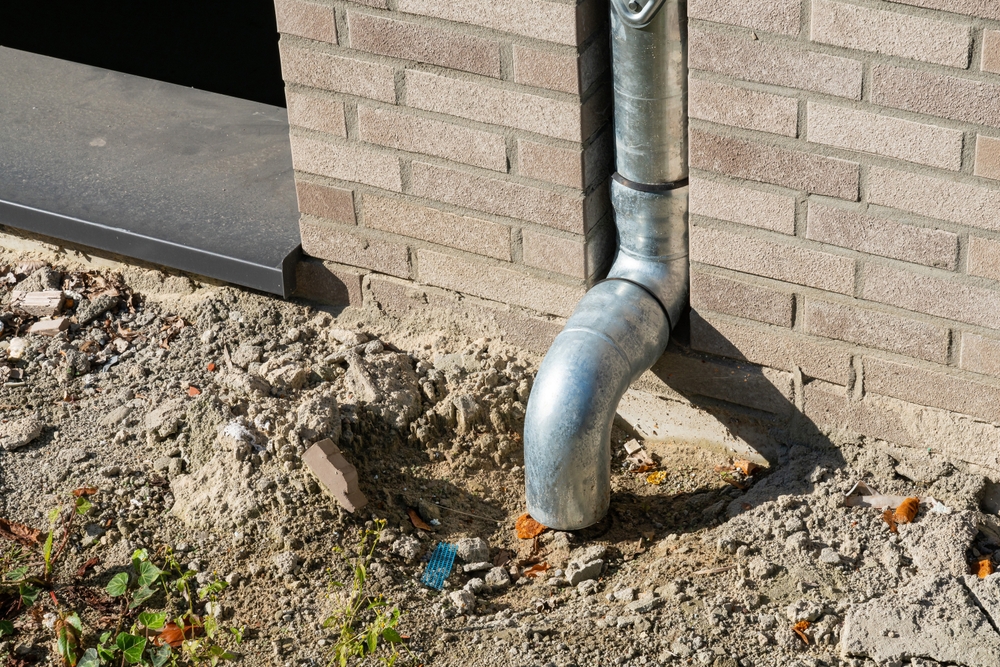
Capturing water in the gutters is only half the battle. The downspouts and their extensions are responsible for moving that water safely away from the vulnerable area around your foundation. This is one of the most common and critical failure points in home drainage.
- The 10-Foot Rule: A downspout that terminates right at the foundation is one of the worst mistakes a homeowner can make. You are simply taking all the water from your large roof and concentrating it in the most dangerous possible spot. At a minimum, every downspout should have an extension that carries water at least 6 to 10 feet away from the house.
- Choosing the Right Extension: While flexible corrugated pipes are a cheap option, they trap debris easily and are prone to damage. Rigid PVC or aluminum extensions provide a smoother, more durable path for water.
- Splash Blocks: A splash block alone is insufficient. While it can help prevent erosion directly under the downspout, it does not move the water far enough away to protect your foundation. It should only be used in conjunction with a properly sloped grade away from the house.
For homes on sloped lots, like many found near Roswell, managing downspout discharge is even more critical to prevent creating a new erosion problem. An expert consultation from a provider of gutter services in Roswell can help design an effective discharge plan.
Layer 3: Advanced Ground Drainage – Managing Surface and Subsurface Water
For many properties, especially those on a slope or with heavy clay soil, gutters and downspouts alone aren’t enough. An advanced ground drainage system may be necessary to control water that is already on or in the ground.
- French Drains: A French drain is a highly effective tool for intercepting groundwater. It consists of a perforated pipe buried in a gravel-filled trench. The drain is typically installed “uphill” from the area you want to protect, like your foundation. It captures water that is moving through the soil and channels it away to a safe discharge point. This is an excellent solution for preventing a soggy yard or a wet basement. Many homes in planned developments, such as those in Johns Creek, can benefit from this type of engineered solution to manage lot-to-lot drainage. Professionals offering gutter services in Johns Creek often have expertise in these integrated systems.
- Catch Basins and Underground Pipes: A catch basin is a collection box with a grate on top that is installed at a low point in your yard or driveway. It captures surface water and directs it into a solid, underground pipe that carries it away. Connecting your downspouts directly to this underground system is the cleanest and most effective way to manage roof runoff, keeping it completely out of sight and away from your foundation. This is a common and effective strategy in areas like Duluth, Flowery Branch, Gainesville, and Oakwood. Local experts providing gutter services in Duluth, gutter services in Flowery Branch, gutter services in Gainesville, and gutter services in Oakwood can design and install these systems.
- Swales and Grading: The most fundamental aspect of drainage is grading. The ground around your home should slope away from your foundation on all sides for at least 10 feet. This gentle slope uses gravity to naturally pull surface water away. In some cases, creating a “swale”—a shallow, wide, vegetated channel—can help to guide water along a desired path across your property.
Professional Expertise is Key
While some simple solutions like adding a downspout extension can be a DIY project, designing and installing a comprehensive drainage system is a job for professionals. An expert can:
- Accurately Assess the Problem: They have the experience to identify the true source of your water issues, whether it’s a grading problem, high water table, or an inadequate gutter system.
- Understand Local Conditions: A local professional understands the soil types, rainfall patterns, and building codes in Northeast Georgia.
- Design a Cohesive System: They can create a plan where the gutters, downspouts, and ground drains all work together seamlessly to protect your home.
- Execute with Precision: Proper installation, from setting the correct slope on a gutter to getting the right depth and pitch on a French drain, is critical for the system to function correctly.
In Northeast Georgia, water management is not a passive activity. It requires a proactive and systemic approach. By investing in proper drainage, you are doing more than just fixing a soggy lawn or a leaky basement. You are actively protecting the very foundation your home rests on, preserving its structural integrity, ensuring a healthy indoor environment, and safeguarding its long-term value. It is one of the most important investments you can make in your property.